At minimum, an LV bushing RFQ should specify rated voltage (Um) and current, mounting configuration (oil-to-air or oil-to-oil), creepage distance requirement, terminal type, and quantity with a delivery window. Buyers who omit any of these fields typically receive a wider quote range and a slower first response, because the supplier has to request clarification before pricing.
Low-voltage bushings sit at the low end of the transformer accessory chain — usually rated up to 1.1 kV or up to 3.6 kV depending on the distribution transformer class — but “low voltage” does not mean low specification risk. A vague RFQ on a $15 component can still hold up a $200,000 transformer shipment if the wrong creepage class or terminal thread gets ordered. For a broader view of how LV bushings fit against the wider range of transformer accessories, it helps to treat the bushing spec as one line item inside a larger insulation coordination plan rather than an isolated part number.
Core Fields Every RFQ Needs
Rated voltage (Um) and rated current
Mounting style: oil-to-air, oil-to-oil, or bushing-well compatible
Creepage distance / pollution severity class
Terminal configuration (stud, spade, or NEMA pad)
Tank flange dimensions or bushing-well interface, if applicable
Target quantity and delivery timeline
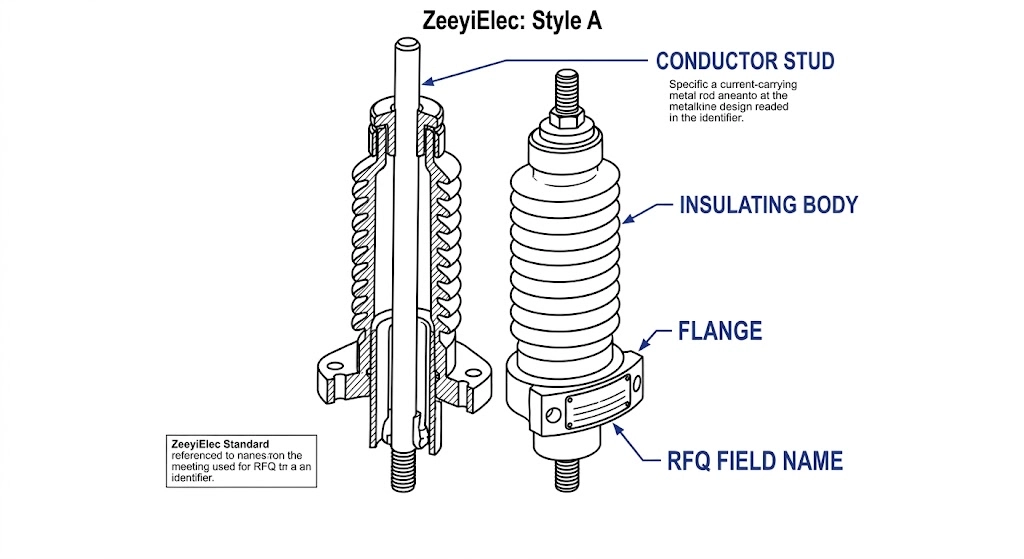
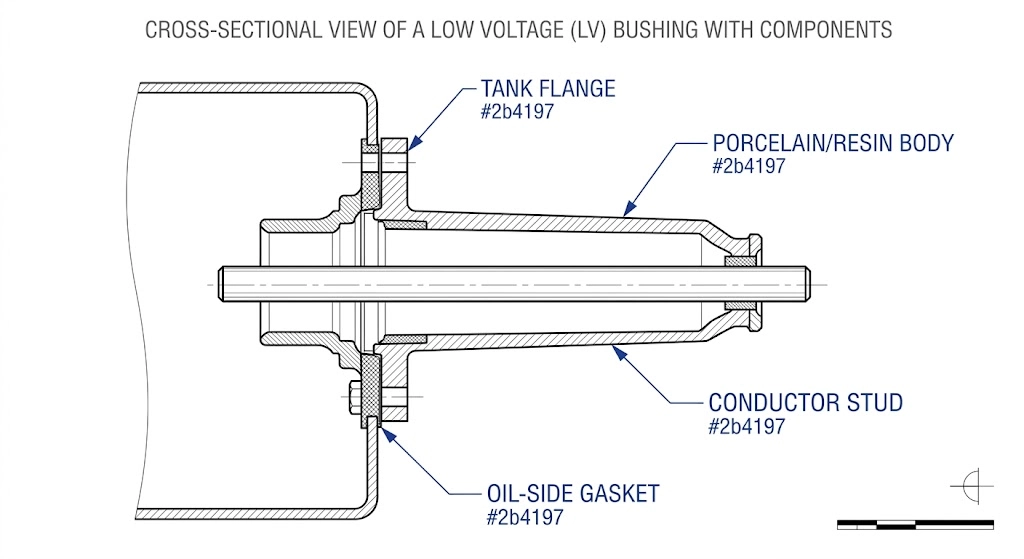
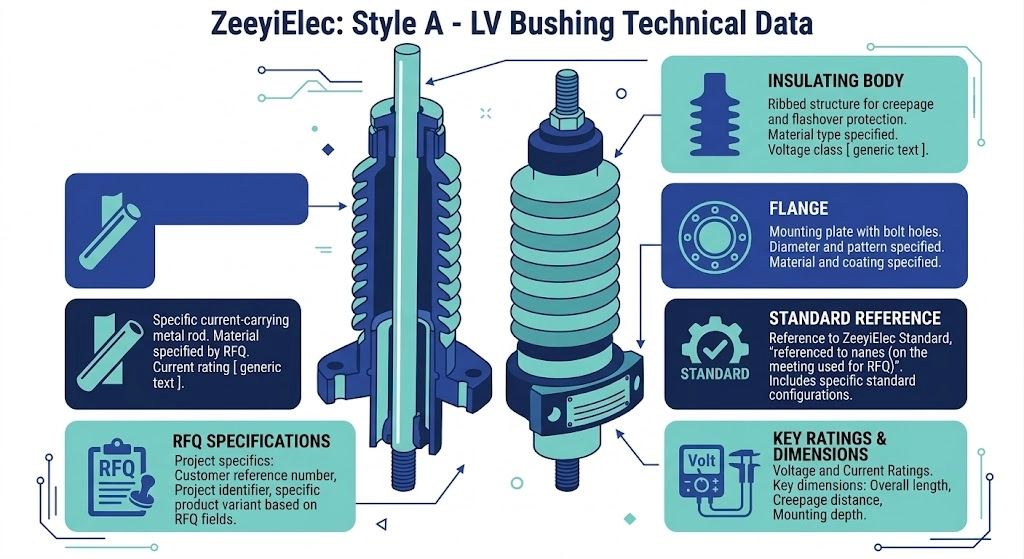
Each physical feature of the LV bushing — stud, body, gasket, flange — corresponds directly to a required RFQ field.
LV Bushing Types and Construction OEMs and EPCs Should Specify
Two construction families dominate LV bushing RFQs: porcelain-body bushings and cast resin (epoxy) bushings, with a smaller share of composite/silicone designs for coastal or heavy-pollution sites. In field deployments across 200+ transformer installations, we’ve found that buyers who don’t state the body material up front tend to receive porcelain quotes by default, since it remains the lower-cost baseline — which can be the wrong call in tropical or high-salinity environments.
Porcelain vs Resin: What to State in the RFQ
Porcelain bushings offer proven long-term dielectric stability and lower unit cost but are more fragile in transit and during EPC site handling. Resin-body bushings cost more per unit but tolerate rough handling better and are increasingly specified for EPC projects with long inland logistics chains. Neither is universally “better” — the RFQ should state the installation environment (coastal, industrial, high-altitude) so the supplier can recommend the appropriate creepage class rather than guessing.
For projects that also need to weigh LV against MV bushing selection on the same transformer design, our LV vs MV bushing selection guide walks through the voltage-class decision logic in more depth than this RFQ-focused guide covers.
[Expert Insight: Material Selection Risk]
Porcelain bushings can chip during EPC site unloading if pallet specs aren’t confirmed in the RFQ
Resin bushings tolerate humidity swings better but require confirmed UV-stabilization for outdoor tropical sites
Always state the ambient pollution level (light/medium/heavy/very heavy per IEC guidance) rather than leaving it to supplier assumption
Electrical and Mechanical Parameters to Specify in the RFQ
Beyond voltage and current, a technically complete LV bushing RFQ specifies dielectric withstand requirements and mechanical load ratings, since these determine both the internal insulation design and the flange/gasket selection.
Typical LV bushing RFQs from OEM and EPC buyers should include power-frequency withstand voltage, lightning impulse level (BIL) where applicable, and cantilever load rating. For a 1.1 kV class bushing, a realistic creepage distance target is 25 mm/kV under light pollution rising to 31 mm/kV under heavy pollution, and rated short-time current is commonly specified in the 20–40 kA range depending on the transformer’s fault-current design.
Parameters to Include Line-by-Line
Parameter
Why It Matters in the RFQ
Rated voltage (Um)
Sets insulation class and creepage requirement
Rated current
Determines conductor stud diameter and terminal rating
Creepage distance / pollution class
Prevents flashover under contamination
Mechanical (cantilever) load
Confirms bushing survives busbar/cable stress
Mounting flange dimensions
Avoids tank-hole mismatch on delivery
Ambient temperature range
Confirms gasket and seal material compatibility
Characteristics and test requirements for insulated bushings above 1,000 V are formalized in IEC 60137, and while most LV bushings in this segment fall near or below that threshold, EPC buyers sourcing bushings for the same transformer platform as MV components often ask suppliers to test both to a consistent standard for project documentation continuity. [VERIFY STANDARD: applicable IEEE C57 clause for outdoor apparatus bushing dimensions on North American EPC projects]
Six parameters — voltage, current, creepage, mechanical load, flange dimension, temperature range — an RFQ should state explicitly.
OEM vs EPC Buyer Requirements: What Differs in the RFQ
OEM transformer manufacturers and EPC contractors both buy LV bushings, but their RFQs carry different priorities, and suppliers who don’t distinguish the two often quote the wrong lead time or documentation package.
RFQ Priorities by Buyer Type
Criterion
OEM Buyer
EPC Buyer
Order pattern
Recurring, forecast-based, tied to production schedule
Project-based, tied to a fixed commissioning date
Documentation need
Type test reports, drawing approval before tooling
Routine test reports, third-party inspection (SGS/BV) certificates
Packaging requirement
Bulk packaging for factory line-feed
Export crating rated for multi-leg freight and site storage
Typical lead-time pressure
Moderate, planned against production runs
High, tied to substation energization date
Quantity pattern
Larger recurring volumes per SKU
Smaller one-off volumes across mixed SKUs
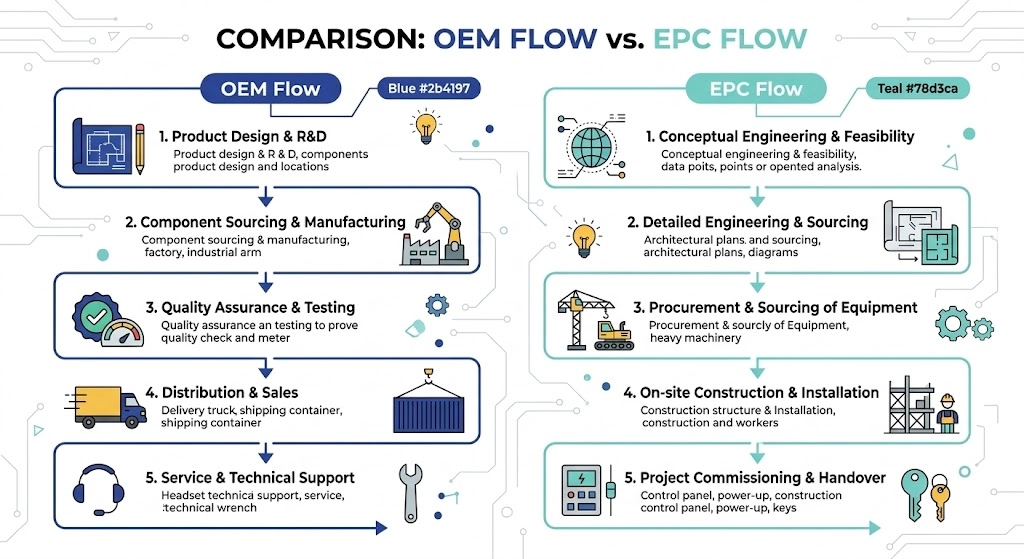
In commissioning work on distribution projects, we’ve consistently seen EPC RFQs stall when the buyer requests OEM-style bulk pricing without specifying the export packaging and third-party inspection requirements EPC contracts typically demand — the two buyer types need materially different RFQ templates, not the same form with different quantities.
OEM production sourcing and EPC project sourcing follow different documentation and packaging paths from RFQ to delivery.” Prompt: Flat infographic, two parallel horizontal flow colu
Common RFQ Mistakes That Delay Quotations
Missing or Ambiguous Fields
The most frequent delay we see is a voltage field written as “LV” or “low voltage” without a number. Suppliers cannot price a bushing without knowing whether “low voltage” means 0.72 kV, 1.1 kV, or 3.6 kV class, since insulation thickness and creepage requirements shift meaningfully across that range.
Undefined Mounting Interface
RFQs that omit the tank flange drawing or bushing-well compatibility force a round-trip clarification before any quote can be issued. Supplying a simple flange sketch or referencing an existing bushing-well design at RFQ stage typically cuts quotation turnaround by several business days.
No Stated Test or Inspection Requirement
EPC buyers in particular sometimes leave inspection requirements for the purchase-order stage rather than the RFQ stage, which can change pricing by a meaningful margin once third-party witness testing is added after quotation. Stating SGS, BV, or client-witnessed testing requirements at RFQ stage keeps the quoted price binding.
Documentation and Compliance to Request From Suppliers
A complete supplier response package should include a routine test report (dielectric withstand, tan δ where applicable), a dimensional drawing, and — for EPC projects — a certificate of origin and packing list template ready for customs clearance. Buyers sourcing LV bushings alongside cable terminations or joints for the same substation package can review our cable accessories range to consolidate documentation requests across both product families in a single RFQ cycle.
If you’re preparing an RFQ now, sending your voltage class, mounting style, and quantity to our engineering team gets you a technically complete quote — including test report samples — typically within one to two business days.
Field Considerations: Installation Environment and Testing Requirements
Pre-Energization Checks
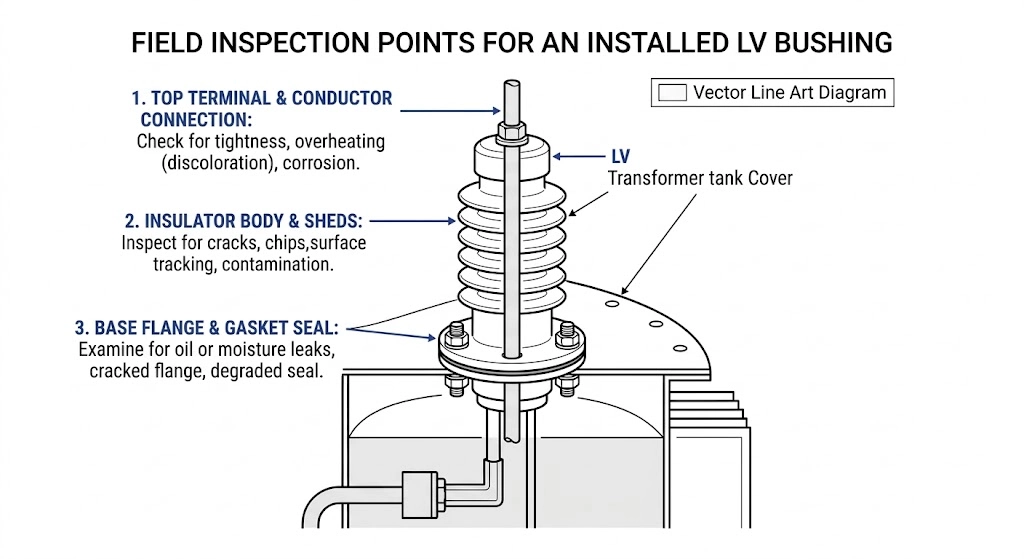
During pre-energization inspection across multiple distribution transformer commissioning projects, insulation resistance testing on newly installed LV bushings is a standard check before the transformer is placed in service, alongside a visual inspection for gasket seating and terminal torque. Under-torqued terminal connections are a recurring field finding and are typically traceable to the RFQ not specifying the terminal type clearly enough for the correct hardware to ship with the bushing.
Environmental Exposure
Coastal and heavy-industrial sites accelerate surface contamination on porcelain LV bushings, which is why the pollution severity class stated in the RFQ has downstream field consequences years after installation — a bushing under-specified for its environment shows tracking marks and reduced creepage margin well before its expected service life.
Insulation resistance testing, terminal torque check, and gasket inspection are standard pre-energization steps for installed LV bushings.
Frequently Asked Questions
What voltage range counts as “LV” for transformer bushings?
LV bushings generally cover ratings up to around 3.6 kV in distribution transformer applications, though some buyers use “LV” loosely for anything below the medium-voltage bushing range — stating the exact Um figure in the RFQ avoids this ambiguity entirely.
Can one RFQ cover both OEM production volumes and an EPC project order?
It’s possible but generally slower to quote, since the two buyer types typically need different documentation packages and packaging specs — separating them into two RFQs with buyer-type noted usually gets a faster, more accurate response.
How long does a complete LV bushing RFQ typically take to quote?
A technically complete RFQ with voltage, mounting, and quantity specified is usually quoted within one to three business days, while RFQs missing key fields can take a week or more due to clarification rounds.
Do LV bushings need type test certificates for every order?
Not for every order — type test certificates are usually provided once per design and referenced for subsequent orders, while routine test reports are typically issued per production batch or shipment.
What packaging should an EPC buyer request for overseas LV bushing shipments?
Export-rated crating designed for multi-leg freight handling and outdoor site storage is the general recommendation, with buyers in humid climates often requesting additional desiccant packaging for extended storage before installation.
Is a bushing-well interface always compatible across suppliers?
Not always — bushing-well dimensions can vary by manufacturer, so confirming the exact well interface drawing or an existing reference part number in the RFQ prevents a mismatch on delivery.
yoyo shi
Yoyo Shi writes for ZeeyiElec, focusing on medium-voltage accessories, transformer components, and cable accessory solutions. Her articles cover product applications, technical basics, and sourcing insights for global electrical industry buyers.





 English
 한국어
한국어 العربية
 Español
 हिन्दी
 தமிழ்
தமிழ் Deutsch (Sie)
 Français
 Português do Brasil
 Русский