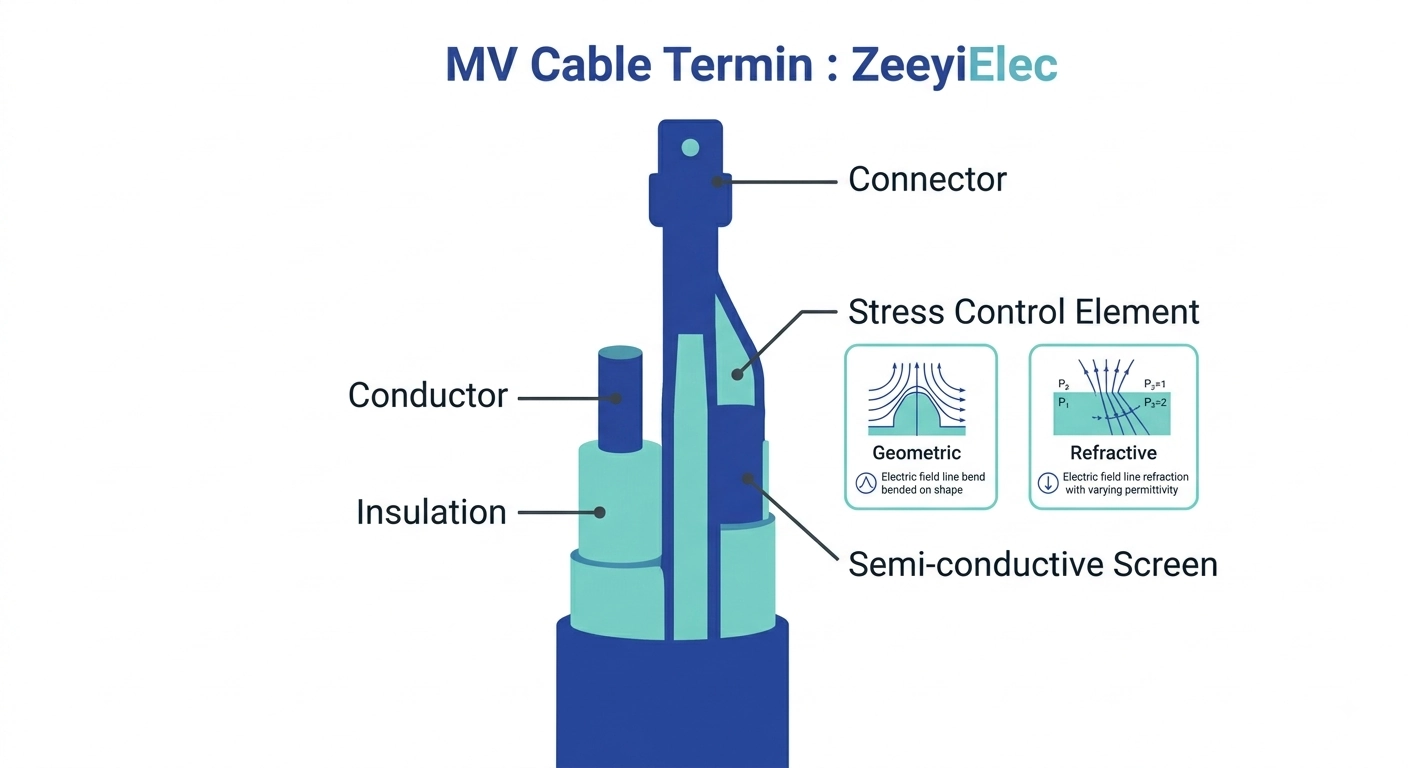
एक कोल्ड श्रिंक टर्मिनेशन उस बिंदु पर इन्सुलेशन की अखंडता बहाल करता है जहाँ पावर केबल समाप्त होती है, लेकिन इससे एक परत नीचे एक और कठिन इंजीनियरिंग समस्या होती है: केबल की इन्सुलेशन शील्ड रुकने पर उत्पन्न विद्युत क्षेत्र का प्रबंधन।.
तनाव नियंत्रण वह डिज़ाइन परत है — ज्यामितीय, क्षमतात्मक, या दोनों का संयोजन — जो इस क्षेत्र का प्रबंधन करती है ताकि यह आसपास की सामग्रियों की विद्युत-रोधी क्षमता के भीतर रहे, बजाय इसके कि यह एक बिंदु पर केंद्रित होकर इन्सुलेशन को भेद दे या सतही ट्रैकिंग शुरू कर दे।.
एक फैक्ट्री-एक्सट्रूडेड मध्यम-वोल्टेज केबल में तीन परतें एक साथ काम करती हैं: चालक, प्राथमिक इन्सुलेशन (आमतौर पर XLPE या EPR), और एक अर्ध-चालक इन्सुलेशन शील्ड जो इन्सुलेशन पर बंधी होती है और ग्राउंड से जुड़ी होती है। यह शील्ड चालक के चारों ओर विद्युत क्षेत्र को त्रिज्यात्मक रूप से सममित बनाए रखती है, ठीक उसी तरह जैसे एक कोएक्सियल केबल अपना क्षेत्र आंतरिक और बाहरी चालकों के बीच बनाए रखती है। जब तक शील्ड निरंतर बनी रहती है, क्षेत्र समान बना रहता है।.
एक अभियांत्रिकी विराम के रूप में कट-बैक बिंदु
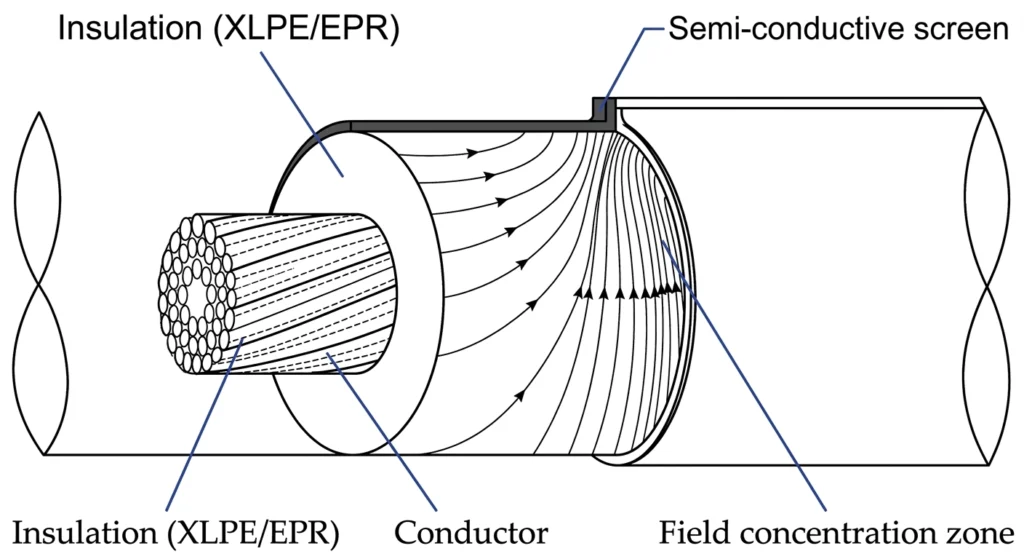
एक टर्मिनेशन के लिए कनेक्टर के लिए नंगे इन्सुलेशन को उजागर करने हेतु कुछ लंबाई तक उस शील्ड को हटाना आवश्यक होता है। जैसे ही शील्ड काटी जाती है, क्षेत्र की सममिति टूट जाती है। कट के ठीक किनारे पर, जो क्षेत्र रेखाएँ पहले चालक के चारों ओर समान रूप से फैली होती थीं, वे अब इन्सुलेशन के एक बहुत छोटे आयतन में संकुचित हो जाती हैं — यह तनाव-प्रबंधित बिंदु के बजाय एक तनाव-एकाग्रता बिंदु बन जाता है। 15 kV वर्ग के केबल पर, इस किनारे पर बिना प्रबंधित क्षेत्र का संकेंद्रण इन्सुलेशन की निरंतर सहन क्षमता से काफी अधिक हो सकता है, यही कारण है कि हर टर्मिनेशन डिज़ाइन — कोल्ड श्रिंक, हीट श्रिंक, या पुश-ऑन — इस कट पॉइंट के ठीक ऊपर एक तनाव-नियंत्रण तत्व बनाता है, बजाय इसे केवल एक साधारण यांत्रिक संक्रमण मानने के।.
इन्सुलेशन और सीलिंग के साथ तनाव नियंत्रण की भूमिका
तनाव नियंत्रण उस दो कार्यों से एक अलग कार्य है जिनके लिए टर्मिनेशन को आमतौर पर वर्णित किया जाता है — इन्सुलेट करना और सील करना। एक टर्मिनेशन नमी को पूरी तरह से सील कर सकता है और फिर भी यदि कट-बैक पॉइंट पर तनाव-नियंत्रण ज्यामिति केबल की इन्सुलेशन मोटाई या वोल्टेज वर्ग के लिए गलत हो, तो वह अपने पहले वर्ष के भीतर विद्युत रूप से विफल हो सकता है। इसीलिए कोल्ड श्रिंक किट को वोल्टेज वर्ग (आमतौर पर 8.7/15 kV या 26/35 kV की श्रेणियाँ) और कंडक्टर/इन्सुलेशन व्यास की श्रेणी के अनुसार निर्दिष्ट किया जाता है, न कि एकल सार्वभौमिक स्लीव के रूप में — किट में ढाली गई ज्यामिति को उन क्षेत्र की परिस्थितियों से मेल खाना चाहिए जिनका वह प्रबंधन करने के लिए बनी है।.
विशेषज्ञ की अंतर्दृष्टि
एक ऐसा टर्मिनेशन जो पूरी तरह से सील करता है, फिर भी विद्युत रूप से विफल हो सकता है — सीलिंग और तनाव नियंत्रण अलग-अलग समस्याओं का समाधान करते हैं।.
किट लेबल पर वोल्टेज वर्ग कोई औपचारिकता नहीं है; यह सीधे अंदर ढाली गई तनाव-नियंत्रण ज्यामिति से मेल खाता है।.
कभी भी सिर्फ इसलिए कि व्यास फिट बैठता है, एक वोल्टेज वर्ग के लिए रेटेड किट को दूसरे में प्रतिस्थापित न करें — व्यास का मेल फील्ड-ग्रेडिंग की पर्याप्तता को इंगित नहीं करता।.
केबल कट-बैक बिंदु पर विद्युत तनाव का भौतिकी
मध्यम-वोल्टेज केबल पर एक असंयमित अर्ध-चालक स्क्रीन कट-बैक बिंदु पर विद्युत क्षेत्र सांद्रता का क्रॉस-सेक्शनल दृश्य।.
अर्ध-चालक स्क्रीन के किनारे पर, विद्युत क्षेत्र अब त्रिज्यात्मक रूप से वितरित नहीं रहता — यह स्पर्शरेखीय और अत्यधिक विषम हो जाता है, और ठीक उसी बिंदु पर तीव्रता से चरम पर पहुँचता है जहाँ स्क्रीन समाप्त होती है। यह एक ज्यामितीय परिणाम है कि एक ग्राउंडेड चालक सतह को एक ऐसी इन्सुलेशन प्रणाली के ठीक बगल से हटा दिया गया है जो अभी भी पूर्ण फेज-टू-ग्राउंड वोल्टेज संभाले हुए है। यह क्षेत्र चालक से दूर जाते हुए वैसे धीरे-धीरे कमजोर नहीं होता जैसे एक अखंड स्क्रीन के नीचे होता है; इसके बजाय यह विच्छेद पर स्थानीय रूप से तीव्र हो जाता है, अक्सर कुछ ही दूरी पर अविकृत केबल इन्सुलेशन के नीचे मौजूद क्षेत्र की ताकत से कई गुना अधिक तक पहुँच जाता है।.
एक असंशोधित कट पॉइंट आंशिक निर्वहन क्यों आरंभ करता है
आंशिक निर्वहन — एक छोटा, स्थानीय विद्युत विघटन जो इन्सुलेशन को पूरी तरह से नहीं जोड़ता लेकिन प्रत्येक घटना के साथ सामग्री को क्षयित करता है — तब शुरू होता है जब स्क्रीन के किनारे पर स्थानीय क्षेत्र की तीव्रता आसपास के इन्सुलेशन या वायु/इन्सुलेशन इंटरफ़ेस के निर्वहन आरंभ थ्रेशोल्ड से अधिक हो जाती है। सामान्य सिस्टम वोल्टेज पर काम करने वाली एक विशिष्ट 15 kV श्रेणी की वितरण केबल में, एक असंयमित कट पॉइंट स्थानीय क्षेत्र की ताकत को उस सीमा में ले जा सकता है जहाँ आंशिक निर्वहन गतिविधि उन स्तरों पर शुरू होती है जो केबल के अखंड, शील्ड किए गए हिस्से के तहत कभी नहीं होतीं — यही मुख्य कारण है कि एमवी वोल्टेज श्रेणियों में तनाव नियंत्रण वैकल्पिक नहीं है। प्रत्येक निर्वहन घटना सामग्री की एक सूक्ष्म मात्रा को घिस देती है, और महीनों या वर्षों तक दोहराए जाने पर यह एक विद्युत वृक्ष (इलेक्ट्रिकल ट्री) का रूप ले लेती है जो अंततः फ्लैशओवर (झिलमिलाहट) पैदा करने के लिए पर्याप्त इन्सुलेशन की मोटाई को पार कर देती है।.
वोल्टेज वर्ग बढ़ने पर यह क्यों अधिक महत्वपूर्ण हो जाता है
वोल्टेज वर्ग और आवश्यक तनाव-नियंत्रण प्रदर्शन के बीच संबंध रैखिक नहीं होता। 35 kV सिस्टम पर टर्मिनेशन को केवल 8.7 kV सिस्टम की तुलना में “अधिक” ग्रेडिंग की आवश्यकता नहीं होती — तत्व की ज्यामिति और परमिटिविटी को विशेष रूप से उस उच्च परिचालन क्षेत्र के लिए इंजीनियर किया जाना चाहिए, क्योंकि वोल्टेज क्लास बढ़ने के साथ सामान्य सिस्टम वोल्टेज और डिस्चार्ज आरंभ वोल्टेज के बीच का अंतर संकीर्ण हो जाता है। यह ही भौतिक आधार है कि कोल्ड श्रिंक किट को वोल्टेज-क्लास-विशिष्ट उत्पादों के रूप में बेचा जाता है: 8.7/15 kV पर क्षेत्र एकाग्रता को पर्याप्त रूप से प्रबंधित करने वाली ज्यामिति 26/35 kV अनुप्रयोग के लिए अपर्याप्त होगी।.
ज्यामितीय बनाम अपवर्तनात्मक (धारितात्मक) तनाव नियंत्रण विधियाँ
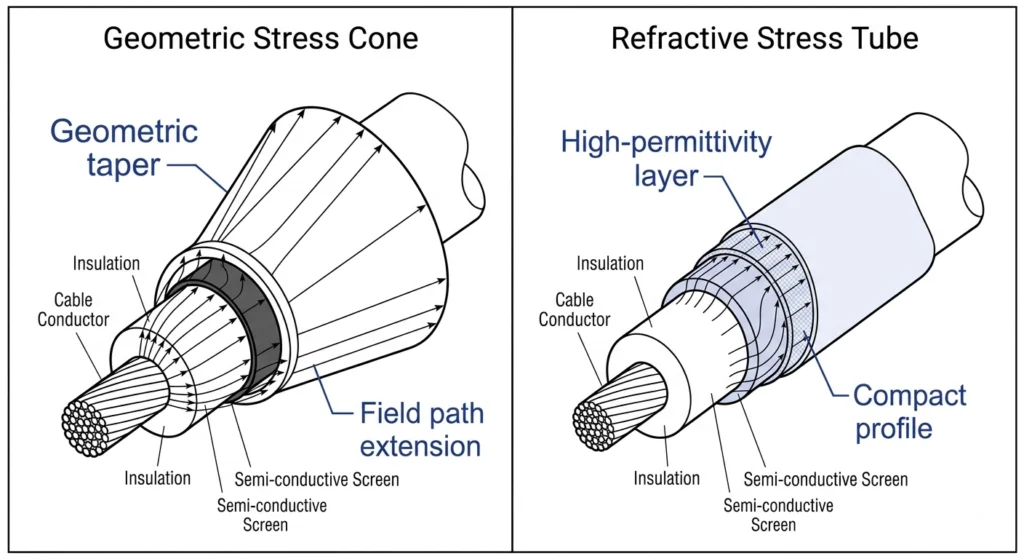
ज्यामितीय तनाव शंकु की संकीर्णता ज्यामिति और अपवर्तक उच्च-परमिटिविटी तनाव नली परतकरण की साइड-बाय-साइड कटअवे तुलना।.
दो इंजीनियरिंग दृष्टिकोण केबल कट-बैक बिंदु पर एक ही क्षेत्र-सघनता समस्या का समाधान करते हैं, और अधिकांश कोल्ड श्रिंक टर्मिनेशन वोल्टेज वर्ग और टर्मिनेशन डिज़ाइन के आधार पर इनमें से किसी एक या दोनों का संकर उपयोग करते हैं।.
ज्यामितीय तनाव शंकु: यांत्रिक क्षेत्र प्रसार
एक ज्यामितीय तनाव शंकु ग्राउंडेड स्क्रीन और उजागर इन्सुलेशन के बीच प्रभावी संक्रमण दूरी को भौतिक रूप से बढ़ाकर कार्य करता है। तीखे कट के बजाय, शंकु की मोल्डेड प्रोफ़ाइल एक धीरे-धीरे चौड़ी होती चालक सीमा बनाती है जो क्षेत्र को एक लंबी भौतिक दूरी पर फैलाती है, जिससे किसी भी एक बिंदु पर क्षेत्र की चरम तीव्रता कम हो जाती है। यह दृष्टिकोण पूरी तरह से आकार पर निर्भर करता है — ठंडे सिकुड़ने वाले शरीर में पहले से उपयोग किए जाने वाले आधार इलास्टोमर (आमतौर पर सिलिकॉन रबर या EPDM) के अलावा किसी विशेष डाइइलेक्ट्रिक गुण की आवश्यकता नहीं होती है। ज्यामितीय नियंत्रण 8.7/15 kV वर्ग की टर्मिनेशनों में आम है, जहाँ आवश्यक क्षेत्र-विस्तार दूरी एक व्यावहारिक शंकु की लंबाई के भीतर रहती है।.
अपवर्तनात्मक, या धारितात्मक, तनाव नियंत्रण इसके बजाय एक ऐसे यौगिक पर निर्भर करता है जिसकी पारगम्यता आसपास की केबल इन्सुलेशन से काफी अधिक होती है — अक्सर XLPE की अपेक्षित पारगम्यता से कई गुना अधिक। यह परमिटिविटी असंगति क्षेत्र को यांत्रिक रूप से नहीं बल्कि विद्युत रूप से पुनर्वितरित करती है: उच्च-परमिटिविटी सामग्री क्षेत्र रेखाओं को अपनी ओर खींचती है और अपनी लंबाई के साथ उन्हें अधिक धीरे-धीरे छोड़ती है, जिससे स्क्रीन के किनारे पर अन्यथा बनने वाला शिखर समतल हो जाता है। यह विधि एक अधिक कॉम्पैक्ट टर्मिनेशन प्रोफ़ाइल की अनुमति देती है, जो वोल्टेज क्लास बढ़ने और लंबे ज्यामितीय टेपर के लिए भौतिक स्थान को समायोजित करना कठिन होने पर महत्वपूर्ण हो जाता है।.
वोल्टेज-वर्ग मार्गदर्शन: कौन सी विधि लागू होती है
पैरामीटर
ज्यामितीय तनाव शंकु
अपवर्तनात्मक (धारितात्मक)
आम वोल्टेज वर्ग
8.7/15 kV
15 kV–35 kV और उससे ऊपर
यंत्रणा
भौतिक पथ लंबाई बढ़ना
परिवाहकता (εr) मेल न खाने की ग्रेडिंग
समाप्ति प्रोफ़ाइल
लंबी टेपर लंबाई
अधिक संकुचित अक्षीय लंबाई
स्थापना त्रुटि के प्रति संवेदनशीलता
मध्यम — शंकु स्थिति सहिष्णुता
उच्च — यौगिक प्लेसमेंट और रिक्तता-रहित संपर्क महत्वपूर्ण
मैदानी अभ्यास में, कुछ 26/35 kV किट दोनों तंत्रों को संयोजित करती हैं — एक छोटा ज्यामितीय संकुचन एक अपवर्तक परत के साथ — ताकि टर्मिनेशन की कुल लंबाई को एक व्यावहारिक सीमा के भीतर रखा जा सके, साथ ही उच्च वोल्टेज वर्ग द्वारा मांगी गई फील्ड-ग्रेडिंग प्रदर्शन की भी पूर्ति हो सके। कोई भी विधि स्वभावतः श्रेष्ठ नहीं है; सही विकल्प केबल की इन्सुलेशन मोटाई, उपलब्ध स्थापना स्थान, और उस विशिष्ट वोल्टेज वर्ग के लिए किट निर्माता द्वारा प्रमाणीकृत डिज़ाइन पर निर्भर करता है, न कि किसी सामान्य नियम पर।.
तनाव नियंत्रण विफल होने या गलत तरीके से लागू होने पर क्या होता है
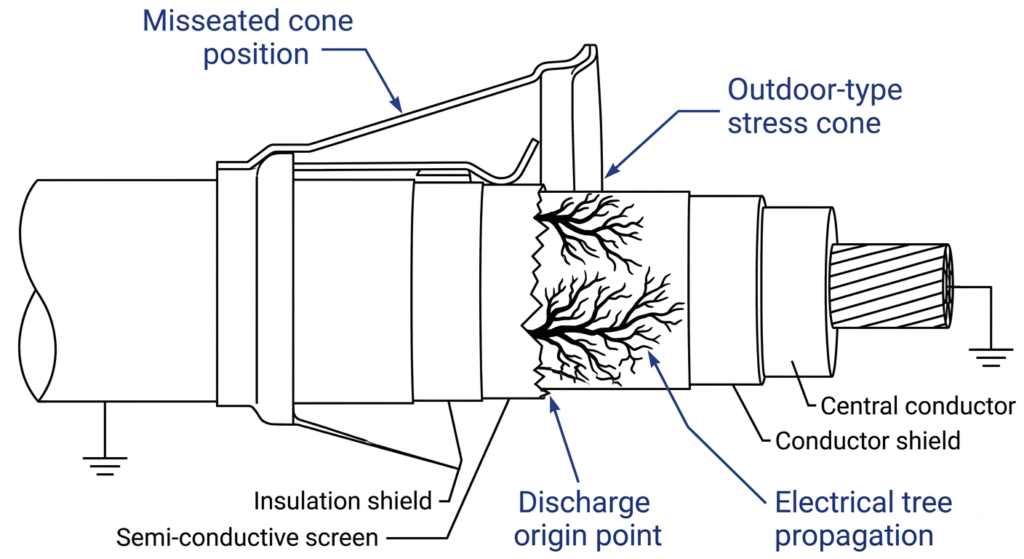
गलत बैठने वाले तनाव शंकु की स्थिति से उत्पन्न होने वाला प्रगतिशील विद्युत वृक्षण, जो समय के साथ स्क्रीन के किनारे से चालक की ओर बढ़ता है।.
तनाव नियंत्रण की विफलताएँ कमीशनिंग के समय शायद ही कभी खुद को प्रकट करती हैं। गलत तरीके से स्थापित शंकु या अधूरे रूप से बंधित अपवर्तक परत के साथ कोई टर्मिनेशन आमतौर पर प्रारंभिक हाई-पॉट या इन्सुलेशन प्रतिरोध परीक्षण पास कर लेता है, क्योंकि दोष एक स्थानीय क्षेत्र एकाग्रता है, न कि समग्र इन्सुलेशन समस्या — और समग्र-केंद्रित परीक्षण हमेशा इसे पकड़ने के लिए पर्याप्त संवेदनशील नहीं होते। यह विफलता बाद में, सामान्य परिचालन वोल्टेज के तहत विकसित होती है, और इसमें लगने वाला समय कुछ महीनों से लेकर कई वर्षों तक हो सकता है, जो इस बात पर निर्भर करता है कि स्थापना सही ज्यामिति से कितनी दूर थी।.
एक क्षेत्रीय मामला: विस्थापित तनाव शंकु की स्थिति निर्धारण
एक बार-बार दोहराए जाने वाले फील्ड पैटर्न में, 15 kV की कोल्ड श्रिंक टर्मिनेशन अपनी अपेक्षित सेवा अवधि से काफी पहले ही विफल हो जाती है — कभी-कभी पहले 12–18 महीनों के भीतर — और विफलता के बाद की जांच मूल बिंदु को उस स्ट्रेस कोन तक ट्रेस करती है जिसे स्क्रीन कट-बैक के ऊपर अपनी निर्दिष्ट स्थिति से कुछ मिलीमीटर कम पर स्थापित किया गया था। उस छोटी स्थिति संबंधी त्रुटि से स्क्रीन के किनारे का एक पतला सा हिस्सा कोन के फील्ड-ग्रेडिंग क्षेत्र के बाहर रह जाता है, जिससे वह सटीक एकाग्रता बिंदु फिर से बन जाता है जिसे कोन खत्म करने के लिए डिज़ाइन किया गया था। विफलता का संकेत — एक विशिष्ट बिंदु से उत्पन्न होने वाला कार्बोनाइज्ड ट्रैकिंग पथ, न कि फैली हुई इन्सुलेशन क्षरण — यह एक मजबूत नैदानिक संकेतक है कि मूल कारण केबल की मोटी इन्सुलेशन नहीं, बल्कि तनाव नियंत्रण ज्यामिति थी।.
प्रगतिशील विफलता पथ
गलत तरीके से लगाए गए तनाव नियंत्रण तत्व से पूर्ण विफलता तक का मार्ग सामान्यतः तीन चरणों से होकर गुजरता है। सबसे पहले, अंशतः निर्वहन गतिविधि अनियंत्रित संकेंद्रण बिंदु पर शुरू होती है, अक्सर ऐसे वोल्टेज स्तरों पर जहाँ सही ढंग से समाप्त किए गए केबल पर निर्वहन कहीं और नहीं पहुँचता। दूसरा, प्रत्येक निर्वहन चक्र इन्सुलेशन सामग्री की सूक्ष्म मात्रा को कार्बनीकृत करता है, जिससे एक दृश्यमान ट्रैकिंग पथ — जिसे आमतौर पर इलेक्ट्रिकल ट्रीइंग कहा जाता है — इन्सुलेशन की मोटाई में और गहरा हो जाता है। तीसरा, एक बार जब यह ट्री शेष इन्सुलेशन पथ के एक पर्याप्त हिस्से को जोड़ लेता है, तो कम हुई सहन क्षमता फ्लैशओवर का कारण बनती है, जो आमतौर पर स्थिर-स्थिति लोड के बजाय स्विचिंग या बिजली-प्रेरित सर्ज जैसे वोल्टेज अस्थिरता के दौरान होती है।.
लक्षण देर तक क्यों छिपे रहते हैं
क्योंकि इस पैमाने पर आंशिक निर्वहन से कोई दृश्यमान बाहरी संकेत नहीं मिलता और रिसाव धारा में केवल एक मामूली, मुश्किल से पता लगने वाला परिवर्तन होता है, इसलिए फील्ड क्रू और संपत्ति मालिकों को आमतौर पर विफलता से पहले कोई चेतावनी नहीं मिलती, जब तक कि साइट पर निरंतर आंशिक निर्वहन निगरानी व्यवस्था लागू न हो — जो बड़े सबस्टेशनों के बाहर वितरण-स्तरीय संपत्तियों पर असामान्य है। यह स्थापना के समय तनाव नियंत्रण स्थिति को सही ढंग से निर्धारित करने का व्यावहारिक तर्क है, बजाय इसके कि बाद में होने वाले पता लगाने पर निर्भर रहा जाए।.
मैदानी स्थापना की वास्तविकताएँ: तनाव नियंत्रण की जाँच और पुष्टि
कोल्ड श्रिंक तनाव नियंत्रण ठीक वैसे ही काम करता है जैसे इसे डिज़ाइन किया गया है, केवल तभी जब स्थापित ज्यामिति उस आकार से मेल खाती हो जिसे निर्माता ने प्रकार परीक्षण के दौरान सत्यापित किया था — और यही कारण है कि केबल तैयारी के आयाम और शंकु की स्थिति वे दो चर हैं जो सबसे सीधे यह निर्धारित करते हैं कि कोई टर्मिनेशन अपनी नियोजित 20–30 वर्ष की सेवा अवधि तक टिक पाएगी या नहीं।.
कोन की स्थिति को प्रभावित करने वाली केबल तैयारी सहनशीलताएँ
प्रत्येक कोल्ड श्रिंक किट में एक केबल तैयारी आयाम शीट होती है: बाहरी आवरण को कितनी दूरी तक उतारना है, अर्ध-चालक स्क्रीन को कहाँ काटना है, और उस कटे हुए किनारे को कितनी दूरी तक बेवल या टेपर करना है। ये आयाम मनमाने नहीं होते — स्ट्रेस कोन या अपवर्तक ट्यूब को स्क्रीन कट से एक विशिष्ट दूरी पर बैठने के लिए मोल्ड किया जाता है, और 5–10 मिमी की तैयारी त्रुटि भी कोन को उसके डिज़ाइन किए गए स्थान से उस क्षेत्र के संकेंद्रण बिंदु के सापेक्ष हटा सकती है, जिसे यह प्रबंधित करने के लिए बनाया गया है। मैदानी कार्य में, सबसे आम तैयारी त्रुटि स्क्रीन को कनेक्टर के बहुत करीब काटना है, जिससे कोन को सही ढंग से बैठने के लिए पर्याप्त खुला इन्सुलेशन नहीं बचता है और इंस्टॉलरों को ऐसे तरीकों से समायोजन करने के लिए मजबूर होना पड़ता है जिनके लिए किट को डिज़ाइन नहीं किया गया था।.
कोर हटाने से पहले दृश्य और आयामी जांच
हटाने योग्य कोर को खोलने और सिलिकॉन बॉडी को केबल पर ढहने देने से पहले, इंस्टॉलर कोन की स्थिति की जांच निर्माता द्वारा चिह्नित संदर्भ रेखाओं के खिलाफ करते हैं — अधिकांश कोल्ड श्रिंक किट सीधे केबल की तैयारी पर संरेखण चिह्न प्रिंट करती हैं या इस उद्देश्य के लिए एक अलग मार्किंग टूल प्रदान करती हैं। इस चरण में यदि शंकु अपने संदर्भ चिह्न से थोड़ा भी आगे या पीछे स्थित हो, तो उसे अभी भी ठीक किया जा सकता है; एक बार कोर हटा दिया जाता है और बॉडी अपनी लोचदार स्मृति के तहत ढह जाती है, तो किट को काटकर हटाए बिना और नई किट के साथ फिर से शुरू किए बिना पुनः स्थिति में लाना आम तौर पर संभव नहीं होता।.
सामान्य क्रू-स्तर की गलतियाँ और QC में वे कैसे पकड़ी जाती हैं
त्रुटि
परिणाम
QC पता लगाने का बिंदु
स्क्रीन कनेक्टर के बहुत करीब से काटी गई
कोन सीटिंग के लिए पर्याप्त जगह नहीं
स्थापना-पूर्व आयामी जाँच
संरेखण की पुष्टि से पहले कोर हटाया गया
कोन गलत स्थिति में अटका हुआ
विद्युत प्रवाह शुरू करने से पहले दृश्य निरीक्षण
दूषित या खरोंची हुई इन्सुलेशन सतह
तनाव नियंत्रण क्षेत्र के अंतर्गत रिक्ति निर्माण
तैयारी के दौरान सतही निरीक्षण
गलत किट वोल्टेज वर्ग चुना गया
अपरिमाणित क्षेत्र-ग्रेडिंग ज्यामिति
नेमप्लेट-से-किट क्रॉस-चेक
विशेषज्ञ की अंतर्दृष्टि
संरेखण चिह्न एक कारण से होते हैं — कोर हटाने से पहले, बाद में नहीं, इनके आधार पर शंकु की स्थिति की पुष्टि करें।.
एक बार जब सिलिकॉन बॉडी ढह जाती है, तो उसे फिर से सही जगह पर रखना संभव नहीं होता; एकमात्र समाधान एक नया किट है।.
किसी विशिष्ट किट ब्रांड की मार्किंग कन्वेंशन्स से अपरिचित क्रू में स्थितिकरण त्रुटियों का अनुपात असामान्य रूप से अधिक होता है — ब्रांड की परिचितता सामान्य कौशल जितनी ही महत्वपूर्ण है।.
तनाव नियंत्रण डिज़ाइन के लिए मानक और प्राधिकरण संदर्भ
कोल्ड श्रिंक तनाव नियंत्रण डिज़ाइन केवल क्षेत्रीय अनुभव से ही सत्यापित नहीं होता — किट निर्माता किसी उत्पाद परिवार को मध्यम-वोल्टेज सेवा के लिए जारी करने से पहले अंतरराष्ट्रीय स्तर पर मान्यता प्राप्त टाइप-टेस्ट प्रोटोकॉल के तहत प्रदर्शन करते हैं, और टर्मिनेशन की खरीद करने वाली खरीद टीमें इन दस्तावेज़ों को देखने की उम्मीद रखनी चाहिए, बजाय इसके कि वे क्षेत्रीय सेवा दावों को बिना जांच-परख के स्वीकार कर लें।.
समाप्ति प्रदर्शन को नियंत्रित करने वाला मानक ढांचा
IEC 60502-4, 1 kV से 30 kV तक रेटेड पावर केबलों पर उपयोग किए जाने वाले एक्सेसरीज़ के लिए परीक्षण विधियों और आवश्यकताओं को नियंत्रित करता है, और यह ठंडे सिकुड़न समाप्ति प्रकार परीक्षण के लिए सबसे अधिक संदर्भित मानक है, जो पूर्ण असेंबली के आंशिक निर्वहन, आवेग प्रतिरोध, और तापीय चक्रण प्रदर्शन को कवर करता है — जिसमें इसका तनाव नियंत्रण तत्व भी शामिल है — बजाय इसके कि तनाव नियंत्रण का पृथक रूप से परीक्षण किया जाए। उच्च वोल्टेज वर्गों तक विस्तारित होने वाली टर्मिनेशन के लिए, IEC 60840 30 kV से ऊपर और 150 kV तक रेटेड केबलों पर एक्सेसरीज़ को कवर करता है, जिसमें अनुरूप रूप से अधिक मांग वाले इम्पल्स और आंशिक निर्वहन स्वीकृति मानदंड होते हैं।.
वास्तव में किस प्रकार का परीक्षण सत्यापित करता है
एक प्रकार परीक्षण यह पुष्टि नहीं करता कि प्रत्येक उत्पादन इकाई समान रूप से कार्य करेगी — यह भूमिका शिपमेंट से पहले उत्पादन के 100% पर किए जाने वाले नियमित परीक्षण की होती है। इसके बजाय, प्रकार परीक्षण स्वयं तनाव नियंत्रण ज्यामिति को मान्य करता है: एक नमूना टर्मिनेशन, जिसे उत्पादन में निर्दिष्ट सटीक आयामों और सामग्रियों के अनुसार बनाया गया है, को उच्च वोल्टेज (आमतौर पर PD स्क्रीनिंग के लिए रेटेड वोल्टेज का 1.5–2.0 गुना) के तहत आंशिक निर्वहन मापन के अधीन किया जाता है, जिसके बाद केबल के मूल आवेग इन्सुलेशन स्तर के अनुरूप स्तरों पर आवेग सहनशीलता परीक्षण किया जाता है (BIL). एक ऐसा डिज़ाइन जो इन परीक्षणों में उत्तीर्ण होता है, यह प्रमाणित करता है कि इसकी फील्ड-ग्रेडिंग ज्यामिति सामान्य सेवा वोल्टेज से भी अधिक गंभीर परीक्षण स्थितियों के तहत निर्वहन गतिविधि को लागू सीमा से नीचे रखती है।.
यह खरीदारों के लिए क्यों मायने रखता है, सिर्फ इंजीनियरों के लिए नहीं
ठंडी सिकुड़न आपूर्तिकर्ताओं का मूल्यांकन करने वाली खरीद टीमें ऑर्डर किए जा रहे विशिष्ट वोल्टेज वर्ग और केबल आकार के लिए प्रकार परीक्षण प्रमाणपत्र का उचित रूप से अनुरोध कर सकती हैं, क्योंकि एक वोल्टेज वर्ग या कंडक्टर रेंज का प्रमाणपत्र स्वचालित रूप से दूसरे पर लागू नहीं होता — ज्यामिति वोल्टेज-वर्ग-विशिष्ट होती है, जैसा कि इस गाइड में पहले बताया गया है। खरीदार संदर्भित कर सकते हैं आईईसी 60502-4 केबल एक्सेसरीज़ परीक्षण मानक विशिष्ट परीक्षण आवश्यकताओं के लिए सीधे, जो एक आपूर्तिकर्ता का प्रमाणपत्र प्रदर्शित करना चाहिए।.
कोल्ड श्रिंक टर्मिनेशन के बारे में ZeeyiElec की इंजीनियरिंग टीम से बात करें
तनाव नियंत्रण ज्यामिति उन विवरणों में से एक है जो 20 से अधिक वर्षों तक विश्वसनीय रूप से काम करने वाले टर्मिनेशन को उसके पहले सेवा चक्र में ही विफल हो जाने वाले टर्मिनेशन से अलग करती है — और इसे किसी सामान्य कैटलॉग मिलान पर छोड़ना उचित नहीं है। यदि आप निर्दिष्ट कर रहे हैं कोल्ड श्रिंक केबल सहायक उपकरण एक आगामी वितरण परियोजना के लिए, ज़ीईइलेक्ट की तकनीकी टीम आपके ऑर्डर देने से पहले, आपके केबल की इन्सुलेशन मोटाई और वोल्टेज क्लास के आधार पर सही स्ट्रेस कंट्रोल प्रकार और किट के आकार की पुष्टि कर सकती है।.
उन परियोजनाओं के लिए जो अभी भी व्यापक रूप से समाप्ति तकनीक पर विचार कर रही हैं, हमारी केबल एक्सेसरीज़ चयन गाइड वोल्टेज वर्गों और स्थापना परिवेशों में पूरे निर्णय ढांचे की समीक्षा करता है, और हमारी तुलना कोल्ड श्रिंक बनाम हीट श्रिंक तकनीकें यह बताता है कि दोनों के बीच तनाव नियंत्रण संबंधी विचार कैसे भिन्न होते हैं।.
एक पूरे में स्रोतिकरण ट्रांसफॉर्मर सहायक उपकरण या केबल सहायक उपकरण मल्टी-साइट रोलआउट के लिए पैकेज? अपनी केबल विनिर्देश, वोल्टेज वर्ग और साइट की स्थितियाँ साझा करें, और हम तकनीकी प्रतिक्रिया के साथ एक कोटेशन प्रदान करेंगे, साथ ही आपके आवश्यक विशिष्ट वोल्टेज वर्ग के लिए परीक्षण दस्तावेज़ अनुरोध पर उपलब्ध होंगे।.
स्ट्रेस कंट्रोल एक अभियंत्रित परत है — ज्यामितीय या क्षमतात्मक — जो उस बिंदु पर संकेंद्रित विद्युत क्षेत्र को फैलाती या समतल करती है जहाँ केबल की इन्सुलेशन शील्ड पीछे हटा दी गई होती है, और इस इंटरफ़ेस पर स्थानीय विद्युत-आइसोलेशन भंग को रोकती है।.
अर्ध-चालक स्क्रीन को हटाने से समस्या क्यों उत्पन्न होती है?
स्क्रीन को काटने से ग्राउंड की गई और अनग्राउंड की गई सतहों के बीच एक तीव्र असंततता उत्पन्न होती है, जो उस किनारे पर विद्युत क्षेत्र को केबल के सामान्य परिचालन तनाव से कहीं अधिक स्तर पर केंद्रित कर देती है, विशेष रूप से 15 kV–35 kV वर्ग के मध्यम वोल्टेज (MV) प्रणालियों में।.
ज्यामितीय और अपवर्तनात्मक तनाव नियंत्रण में क्या अंतर है?
ज्यामितीय तनाव नियंत्रण एक आकारित इलास्टोमेरिक शंकु का उपयोग करके क्षेत्र को एक लंबी दूरी पर भौतिक रूप से फैलाता है, जबकि अपवर्तनात्मक (कैपेसिटिव) नियंत्रण एक उच्च-परमिटिविटी यौगिक का उपयोग करके क्षेत्र को विद्युत रूप से पुनर्वितरित करता है; यह विकल्प सामान्यतः वोल्टेज वर्ग और टर्मिनेशन प्रकार पर निर्भर करता है।.
क्या उच्च वोल्टेज पर तनाव नियंत्रण के बिना टर्मिनेशन काम कर सकता है?
लगभग 1 kV तक के निम्न-वोल्टेज टर्मिनेशन्स पर तनाव नियंत्रण आमतौर पर अनावश्यक होता है, लेकिन कुछ kV से ऊपर के मध्य-वोल्टेज प्रणालियों में इसे छोड़ देने पर आमतौर पर तीव्र आंशिक निर्वहन गतिविधि और प्रारंभिक जीवनकाल में विफलता होती है।.
फील्ड क्रू कैसे सत्यापित करते हैं कि स्ट्रेस कंट्रोल सही ढंग से स्थापित है?
कर्मचारी आमतौर पर कोन या ट्यूब की स्थिति का सत्यापन निर्माता के केबल-तैयारी आयामों के अनुसार करते हैं और टर्मिनेशन बंद करने से पहले स्क्रीन कट-बैक क्षेत्र में पूर्ण, बिना रिक्तियों वाला संपर्क होने की दृश्य जांच करते हैं।.
तनाव नियंत्रण विफलता के शुरुआती चेतावनी संकेत क्या हैं?
प्रारंभिक संकेत शायद ही कभी बाहरी रूप से दिखाई देते हैं; विफलताएँ आमतौर पर आंशिक निर्वहन के रूप में सामने आती हैं, जिसे निदान परीक्षण के माध्यम से पता लगाया जा सकता है, या बाद में विफलता के बाद के निरीक्षण के दौरान पाए जाने वाले ट्रैकिंग निशान और स्थानीय गर्मी के रूप में।.
क्या केबल इन्सुलेशन प्रकारों के बीच तनाव नियंत्रण प्रदर्शन भिन्न होता है?
हाँ — XLPE और EPR इन्सुलेशन की विद्युत-आइसोलेशन गुणधर्म भिन्न होती हैं, इसलिए एक इन्सुलेशन प्रकार के लिए मान्य तनाव नियंत्रण तत्व को दूसरे प्रकार के लिए स्वचालित रूप से उपयुक्त नहीं माना जा सकता जब तक निर्माता उस विशिष्ट संयोजन के लिए अनुकूलता की पुष्टि न कर दे।.
योयो शी
योयो शी ZeeyiElec के लिए लिखती हैं, जहाँ उनका ध्यान मध्यम-वोल्टेज सहायक उपकरणों, ट्रांसफॉर्मर घटकों और केबल सहायक समाधानों पर केंद्रित है। उनके लेख उत्पाद अनुप्रयोगों, तकनीकी मूल बातों और वैश्विक विद्युत उद्योग के खरीदारों के लिए आपूर्ति संबंधी अंतर्दृष्टि को कवर करते हैं।.





 English
 한국어
한국어 العربية
 Español
 हिन्दी
 தமிழ்
தமிழ் Deutsch (Sie)
 Français
 Português do Brasil
 Русский