A brass transformer drain valve described as forged needs a traceable material designation, a documented forging route and an accepted finished-body configuration. The forging claim concerns how the body was made; it does not, by itself, establish alloy identity, machining conformity, sealing performance or approval for a transformer duty.
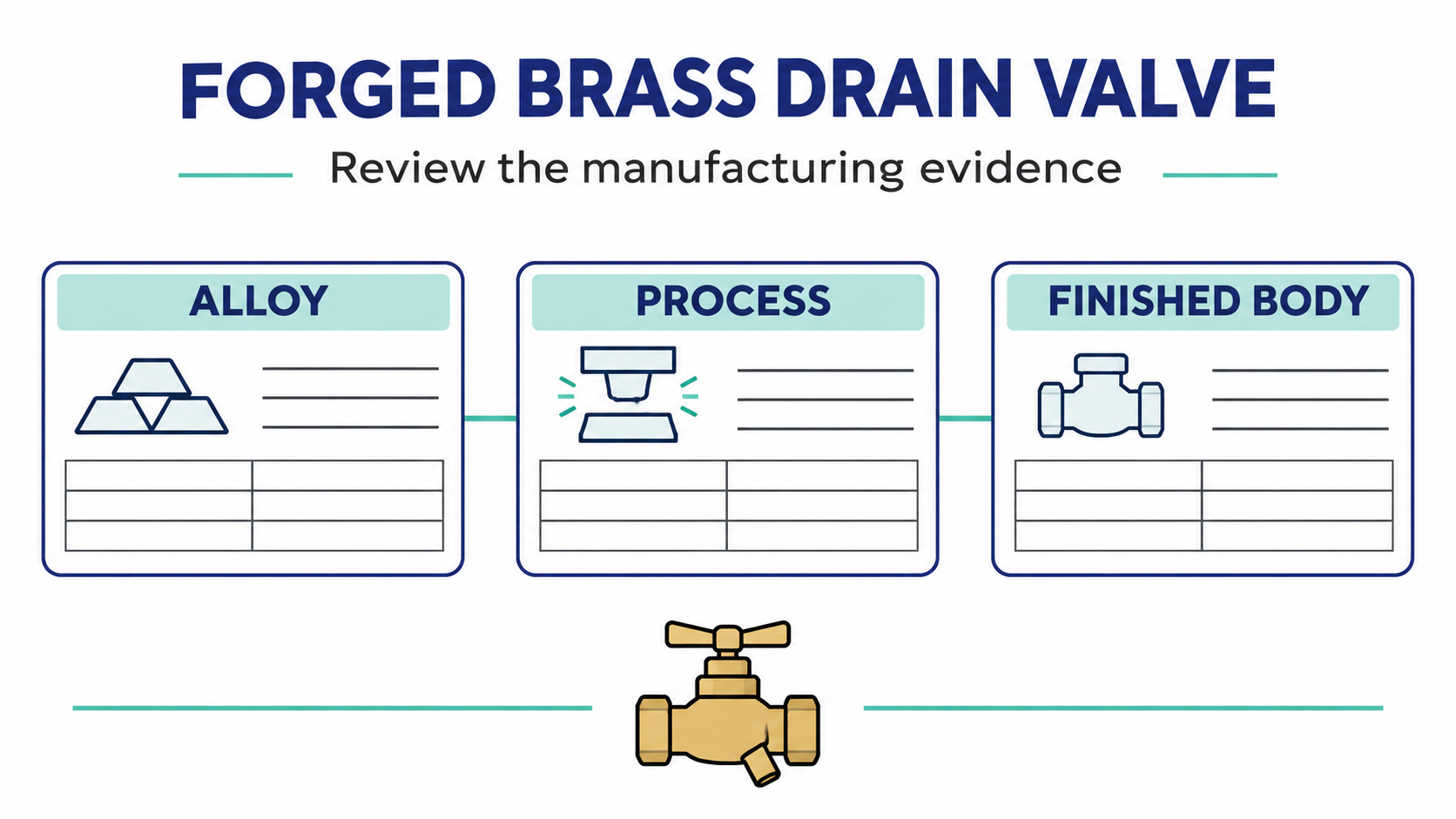
ALLOYIdentify the material.
PROCESSTrace the claimed route.
FINISHED BODYReview the supplied geometry.
This guide examines the manufacturing evidence behind a forged-body offer. It is intended for engineers, purchasing teams and quality reviewers comparing an offered body with an agreed requirement. General comparisons between steel, stainless steel and copper alloys belong to a broader material review. Here, the useful question is narrower: can the supplied body be connected to the claimed manufacturing route and the accepted finished drawing?
Define the forging claim before reviewing the evidence
Keep alloy, process and condition separate
For a brass transformer drain valve, record the specified alloy designation, applicable product specification, manufacturing route and delivered condition separately. Brass is a copper-alloy family; forging is a forming route. Neither term supplies the other missing information. A body described only as heavy-duty forged brass leaves several purchasing requirements unresolved.
அதிகாரப்பூர்வ பொது வரம்பு ASTM B283/B283M-24 concerns copper and copper-alloy die forgings produced by hot pressing. It includes multiple alloy designations, including C37700 forging brass. This is a product-form specification, not an automatic approval of a complete transformer valve. Confirm the contractually applicable specification and edition rather than assuming that every copper-alloy forging is interchangeable.
Make the claim specific to the body
Identify which component is claimed to be forged. The body, bonnet, handwheel, closure, fittings and other supplied parts need not share one manufacturing route. Use a component reference or drawing item to define the claim. A general description for the assembly should not silently become a statement about every metal part in it.
Trace the body through the manufacturing stages
Connect material and production references
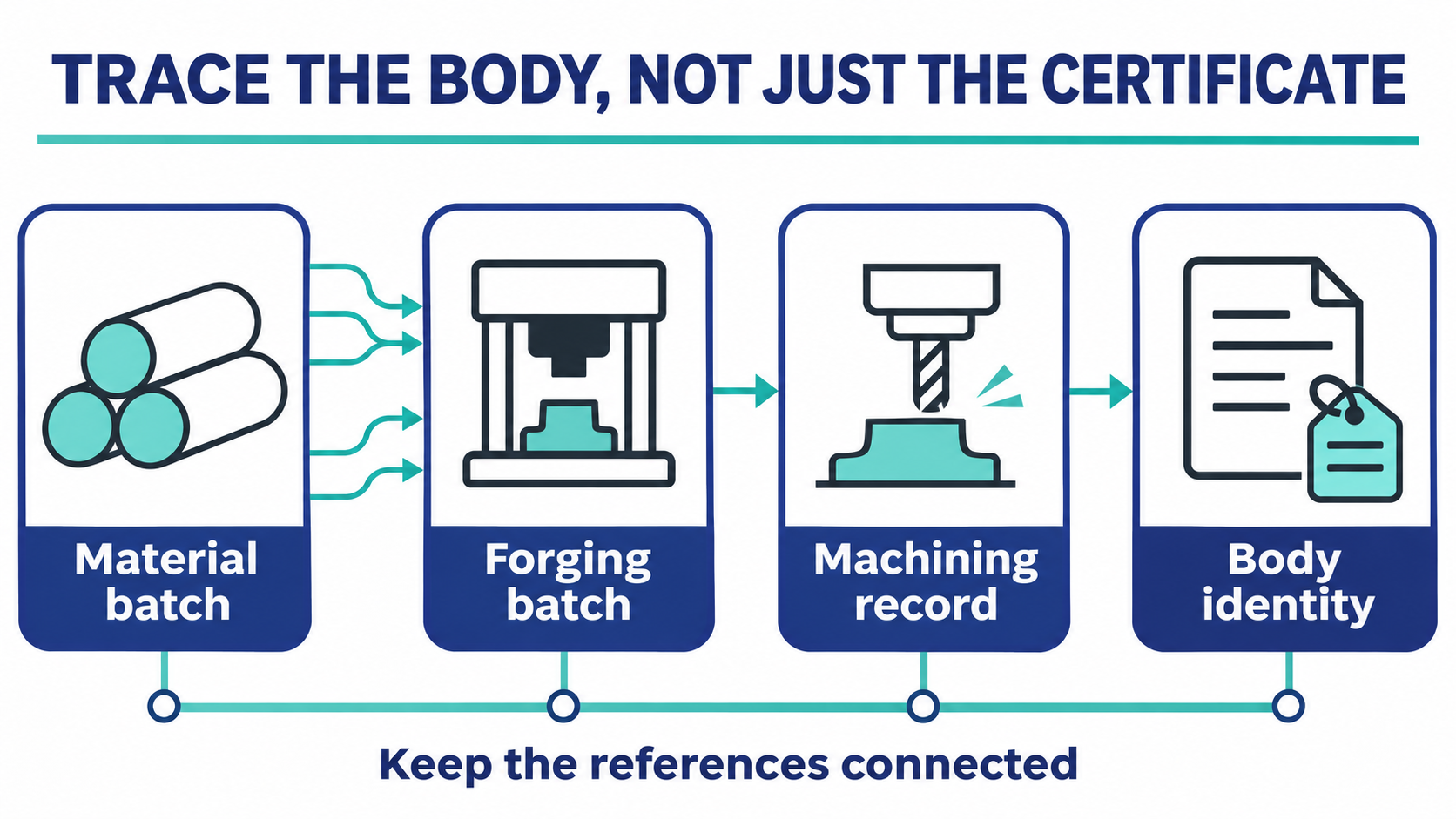
Traceability for a brass transformer drain valve should connect the incoming material reference, the relevant forging production record, subsequent machining and the supplied body identity. The exact record names depend on the manufacturer’s system. Review the relationship between records rather than demanding a familiar document title that does not identify the offered parts.
A material heat or batch reference can continue into several production batches. Conversely, a delivered group may contain bodies from different material or manufacturing batches. Ask how those relationships are preserved, particularly after parts are separated for machining, inspection or outside processing. One certificate attached to a delivery does not explain the mapping unless the supplied quantities and identifiers are connected to it.
Preserve identity when visible marks change
Machining can remove surfaces that originally carried a mark. Establish how identity is maintained before and after that operation through the agreed identification system. This may involve controlled batch segregation and linked records; it does not necessarily require a permanent mark on every surface. Any marking method must remain compatible with the finished drawing and applicable requirements.
Conceptual traceability chain. Record names and batch relationships must be confirmed for the actual supply; this is not a photograph or record of a specific factory process.
Ask what each inspection result actually demonstrates
Separate observation from manufacturing history
Color, weight, a smooth finish or a visible line on a body cannot independently establish its alloy and manufacturing history. A surface line may require explanation, while the absence of a visible forging line does not prove that the body was made by another route. Finishing and machining can change what remains visible on the delivered component.
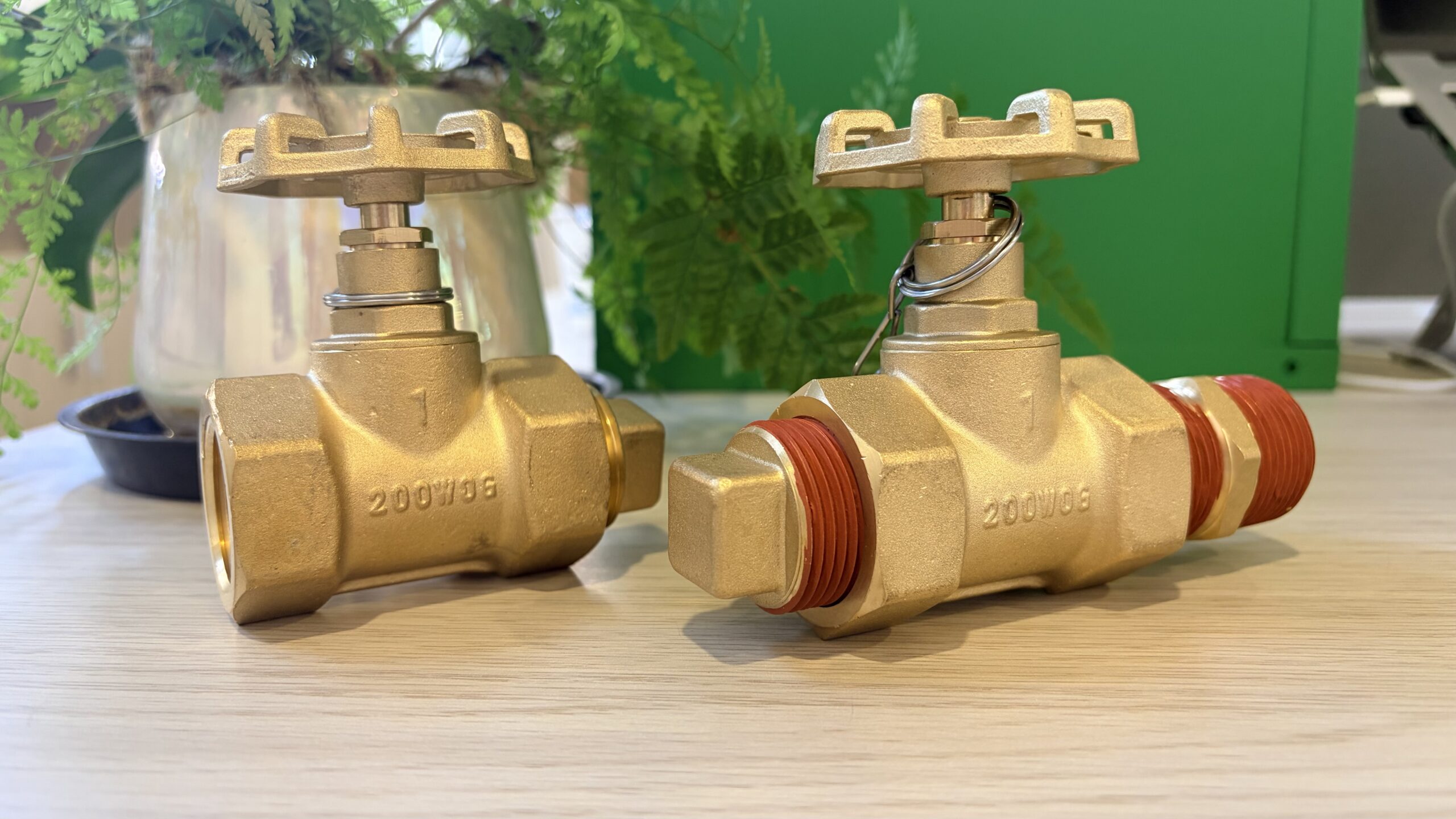
The original photograph below is useful for identifying the photographed bodies and their exterior features. It is not evidence of alloy composition, internal soundness or the production route. Keep that distinction when using product photographs in an enquiry or receiving record.
Original local product photograph, without AI redrawing. Visible body shapes and markings support identification only; no alloy grade, forging route or pressure rating is verified from the photograph.
Match the examination to the unanswered question
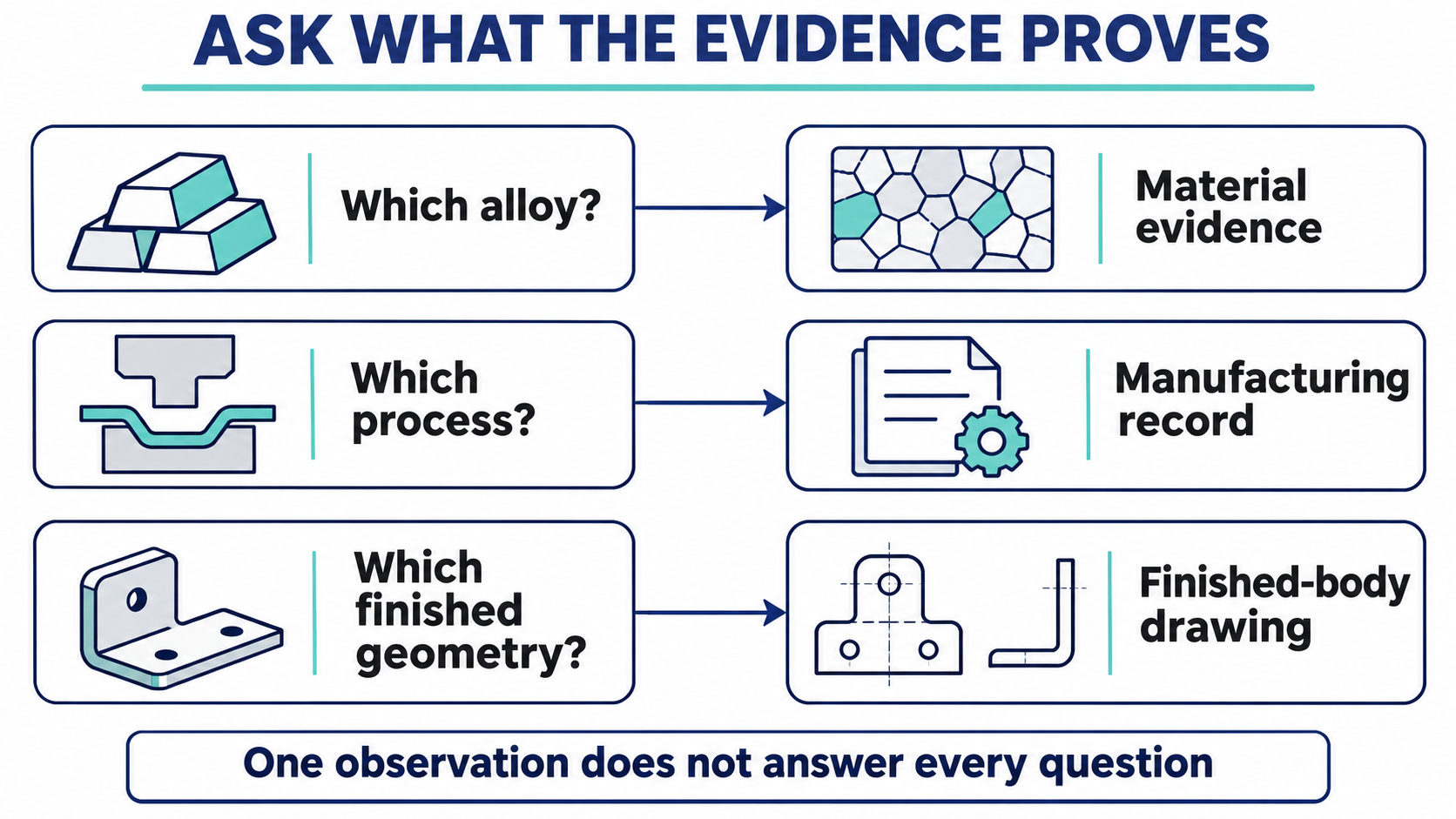
For brass transformer drain valve procurement, distinguish material identification, manufacturing-route evidence, dimensional examination and assembly testing. A chemical measurement may address composition within its method’s capability; it does not establish that the part was forged. A hardness reading similarly needs a defined requirement, method and interpretation rather than serving as a universal shortcut to material acceptance.
Agree the inspection plan, applicable methods, sampling basis and acceptance criteria with the responsible technical authority. Do not prescribe the same non-destructive examination for every forging or assume that an available test resolves every uncertainty. The plan should explain what is being checked and which body or batch the result represents.
Conceptual evidence map. Material identification, manufacturing history and finished geometry are separate questions; the diagram does not prescribe an inspection method or acceptance limit.
Review the machined body against the finished drawing
Distinguish the forging blank from the finished part
A forging blank drawing describes an intermediate form. The finished body drawing defines the geometry to be supplied after machining and any other specified operations. Keep their drawing numbers and revisions distinct. An acceptable blank does not establish that subsequent openings, threads, sealing surfaces or assembly features meet the finished requirements.
The brass transformer drain valve drawing should identify the relevant finished interfaces and features. Review the stated thread designation, mating arrangement, closure or bonnet interface and other configuration-specific details against that drawing. Do not derive a finished dimension, wall requirement or sealing allowance from an exterior photograph or a nominal connection label.
Link findings to the affected feature
Record a dimensional or surface finding against the actual feature, applicable drawing reference and identified part or batch. Describing a body as machined correctly is less useful than a reviewable result with a defined scope. If a feature requires further assessment, retain the unresolved finding and obtain the authorised disposition.
Do not turn a proposed local rework into an informal purchasing acceptance. Removing material, repairing a surface or changing a connection may affect more than appearance. The responsible review must establish whether the proposed action is permitted and what further evidence is needed. This guide does not provide a repair method or dimensional tolerance.
Treat a manufacturing-route change as a defined proposal
Compare the changed basis, not just the alloy name
A brass transformer drain valve may be proposed with a different body manufacturing route while retaining the same stated alloy family. That proposal needs a defined comparison. Identify the changed product form, applicable specification, drawing or manufacturing basis and supporting evidence. Do not infer equivalence from the unchanged commercial product name.
Use a short change record to keep the technical question visible. It should identify what remains unchanged as well as what needs assessment, so reviewers do not repeat unrelated selection work.
Review boundary
Accepted basis
Proposed change to establish
பொருள் அடையாளம்
Exact designation and condition
Whether either has changed
Manufacturing route
Agreed product form and specification
New route and supporting evidence
Finished body
Controlled drawing and revision
Affected geometry or production controls
Release evidence
Defined inspection and acceptance scope
Required revised records and disposition
Work through a bounded example
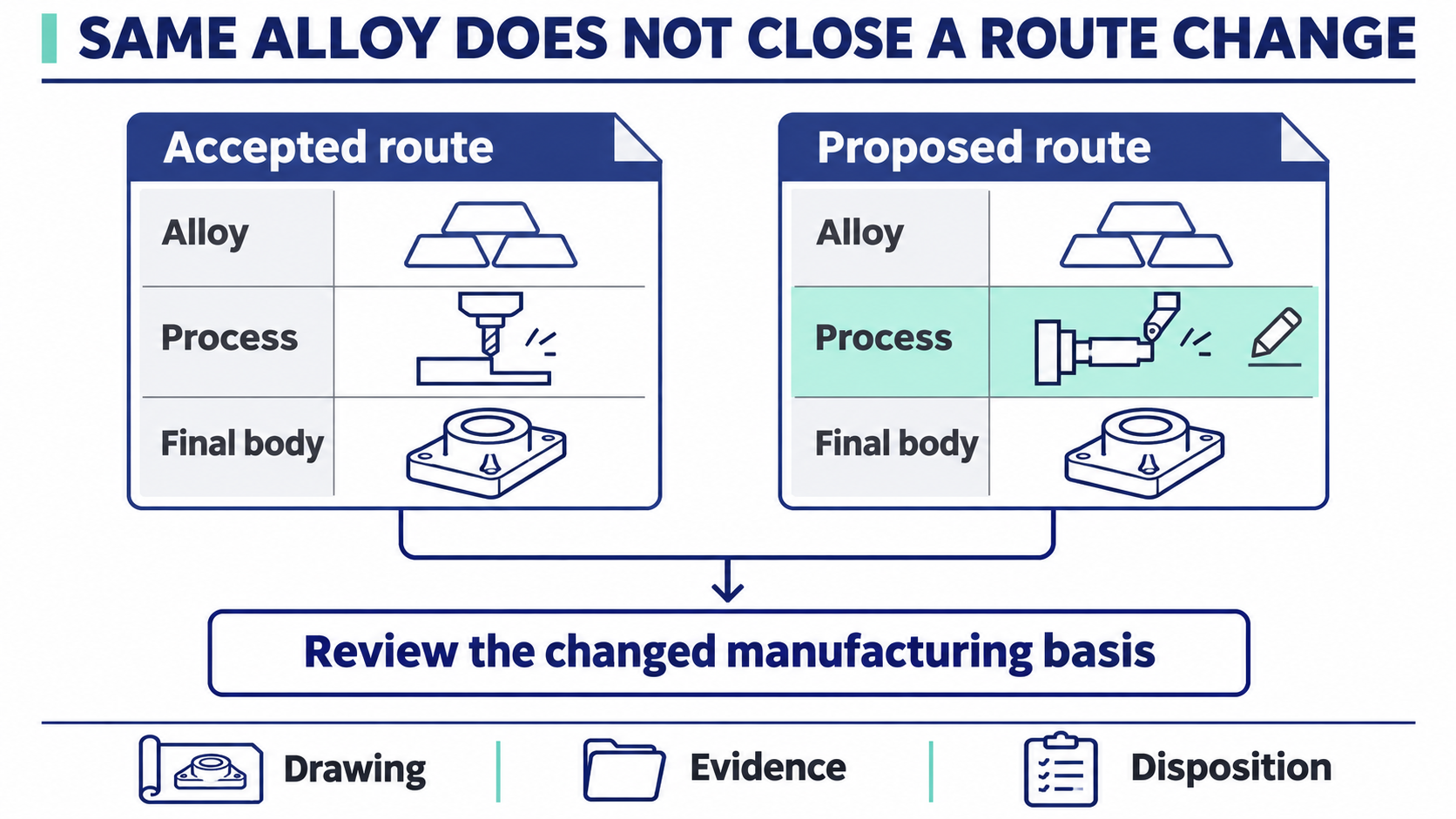
Suppose a supplier proposes a body machined from bar instead of the agreed die-forged body. This is a hypothetical procurement example, not a ZeeyiElec production case. Even if the supplier states the same alloy designation, obtain the proposed manufacturing basis and identify which agreed requirements the change affects. Do not assume that the routes are equivalent or that one is universally unacceptable.
The project authority can then assess the specific brass transformer drain valve alternative and record its decision. A revised quotation or delivery promise is not that disposition. Preserve the accepted route and the relevant evidence requirements in the order revision before treating the alternative as agreed.
Hypothetical change-review diagram. Highlighting the process row identifies an issue to assess; it does not approve a substitute or rank manufacturing routes.
Connect the body dossier to the released drain assembly
Keep manufacturing acceptance within its scope
Body manufacturing acceptance is one part of the complete valve decision. The selected assembly still needs confirmation for the stated insulating liquid, service conditions, interfaces and required evidence. Neither a forging record nor a material result substitutes for configuration-specific sealing or functional acceptance. Keep assembly testing and body manufacturing evidence linked without treating them as the same record.
பயன்படுத்தவும் transformer oil drain valve guide for the broader drainage-duty and interface review. The மாற்றாக்கி வால்வுத் தொகுதி provides product-family context. Neither page replaces the accepted drawing and supply documents for the actual body being reviewed.
Assemble a compact release dossier
Retain the body item and revision, material designation, manufacturing-route reference, batch mapping, relevant inspection results and any accepted disposition. State whether manufacturing questions remain open. This creates a reviewable brass transformer drain valve release record without requiring reviewers to infer the production history from a folder of disconnected certificates.
For a project combining மாற்றான்கருவி துணைக்கருவிகள் மற்றும் கேபிள் துணைக்கருவிகள், keep the valve body’s manufacturing dossier attached to its own supply item. Shared project delivery or packaging does not make another component’s evidence applicable to the valve.
Send ZeeyiElec the required body drawing, material and manufacturing basis, service inputs and inspection-document requirements for review with the enquiry. Use the மாற்றான்களுக்கான துணைக்கருவிகள் தேர்வு வழிகாட்டி to organise the wider equipment selection. Resolve any proposed route change explicitly before the order is released.
அடிக்கடி கேட்கப்படும் கேள்விகள்
Can machining remove a visible forging parting line?
It can change which original surfaces remain visible. The presence or absence of an exterior line is therefore not a sufficient manufacturing-route record; confirm the body identity and linked production evidence.
Does a composition check prove that a body was forged?
No. A composition result addresses material identification within the method’s scope. The manufacturing route requires separate applicable records connected to the supplied body or batch.
Can one material heat reference cover several forging batches?
Yes, depending on the production arrangement. The records must explain which production batches and delivered bodies are connected to that material reference, rather than leaving the relationship to assumption.
Do all forged bodies require the same inspection plan?
No. Agree the applicable requirements, examination scope, sampling basis and acceptance criteria for the specific supply. A method used for another body or application does not automatically become mandatory or sufficient.
Can a forging blank drawing replace the finished-body drawing?
No. They describe different manufacturing stages. Use the accepted finished-body drawing to establish the geometry that must be supplied after machining and other specified operations.
What should reopen the manufacturing review?
Review a change that affects the agreed body material, product form, manufacturing route, finished drawing or evidence basis. Identify the affected requirements and obtain the authorised disposition instead of treating an unchanged product name as approval.
யோயோ ஷி
யோயோ ஷி, ZeeyiElec-க்காக எழுதுகிறார். இவர் நடுத்தர-வோல்டேஜ் துணைக்கருவிகள், டிரான்ஸ்ஃபார்மர் பாகங்கள் மற்றும் கேபிள் துணைக்கருவி தீர்வுகள் ஆகியவற்றில் கவனம் செலுத்துகிறார். அவரது கட்டுரைகள், உலகளாவிய மின்சாரத் தொழில் வாங்குபவர்களுக்கான தயாரிப்புப் பயன்பாடுகள், தொழில்நுட்ப அடிப்படைகள் மற்றும் கொள்முதல் குறித்த பார்வைகள் ஆகியவற்றை உள்ளடக்கியுள்ளார்.





 English
 한국어
 العربية
 Español
 हिन्दी
 தமிழ்
 Deutsch (Sie)
 Français
 Português do Brasil
 Русский