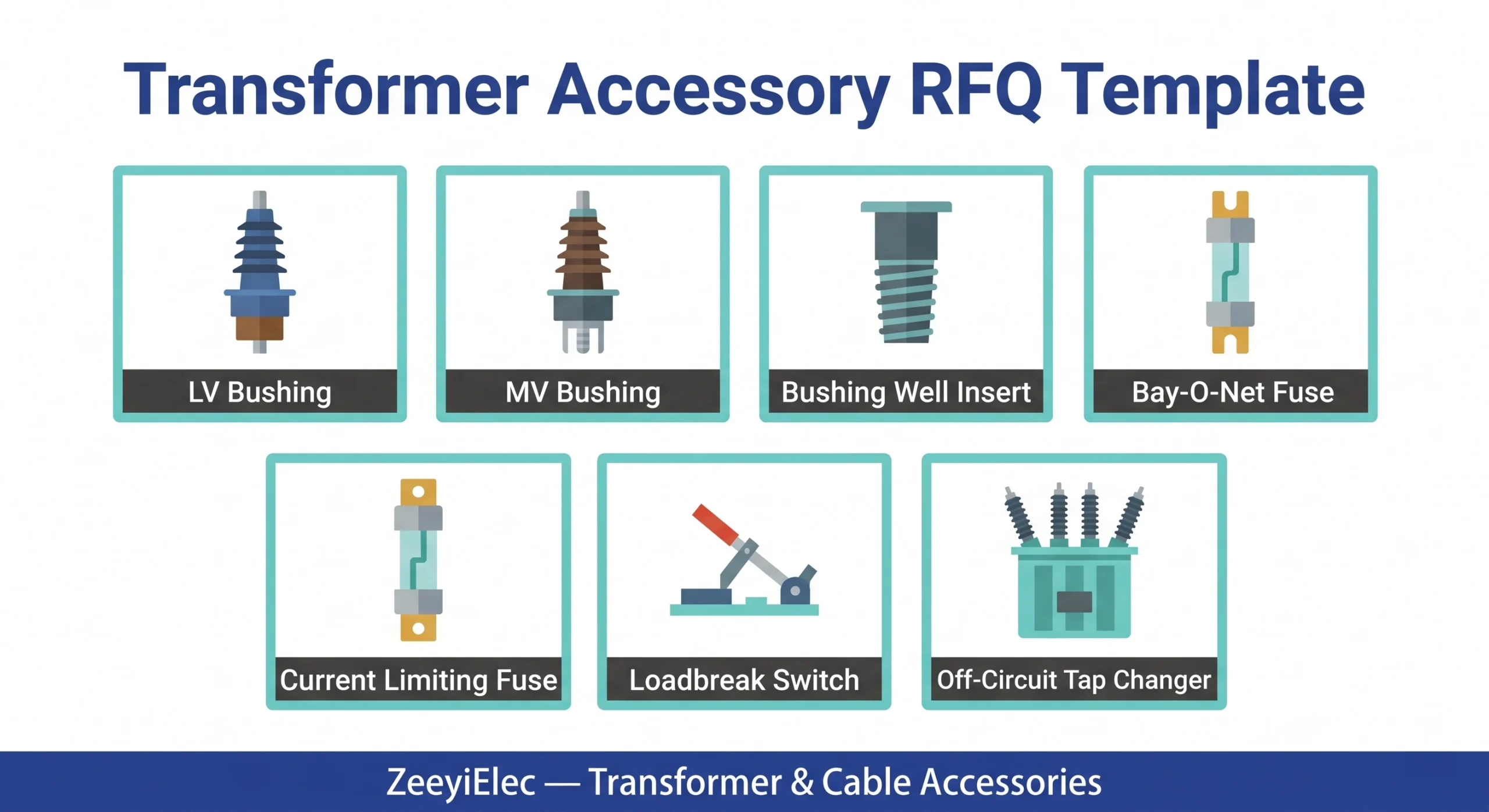
Полный запрос на поставку принадлежностей для трансформаторов требует: данные заводской таблички трансформатора (кВА, напряжение ВН/НН, векторная группа, тип охлаждения), наибольшее напряжение системы Um в кВ, BIL в кВп, условия площадки (высота над уровнем моря, класс загрязнения, температура окружающей среды), количество с запасными коэффициентами для каждого семейства, а также поля параметров, специфичных для принадлежностей, для всех семи семейств: вводы НН/НВ, вставки для вводов, предохранители Bay-O-Net, предохранители с ограничением тока, выключатели нагрузки и устройства переключения ПБВ.
Команды, занимающиеся закупками, обычно недооценивают, насколько подробная спецификация требуется для заказа аксессуаров к трансформаторам. На заводской табличке указаны номинальная кВА и коэффициент напряжения, но не указаны BIL проходного изолятора, пороговые значения координации предохранителей, номинальный ток устройства РПН или класс загрязнения. Если эти параметры отсутствуют, поставщик делает предположение, запрашивает разъяснения или отправляет ближайшую доступную конфигурацию. Данные с мест постоянно указывают на неполноту RFQ как на основную причину несоответствия аксессуаров, а не на контрафактную продукцию или производственный брак.
Два сценария отказа от закупок иллюстрируют стоимость:
Сценарий A - Отсутствие BIL приводит к трехнедельной задержке
В одном из проектов были указаны “проходные изоляторы класса 35 кВ” без подтверждения BIL. Поставщик отгрузил блоки на 170 кВп, тогда как по результатам исследования координации изоляции требовалось 200 кВп. Запасные блоки потребовали повторного изготовления. Ввод в эксплуатацию сдвинулся на 23 дня.
Сценарий B - порог координации предохранителей оставлен неуказанным
Была выбрана плавкая вставка Bay-O-Net на 65 А для трансформатора с первичным током полной нагрузки 83 А при напряжении 15 кВ. Запас координации был отрицательным до подачи напряжения на трансформатор. Обе плавкие вставки потребовали замены.
В приведенных ниже разделах спецификация разбита на обязательные, условные и необязательные поля для всех семи семейств принадлежностей трансформаторов, доступных через Ассортимент аксессуаров для трансформаторов ZeeyiElec.
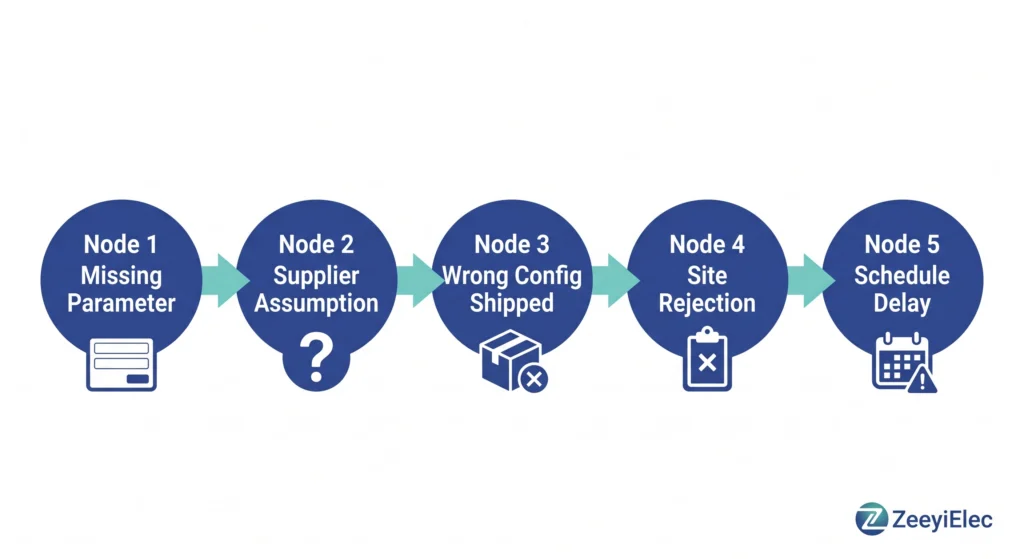
Цепочка отказов из пяти узлов, иллюстрирующая, как один отсутствующий в RFQ параметр распространяется от предположения поставщика через неправильную конфигурацию аксессуаров, отклонение на стройплощадке и задержку графика проекта - пример, зафиксированный в ходе обзоров закупок аксессуаров для трансформаторов, где не были указаны пороговые значения BIL для втулок или координации предохранителей.
Что включает в себя этот шаблон RFQ: Сфера применения, семейства принадлежностей и как его использовать
В этом шаблоне рассматриваются семь семейств принадлежностей трансформаторов в диапазоне 10-35 кВ. Перед заполнением любого раздела убедитесь в наличии данных заводской таблички трансформатора. Попытка определить размеры плавких вставок или ступеней РПН без подтвержденной заводской таблички приводит к ошибкам в спецификации, которые распространяются на все последующие области.
Семьи-аксессуары Покрываемые
Низковольтные втулки - Класс от 1,2 кВ до 3,0 кВ, от 600 А до 5 000 А+
Проходные изоляторы среднего напряжения - Класс от 12 кВ до 52 кВ, ANSI / DIN / эпоксидный интерфейс
Вставки для втулочных колодцев - Классы 15/25 кВ и 15/25/35 кВ, 200 А непрерывно
Сборки предохранителей Bay-O-Net - 15/25 кВ, боковая защита от выброса
Токоограничивающие предохранители - прерывание при сильном замыкании, согласованное с Bay-O-Net
Выключатели нагрузки - 15/25 кВ и 38/40,5 кВ, номинальный ток 630 А
Устройства РПН - 15/25/35 кВ, номинальный ток 63 A и 125 A
Как перемещаться по шаблону
В каждом разделе используются обозначения полей REQUIRED, CONDITIONAL и OPTIONAL. Поля REQUIRED должны быть заполнены перед отправкой; поля CONDITIONAL применяются только при выборе конкретной конфигурации; поля OPTIONAL повышают точность предложения, но не препятствуют получению действительного ответа поставщика. Устройства РПН, реле защиты, трансформаторное масло и кабельные аксессуары не входят в сферу применения данного шаблона.
Универсальные поля заголовка: Параметры уровня проекта, которые должен включать каждый запрос на поставку аксессуаров
Каждый RFQ требует заполненного блока заголовка до того, как будут рассмотрены поля, относящиеся к конкретному аксессуару. Поставщики используют его для подтверждения совместимости всех аксессуаров и выявления конфликтов конфигурации до начала производства.
Параметры заводской таблички трансформатора
Поле
Пример записи
Примечания
Номинальная мощность
1 250 кВА
Подтвердите МВА для крупных агрегатов
Напряжение высокого напряжения
22 кВ
Номинальное - не самое высокое напряжение в системе
Низковольтное напряжение
0,4 кВ
Выход вторичной обмотки
Векторная группа
Dyn11
Влияет на расположение фаз втулки
Тип охлаждения
ONAN
ОНАН / ОНАФ / ОФАФ
Применимый стандарт
IEC 60076
Или серия ANSI/IEEE C57
Поля состояния системы и объекта
Наибольшее напряжение системы Um должно быть указано отдельно от номинального напряжения. Для системы с номинальным напряжением 22 кВ Um обычно достигает 24 кВ, это значение напрямую влияет на расстояние между проходными изоляторами и выбор BIL.
Уровень основной изоляции (BIL) должен быть указан в кВp. Для 24 кВ Um класс, стандартные значения BIL составляют 125 кВp или 145 кВp в зависимости от исследования координации изоляции. Перед заполнением секций проходных изоляторов и предохранителей проверьте, что именно применяется. [ПРОВЕРЬТЕ СТАНДАРТ: IEC 60071-1 координация изоляции подтверждает таблицу BIL для Um = 24 кВ]
Дополнительные поля, необходимые для установки: высота установки в метрах, диэлектрическая проницаемость выше 1000 м; максимальная температура окружающей среды (°C), типичный диапазон от 40°C до 50°C для тропических и пустынных районов; уровень загрязнения по IEC классы I-IV; среда установки (внутри / снаружи / на площадке / на столбе).
Высота над уровнем моря и класс загрязнения - два параметра местности, которые чаще всего не указываются в первых проектах запросов на поставку комплектующих для трансформаторов. Оба эти параметра напрямую определяют, допустимо ли использовать втулку из стандартного каталога или требуется модернизированная конфигурация ползучести.
Поля количества и доставки
Укажите соотношение запасных частей для каждого семейства аксессуаров: 10-15% для расходных плавких вставок; 5% или одна запасная единица на проект для нерасходных материалов, таких как втулки и устройства РПН. Подтвердите требования к экспортной документации на начальном этапе: протоколы испытаний, сертификат происхождения, упаковочный лист и классификация по коду ТН ВЭД - это стандартный минимум. Сайт Шпаргалка по спецификациям и закупкам IEC обеспечивает параллельную ссылку для выравнивания стандартов по этим полям заголовка.
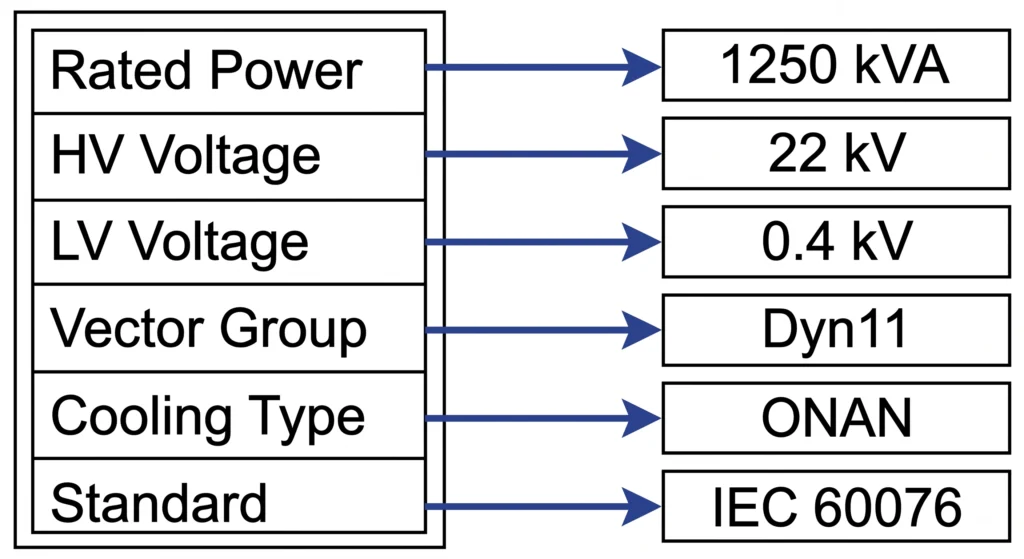
Аннотированная заводская табличка трансформатора с перекрестными ссылками на поля заголовка RFQ: номинальная мощность (кВА), напряжение ВН/НН (кВ), векторная группа, тип охлаждения и применимый стандарт - каждый параметр связан стрелкой с соответствующим полем RFQ с примерами значений, иллюстрирующими прямое сопоставление заводской таблички со спецификацией, необходимое до заполнения специфических полей для аксессуаров.
[Expert Insight]
Um и номинальное напряжение расходятся на 5-15% в зависимости от конструкции системы, всегда используйте Um для спецификации прокладок и предохранителей, никогда не используйте только номинальное напряжение
Класс загрязнения IV (очень тяжелый) требует расстояния ползучести 53 мм/кВ или более Каталог Втулки, рассчитанные на класс II (25 мм/кВ), будут трекироваться и выйдут из строя в течение одного влажного сезона на прибрежных промышленных объектах
Поля RFQ по втулкам: Втулки LV, Втулки MV и Вставки для втулочных колодцев
Втулки требуют одновременного подтверждения электрического класса, механического интерфейса, материала изоляции и конфигурации клемм. Втулка, которая электрически правильна, но по размерам несовместима с фланцем резервуара, не может быть установлена. Втулка, которая подходит механически, но имеет недостаточный зазор для класса загрязнения участка, выйдет из строя в течение первого влажного сезона.
Параметры втулки LV
Поле
Ассортимент / опции
Примечания
Класс напряжения
1,2 кВ / 2,0 кВ / 3,0 кВ
Подключение к обмотке низкого напряжения трансформатора
Текущий рейтинг
600 A - 5,000 A+
Рассчитайте из кВА ÷ (√3 × кВ низкого напряжения)
Изоляционный материал
HTN / пористая смола / фарфор / эпоксидная смола
HTN предпочтительнее для мест с высокой влажностью
Конфигурация терминала
Плоская накладка / резьбовая шпилька / пика DIN
Подтвердите наличие кабельного наконечника или шинного соединения
Монтажный фланец OD
Состояние в мм
Должен соответствовать отверстию бака трансформатора
Для трансформатора мощностью 1 000 кВА с обмоткой низкого напряжения 0,4 кВ вторичный ток достигает примерно 1 443 А на фазу (I = S ÷ (√3 × ULV)). Для проходного изолятора, рассчитанного на 1 250 А непрерывного тока, необходимо занизить размеры, указав минимальное значение 1 600 А с тепловым запасом 10%, подтвержденным поставщиком.
Параметры втулки MV
Применимым стандартом для испытаний втулок является IEC 60137, в котором определены требования к испытаниям на импульсную прочность, прочность на частоту мощности и номинальный тепловой ток для вводов в трансформаторах с жидким заполнением.
Поле
Ассортимент / опции
Примечания
Класс напряжения (Um)
12 кВ / 24 кВ / 36 кВ / 52 кВ
Государство Ум, не номинальное
Текущий рейтинг
55 A - 3,150 A
На одну фазу; рассчитывается со стороны ВН
БИЛ
75 кВп - 250 кВп
Исследование координации изоляции
Стандартный интерфейс
Фарфор ANSI / фарфор DIN / эпоксидная смола
Подтвердите выбор производителя трансформатора
Расстояние между отверстиями
25 мм/кВ (легкий) - 53 мм/кВ (очень тяжелый)
Класс загрязнения в соответствии с IEC 60815
Для проектов, в которых используются цепочки поставок ANSI и IEC, распространенные в тендерах коммунальных служб на Ближнем Востоке и в Юго-Восточной Азии, подтвердите стандарт интерфейса в явном виде. Фарфоровые проходные изоляторы ANSI и DIN не взаимозаменяемы на фланце трансформатора; замена в полевых условиях невозможна без переходных устройств.
Параметры втулочной вставки для скважин
Поле
Ассортимент / опции
Примечания
Класс напряжения
15/25 кВ или 15/25/35 кВ
Две стандартные группы классов
Текущий рейтинг
200 A непрерывно
Исправлена геометрия системы мертвого фронта
Прием локтей
Подтвердить Y/N
Государственное разрывное или неразрывное локоть
Подтвердите совместимость с производителем локтя на этапе запроса предложений. Различия в размерах на стыке колен, препятствующие полной посадке, можно обнаружить только во время подготовки к подаче напряжения - не при визуальном осмотре после поставки.
Защита и коммутация RFQ: Предохранители Bay-O-Net, токоограничивающие предохранители и выключатели нагрузки
Координация предохранителей должна быть решена до подбора одного из семейств предохранителей. Класс напряжения выключателя должен быть подтвержден по Um, а не по номинальному напряжению. Эти три семейства взаимозависимы - неполная спецификация любого из них влияет на достоверность двух других.
Поля для сборки предохранителей Bay-O-Net
Поле
Ассортимент / опции
Примечания
Класс напряжения
15 кВ / 25 кВ
Подключение к обмотке высокого напряжения Um
БИЛ
150 кВп
Стандарт для класса 15/25 кВ
Номинальный ток плавкой вставки
6 A - 200 A
Размер от FLA + пусковой запас
Рейтинг прерывания
До ~3,500 А несимметрично
Лимит на выдворение; CLF обрабатывает выше
Возможность работы с "горячим" прилипанием
Требуется Да/Н
Обязательно для установок live-front
При монтаже на площадку с ограниченными зазорами между корпусами убедитесь, что путь дуги выдува не перекрыт, прежде чем выбирать сборку Bay-O-Net с открытым выдувом.
Токоограничивающие предохранители
Согласно IEC 60282-1, токоограничивающие предохранители для защиты трансформаторов должны характеризоваться номинальным напряжением, непрерывным током и максимальным током прерывания - все три параметра являются обязательными для заполнения полей RFQ без исключения.
Поле
Ассортимент / опции
Примечания
Напряжение системы
12 кВ / 24 кВ / 36 кВ
Штат Эм
Номинальный непрерывный ток
2 A - 200 A
Размер от трансформатора ВН FLA
Максимальный ток прерывания
До 50 кА симметрично
Подтверждение по результатам исследования уровня неисправностей
Порог координации
~2,500 A - 3,500 A
Подтвердите передачу с инженером по защите
Пропустить через себя I²t
Государство в А²с
Требуется для оценки повреждений обмотки
Энергия проскока токоограничивающего предохранителя выражается как I2t в единицах A2s. Для координации защиты трансформатора используется предохранитель I2t при максимальном токе повреждения должна оставаться ниже значения I, выдерживаемого трансформатором.2t, полученный из импеданса короткого замыкания Zk % и тепловая постоянная времени обмотки. Отсутствие этого поля не позволяет поставщику подтвердить запас защиты.
Механизмы с запасом энергии предпочтительнее прямого ручного управления при напряжении 15 кВ и выше, скорость прерывания постоянна независимо от техники оператора, что напрямую снижает скорость эрозии контактов в течение всего срока службы выключателя.
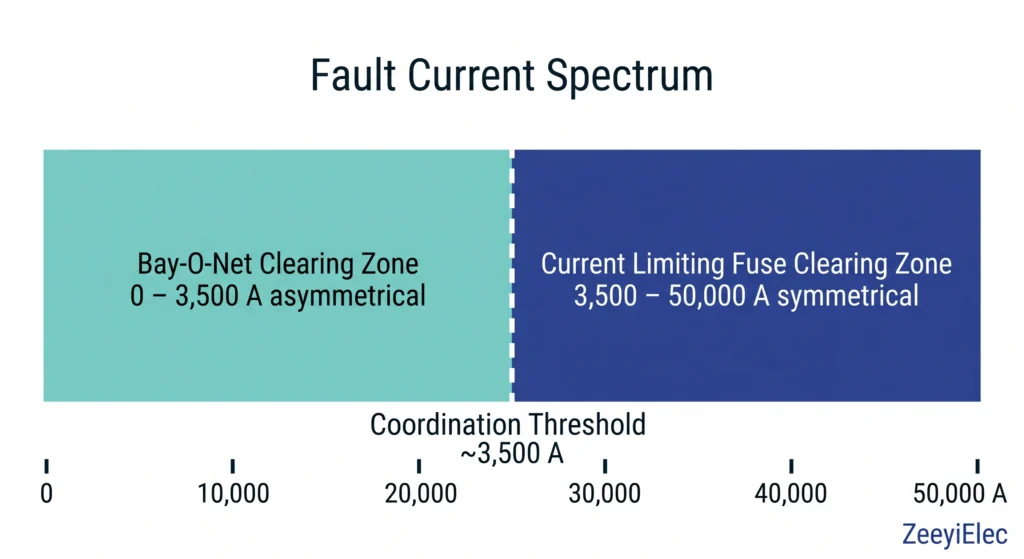
Спектр токов повреждения для защиты распределительных трансформаторов, показывающий зону срабатывания вытесняющего предохранителя Bay-O-Net (несимметричная 0-3 500 А) и зону срабатывания токоограничивающего предохранителя (симметричная 3 500-50 000 А), с порогом координационного переключения, отмеченным приблизительно на 3 500 А - критическая граница, которая должна быть подтверждена исследованием уровня повреждения системы, прежде чем оба типа предохранителей будут указаны в RFQ.
[Expert Insight]
Никогда не устанавливайте плавкую вставку Bay-O-Net, исходя только из кВА трансформатора. Первичный ток полной нагрузки должен быть рассчитан, затем умножен на пусковой запас 8-12× FLA в течение 0,1 с, чтобы избежать неприятного срабатывания при подаче напряжения.
Проходной I²t должен быть подтвержден в сравнении с номиналом выдерживаемого короткого замыкания трансформатора перед выбором предохранителя Команды по закупкам часто опускают это поле, считая его обязанностью поставщика, когда это не так.
RFQ Поля и логика регулировки напряжения для внеконтурного ответвителя
Устройства ПБВ регулируют коэффициент трансформации по дискретному набору положений, обычно пяти, расположенных с интервалом 2,5% и обеспечивающих регулировку ±5% вокруг коэффициента номинального напряжения. Перед любым изменением положения трансформатор должен быть полностью обесточен; это ограничение регулирует все параметры в данном разделе.
Поля электрических и механических параметров
Поле
Ассортимент / опции
Примечания
Класс напряжения
15 кВ / 25 кВ / 35 кВ
Подключение к обмотке высокого напряжения Um
Текущий рейтинг
63 A / 125 A
Выберите из трансформатора HV FLA
Количество позиций
5 (стандарт)
±2 × 2,5% около номинального значения
Ступенчатое напряжение ответвителя
Рассчитать в V
Напряжение обмотки ВН × 2,5% на ступень
Тип вращения
Линейный / поворотный
Подтвердите от чертежа OEM трансформатора
Оператор мотора
Д/Н
Условно - см. ниже
Напряжение ступени ответвителя должно быть рассчитано до подачи запроса предложений. Для трансформатора с обмоткой ВН на 22 кВ и стандартным 5-позиционным расположением ступеней каждая ступенька 2,5% равна 550 В. Полный диапазон регулировки составляет от 20 900 В (положение -2) до 23 100 В (положение +2), т.е. общее окно составляет 2 200 В.AC. Указание только “22 кВ, 5-позиционный” без шагового напряжения ничего не подтверждает о совместимости обмоток.
Логика выбора типа вращения
Для подтверждения типа вращения требуется чертеж комплектного оборудования трансформатора или прямое подтверждение производителя, его нельзя определить только по номинальной кВА или классу напряжения. В одном задокументированном случае замена устройства РПН, заказанного только по электрическим параметрам, потребовала на 40% большего линейного перемещения, чем позволяла внутренняя часть бака; установка была невозможна без внутренней модификации трансформатора.
Условное поле: Оператор автотранспорта
Поле
Укажите, если применимо
Напряжение управления двигателем
24 В ПОСТОЯННОГО ТОКА / 110 В ПЕРЕМЕННОГО ТОКА / 230 В ПЕРЕМЕННОГО ТОКА
Тип управляющего сигнала
Местный / удаленный / интерфейс SCADA
Обратная связь по позиции
4-20 мА / цифровой импульс / нет
Корпус для защиты от воздействия окружающей среды
Степень защиты IP для корпуса двигателя
В каждом RFQ на устройство РПН следует запрашивать рекомендуемую поставщиком маркировку блокировки. Инциденты на местах с устройствами РПН, работающими под нагрузкой, неизменно связаны с неадекватной маркировкой блокировки/тагаута или путаницей персонала между этим устройством и выключателем нагрузки.
Поля для оценки поставщиков и контрольный список для подачи RFQ
Параметры квалификации поставщика
Поле
Требование
Система качества
Запрос действующего сертификата ISO 9001
Сертификация продукции
CE / RoHS в соответствии с требованиями рынка назначения
Отчеты о заводских испытаниях
Требуются обычные отчеты; типовые испытания по запросу
Срок изготовления образца
3-6 недель для стандартных конфигураций
Возможность OEM/ODM
Подтверждение нестандартных размеров или маркировки частной маркировки
Экспортная документация
COO, упаковочный лист, сертификат испытания, код HS подтвердить перед PO
Готовность к подаче RFQ
Перед отправкой подтвердите, что все восемь пунктов решены:
Данные заводской таблички трансформатора в комплекте
Наибольшее напряжение в системе подтверждено
BIL в кВп
Порог согласования предохранителей документирован
Количество на семейство аксессуаров, указанное с учетом коэффициента запаса
Условия поставки и порт подтверждены
Заявленное требование к проверке
Прилагается габаритный чертеж или технический паспорт, если применимо
Один недостающий элемент - достаточное основание для запроса поставщиком разъяснений, чтобы перенести время подачи предложения на несколько дней или недель.
Компания ZeeyiElec поддерживает технические ответы на RFQ по всем семи семействам принадлежностей трансформаторов, представленным в этом шаблоне. Отправьте параметры проекта и данные заводской таблички через форма запроса проекта. Для получения параллельного справочника по закупкам для каждого поля с примечаниями по согласованию стандартов МЭК, см. Аксессуары для трансформаторов Контрольный список RFQ охватывает те же семейства аксессуаров. При закупке кабельных аксессуаров в рамках одного проекта серия кабельных аксессуаров обеспечивает параллельный отбор и систему RFQ.
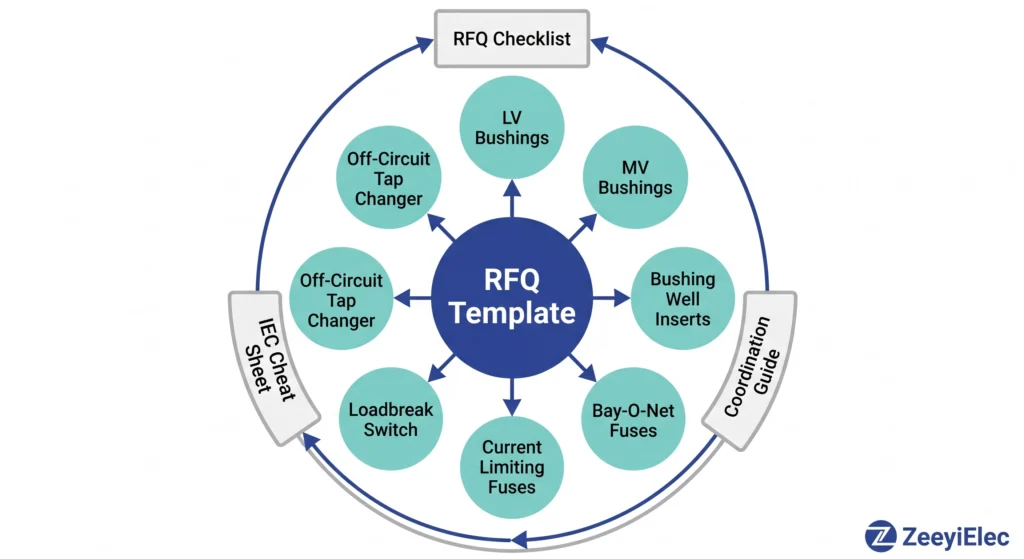
Карта ресурсов, связывающая шаблон RFQ на принадлежности трансформатора (центральный узел) с семью страницами серий продукции - втулки низкого напряжения, втулки среднего напряжения, вставки для втулочных колодцев, предохранители Bay-O-Net, токоограничивающие предохранители, выключатель нагрузки и переключатель ответвителя вне цепи - с внешним кольцом ресурсов поддержки закупок, включая контрольный список RFQ, руководство по координации и шпаргалку по спецификациям IEC.
Часто задаваемые вопросы
Какая минимальная информация необходима для начала RFQ по комплектующим для трансформаторов?
Как минимум, вам нужны данные заводской таблички трансформатора (кВА, напряжение ВН/НН, векторная группа, тип охлаждения и применяемый стандарт), наибольшее напряжение системы Um, BIL в кВп, высота установки и класс загрязненности местности, без которых невозможно правильно определить семейство комплектующих, не восполнив пробелы с помощью поставщиков.
Как рассчитать правильный номинальный ток плавкой вставки для блока Bay-O-Net?
Рассчитайте первичный ток полной нагрузки трансформатора с помощью кВА ÷ (√3 × ВН кВ), затем примените пусковой запас в 8-12 раз больше FLA в течение 0,1 секунды, чтобы определить номинал плавкой вставки, которая переносит нормальную нагрузку без работы и при этом устраняет повреждения от перегрузки ниже предела прерывания Bay-O-Net, составляющего примерно 2 500-3 500 A.
В чем разница между номинальным напряжением и Um в спецификации принадлежностей трансформатора?
Номинальное напряжение - это расчетное значение сети; Um - это максимальное напряжение, которое система выдерживает при нормальных условиях эксплуатации, обычно на 5-15% выше, и требования к расстоянию между проходными изоляторами, BIL и вспышкам определяются Um, а не номинальным напряжением.
Почему тип вращения имеет значение при выборе устройства ПБВ?
Линейные и поворотные механизмы РПН имеют разную внутреннюю геометрию и требования к зазору в баке, поэтому устройство, рассчитанное только на электрические параметры, может потребовать большего внутреннего зазора, чем позволяет трансформатор, что делает установку физически невозможной без модификации трансформатора.
В каких случаях вместо устройства ПБВ следует устанавливать выключатель нагрузки?
Укажите выключатель нагрузки, если требуется обеспечить или отключить ток нагрузки, пока трансформатор остается под напряжением; укажите переключатель ПБВ, если регулировка соотношения напряжения требуется только во время планового обесточивания Несмотря на внешнее сходство, эти устройства не являются оперативно взаимозаменяемыми.
Какой запасной коэффициент должен быть включен в запрос на поставку комплектующих для трансформаторов?
Расходуемые принадлежности, такие как плавкие вставки, требуют 10-15% запасных единиц на проект; нерасходуемые механические компоненты, такие как втулки, устройства РПН и выключатели нагрузки, обычно устанавливаются в размере 5% или одной запасной единицы на проект, причем более высокие коэффициенты оправданы для удаленных объектов, где время замены превышает четыре недели.
Может ли один запрос предложений охватывать несколько семейств принадлежностей для трансформаторов от одного поставщика?
Да, объединение в одну заявку сокращает усилия по координации, но каждое семейство принадлежностей должно занимать отдельный раздел со своими полями параметров, поскольку объединение недифференцированных спецификаций в один блок является наиболее распространенной причиной неправильных расценок и ошибочных отгрузок при заказе принадлежностей для многоквартирных трансформаторов.
йойо ши
Йойо Ши пишет для ZeeyiElec, специализируясь на аксессуарах для среднего напряжения, компонентах трансформаторов и кабельных аксессуарах. В ее статьях рассказывается о применении продукции, технических основах, а также об особенностях поиска поставщиков для глобальных покупателей электротехнической промышленности.




 English
 한국어
한국어 العربية
 Español
 हिन्दी
 தமிழ்
தமிழ் Deutsch (Sie)
 Français
 Português do Brasil
 Русский