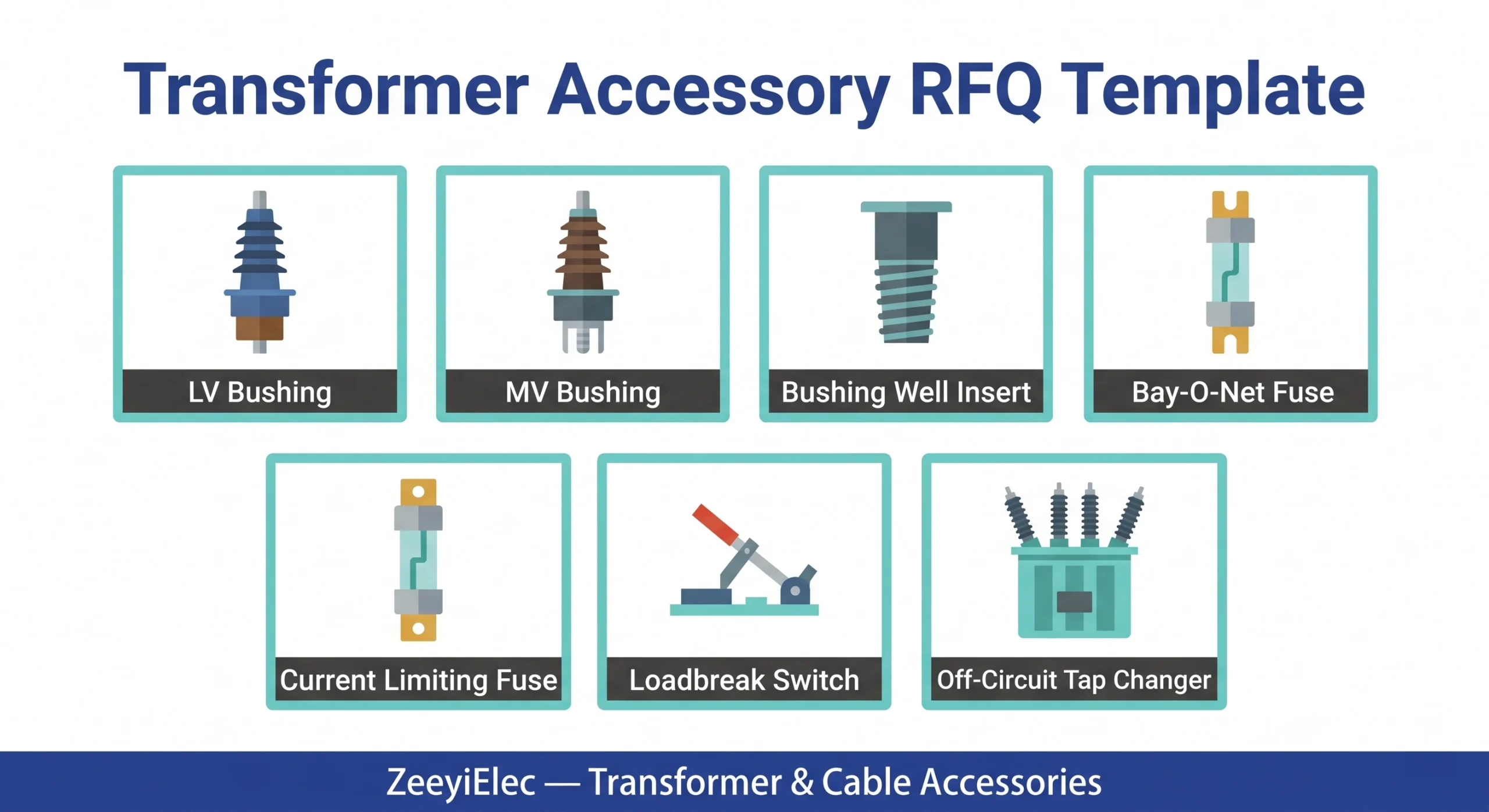
एक पूर्ण ट्रांसफार्मर सहायक उपकरण RFQ के लिए निम्नलिखित की आवश्यकता होती है: ट्रांसफार्मर नेमप्लेट डेटा (kVA, HV/LV वोल्टेज, वेक्टर ग्रुप, कूलिंग का प्रकार), kV में उच्चतम सिस्टम वोल्टेज Um, kVp में BIL, साइट की स्थितियाँ (ऊँचाई, प्रदूषण वर्ग, परिवेश का तापमान), प्रति परिवार स्पेयर अनुपात के साथ मात्रा, और सभी सात परिवारों के लिए सहायक उपकरण-विशिष्ट पैरामीटर फ़ील्ड्स: LV/MV बुशिंग्स, बुशिंग वेल इन्सर्ट्स, Bay-O-Net फ्यूज़, करंट लिमिटिंग फ्यूज़, लोडब्रेक स्विच, और ऑफ-सर्किट टैप चेंजर्स।.
खरीदारी टीमें अक्सर यह कम आँकती हैं कि एक ट्रांसफॉर्मर सहायक उपकरण ऑर्डर में कितनी विशिष्ट जानकारी की आवश्यकता होती है। एक नेमप्लेट kVA रेटिंग और वोल्टेज अनुपात तो बताता है, लेकिन यह बुशिंग BIL, फ्यूज समन्वय सीमाएँ, टैप चेंजर करंट रेटिंग या संदूषण वर्ग निर्दिष्ट नहीं करता। जब ये पैरामीटर अनुपस्थित होते हैं, तो आपूर्तिकर्ता अनुमान लगाता है, स्पष्टीकरण मांगता है, या उपलब्ध निकटतम कॉन्फ़िगरेशन भेज देता है। फील्ड डेटा लगातार दिखाता है कि सहायक उपकरणों के मेल न खाने का मुख्य कारण अपूर्ण RFQs हैं, नकली उत्पाद या निर्माण दोष नहीं।.
दो खरीद विफलता परिदृश्य लागत को दर्शाते हैं:
परिदृश्य A — लापता BIL से तीन सप्ताह की देरी होती है
एक परियोजना में BIL की पुष्टि किए बिना “35 kV वर्ग के बुशिंग्स” निर्दिष्ट किए गए। आपूर्तिकर्ता ने 170 kVp इकाइयाँ भेजीं; इन्सुलेशन समन्वय अध्ययन के लिए 200 kVp की आवश्यकता थी। प्रतिस्थापन इकाइयों के लिए पुनर्निर्माण आवश्यक था। कमीशनिंग 23 दिनों के लिए विलंबित हो गई।.
परिदृश्य B — फ्यूज समन्वय सीमा निर्दिष्ट नहीं की गई
15 kV पर 83 A पूर्ण-भार प्राथमिक धारा वाले ट्रांसफॉर्मर के लिए 65 A का Bay-O-Net फ्यूज लिंक चुना गया। ट्रांसफॉर्मर को ऊर्जा प्रदान करने से पहले समन्वय मार्जिन नकारात्मक था। दोनों फ्यूज सहायक उपकरणों को बदलने की आवश्यकता थी।.
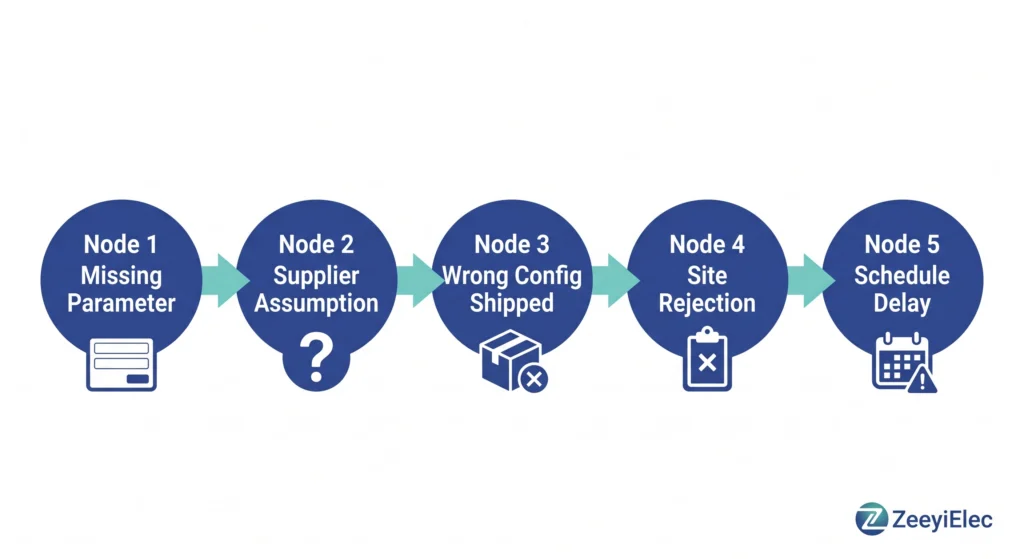
पाँच-नोड विफलता श्रृंखला यह दर्शाती है कि एक ही RFQ पैरामीटर की अनुपस्थिति कैसे आपूर्तिकर्ता की धारणा से शुरू होकर गलत सहायक उपकरण कॉन्फ़िगरेशन, साइट अस्वीकृति और परियोजना अनुसूची में देरी तक फैलती है — यह उस पैटर्न का दस्तावेजीकरण है जो ट्रांसफॉर्मर सहायक उपकरण खरीद समीक्षाओं में देखा गया है जहाँ बुशिंग BIL या फ्यूज समन्वय सीमाएँ छोड़ दी गई थीं।.
यह RFQ टेम्पलेट क्या कवर करता है: दायरा, सहायक उपकरण परिवार, और इसका उपयोग कैसे करें
यह टेम्पलेट 10–35 kV श्रेणी में सात ट्रांसफॉर्मर सहायक उपकरण परिवारों को संबोधित करता है। किसी भी अनुभाग को पूरा करने से पहले, सुनिश्चित करें कि ट्रांसफॉर्मर की नामपट्टिका डेटा उपलब्ध है। पुष्टि किए बिना फ्यूज लिंक या टैप चेंजर स्टेप्स का आकार निर्धारित करने का प्रयास करने पर नामपट्टिका में विनिर्देश त्रुटियाँ उत्पन्न होती हैं जो हर निम्नलिखित क्षेत्र में फैल जाती हैं।.
सहायक परिवारों का कवरेज
निम्न वोल्टेज बुशिंग्स — 1.2 kV से 3.0 kV वर्ग, 600 A से 5,000 A+
मध्यम वोल्टेज बुशिंग्स — 12 kV से 52 kV वर्ग, ANSI / DIN / एपॉक्सी इंटरफ़ेस
बुशिंग वेल इन्सर्ट्स — 15/25 kV और 15/25/35 kV वर्ग, 200 A निरंतर
बे-ओ-नेट फ्यूज असेंबलीज़ — 15/25 kV, साइडवॉल-माउंटेड निष्कासन सुरक्षा
धारा-सीमित फ्यूज — हाई-फ़ॉल्ट इंटरप्शन, बे-ओ-नेट के साथ समन्वित
लोडब्रेक स्विच — 15/25 kV और 38/40.5 kV, 630 A रेटेड
सर्किट से बाहर के टैप चेंजर्स — 15/25/35 kV, 63 A और 125 A धारा रेटिंग
टेम्पलेट को कैसे नेविगेट करें
प्रत्येक अनुभाग में REQUIRED, CONDITIONAL और OPTIONAL क्षेत्र नामकरण का उपयोग किया गया है। REQUIRED क्षेत्रों को सबमिशन से पहले भरना अनिवार्य है; CONDITIONAL क्षेत्र केवल तब लागू होते हैं जब कोई विशिष्ट कॉन्फ़िगरेशन चुना गया हो; OPTIONAL क्षेत्र कोटेशन की सटीकता में सुधार करते हैं लेकिन वैध आपूर्तिकर्ता प्रतिक्रिया को अवरुद्ध नहीं करेंगे। ऑन-लोड टैप चेंजर्स, सुरक्षा रिले, ट्रांसफॉर्मर तेल और केबल सहायक उपकरण इस टेम्पलेट के दायरे से बाहर हैं।.
सार्वभौमिक हेडर फ़ील्ड्स: परियोजना-स्तरीय पैरामीटर जिन्हें प्रत्येक एक्सेसरी RFQ में शामिल करना अनिवार्य है
प्रत्येक RFQ के लिए किसी भी एक्सेसरी-विशिष्ट फ़ील्ड को संबोधित करने से पहले एक पूर्ण हेडर ब्लॉक की आवश्यकता होती है। आपूर्तिकर्ता इसका उपयोग पूरे एक्सेसरी दायरे में संगतता की पुष्टि करने और निर्माण शुरू होने से पहले कॉन्फ़िगरेशन संघर्षों को चिह्नित करने के लिए करते हैं।.
ट्रांसफॉर्मर नेमप्लेट पैरामीटर
क्षेत्र
उदाहरण प्रविष्टि
टिप्पणियाँ
रेटेड पावर
1,250 केवीए
बड़े इकाइयों के लिए एमवीए की पुष्टि करें
उच्च वोल्टेज
22 किलोवोल्ट
नाममात्र — उच्चतम सिस्टम वोल्टेज नहीं
एलवी वोल्टेज
0.4 किलोवोल्ट
द्वितीयक वाइंडिंग आउटपुट
वेक्टर समूह
डायन11
बुशिंग चरण व्यवस्था को प्रभावित करता है
शीतलन प्रकार
ओनान
ओनान / ओनाफ / ओफाफ
लागू मानक
आईईसी 60076
या ANSI/IEEE C57 श्रृंखला
प्रणाली और साइट की स्थिति के क्षेत्र
अधिकतम सिस्टम वोल्टेज Um को नाममात्र वोल्टेज से अलग से निर्दिष्ट किया जाना चाहिए। 22 kV नाममात्र सिस्टम के लिए, Um आमतौर पर 24 kV तक पहुँच जाता है; यह मान सीधे बुशिंग क्रिपिंग दूरी और BIL चयन को नियंत्रित करता है।.
मूल इन्सुलेशन स्तर (BIL) को kV में निर्दिष्ट किया जाना चाहिए।p. 24 kV U के लिएm क्लास, मानक BIL मान 125 kV हैं।p या 145 kVp इन्सुलेशन समन्वय अध्ययन के आधार पर। बुशिंग और फ्यूज अनुभागों को पूरा करने से पहले यह पुष्टि करें कि कौन लागू होता है। [मानक सत्यापित करें: IEC 60071-1 इन्सुलेशन समन्वय, U के लिए BIL तालिका की पुष्टि करें]m = 24 किलोवोल्ट]
अतिरिक्त आवश्यक साइट फ़ील्ड्स: स्थापना की ऊँचाई मीटर में (1,000 मीटर से ऊपर डाइइलेक्ट्रिक डेरेटिंग लागू); अधिकतम परिवेशी तापमान (°C) – उष्णकटिबंधीय और मरुस्थलीय साइटों के लिए सामान्यतः 40°C से 50°C; प्रदूषण स्तर IEC वर्ग I–IV के अनुसार; और स्थापना वातावरण (अंदर/बाहर/पैड-माउंटेड/पोल-माउंटेड)।.
ऊँचाई और संदूषण वर्ग वे दो साइट पैरामीटर हैं जिन्हें प्रथम-ड्राफ्ट ट्रांसफॉर्मर सहायक उपकरण RFQs में सबसे अधिक बार छोड़ दिया जाता है। ये दोनों सीधे यह निर्धारित करते हैं कि मानक-कैटलॉग बुशिंग स्वीकार्य है या उन्नत क्रीपेज विन्यास की आवश्यकता है।.
मात्रा और वितरण क्षेत्र
प्रत्येक सहायक उपकरण परिवार के लिए अतिरिक्त अनुपात निर्दिष्ट करें: उपभोज्य फ्यूज लिंक के लिए 10–15%; बुशिंग्स और टैप चेंजर्स जैसे गैर-उपभोज्य उपकरणों के लिए 5% या प्रति परियोजना एक अतिरिक्त इकाई। निर्यात दस्तावेज़ीकरण आवश्यकताओं की पुष्टि करें कि हेडर स्टेज परीक्षण रिपोर्ट, मूल प्रमाणपत्र, पैकिंग सूची और HS कोड वर्गीकरण मानक न्यूनतम हैं। आईईसी विनिर्देश और खरीद गाइड इन हेडर फ़ील्ड्स में मानकों के संरेखण के लिए एक समानांतर संदर्भ प्रदान करता है।.
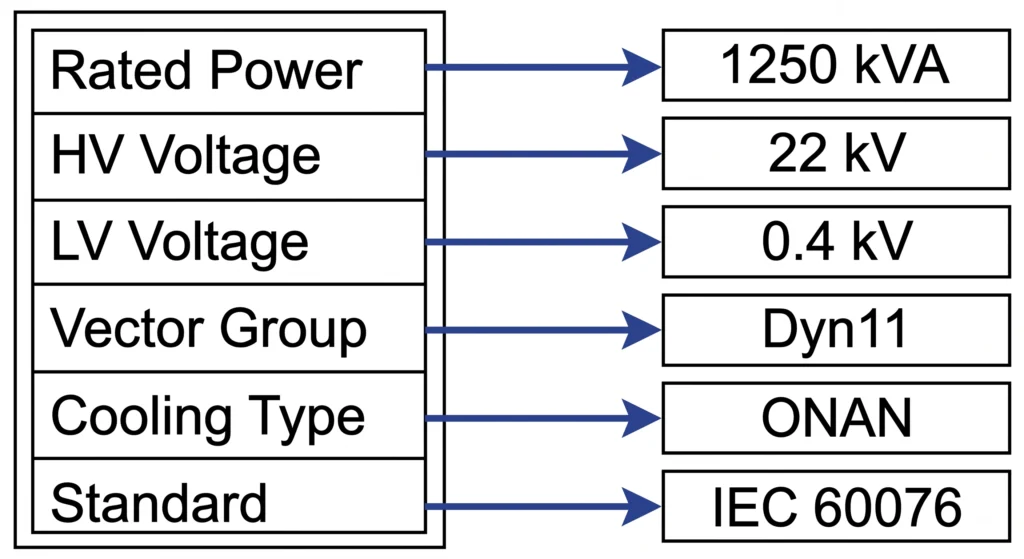
टिप्पणीयुक्त ट्रांसफॉर्मर नेमप्लेट को RFQ हेडर फ़ील्ड्स से क्रॉस-रेफरेंस किया गया है: रेटेड पावर (kVA), HV/LV वोल्टेज (kV), वेक्टर समूह, कूलिंग प्रकार, और लागू मानक — प्रत्येक पैरामीटर को कॉलआउट तीर द्वारा उसके संबंधित RFQ प्रविष्टि फ़ील्ड से जोड़ा गया है, जिसमें उदाहरण मान दिए गए हैं, जो सहायक उपकरण-विशिष्ट फ़ील्ड्स को पूरा करने से पहले आवश्यक प्रत्यक्ष नेमप्लेट-से-स्पेसिफिकेशन मैपिंग को दर्शाता है।.
[विशेषज्ञ की अंतर्दृष्टि]
Um और नाममात्र वोल्टेज सिस्टम डिज़ाइन के आधार पर 5–15% तक भिन्न हो सकते हैं। बुशिंग और फ्यूज विनिर्देशन के लिए हमेशा Um का उपयोग करें, केवल नाममात्र वोल्टेज का नहीं।
प्रदूषण वर्ग IV (अत्यंत भारी) के लिए क्रिपिंग दूरी 53 मिमी/किलोवोल्ट या उससे अधिक आवश्यक है। वर्ग II (25 मिमी/किलोवोल्ट) के लिए रेटेड कैटलॉग बुशिंग्स तटीय औद्योगिक स्थलों पर एक ही गीले मौसम में ट्रैक होकर विफल हो जाएँगी।
बुशिंग्स के लिए विद्युत श्रेणी, यांत्रिक इंटरफ़ेस, इन्सुलेशन सामग्री और टर्मिनल विन्यास की एक साथ पुष्टि आवश्यक है। एक बुशिंग जो विद्युत रूप से सही हो लेकिन टैंक फ्लेंज के साथ आयामी रूप से असंगत हो, स्थापित नहीं किया जा सकता। एक ऐसा बुशिंग जो यांत्रिक रूप से फिट हो लेकिन साइट प्रदूषण वर्ग के लिए पर्याप्त क्रीपज न रखता हो, अपने पहले गीले मौसम में विफल हो जाएगा।.
एलवी बुशिंग पैरामीटर
क्षेत्र
दायरा / विकल्प
टिप्पणियाँ
वोल्टेज वर्ग
1.2 kV / 2.0 kV / 3.0 kV
ट्रांसफार्मर की एलवी वाइंडिंग से मेल करें
वर्तमान रेटिंग
600 A – 5,000 A+
kVA ÷ (√3 × LV kV) से गणना करें।
इन्सुलेशन सामग्री
एचटीएन / छिद्रयुक्त रेज़िन / पोर्सिलेन / एपॉक्सी
उच्च-आर्द्रता वाले स्थलों के लिए HTN वरीय
टर्मिनल विन्यास
सपाट पैड / थ्रेडेड स्टड / DIN स्पेड
केबल लग या बसबार इंटरफ़ेस की पुष्टि करें
माउंटिंग फ्लैंज बाहरी व्यास
मिमी में बताएं
ट्रांसफॉर्मर टैंक के बोर से मेल खाना चाहिए।
0.4 kV पर LV वाइंडिंग वाले 1,000 kVA ट्रांसफॉर्मर के लिए, द्वितीयक धारा प्रत्येक फेज पर लगभग 1,443 A तक पहुँचती है (I = S ÷ (√3 × Uएलवी)). 1,250 A निरंतर रेटेड बुशिंग अपर्याप्त होगा; आपूर्तिकर्ता द्वारा पुष्टि किए गए 10% थर्मल मार्जिन के साथ न्यूनतम 1,600 A निर्दिष्ट करें।.
एमवी बुशिंग पैरामीटर
बुशिंग प्रदर्शन परीक्षण के लिए लागू मानक है आईईसी 60137, जो तरल-भरे ट्रांसफार्मरों में बुशिंग्स के लिए इम्पल्स सहनशीलता, पावर फ्रिक्वेंसी सहनशीलता, और थर्मल करंट रेटिंग परीक्षण आवश्यकताओं को परिभाषित करता है।.
मध्य पूर्व और दक्षिण पूर्व एशियाई उपयोगिता निविदाओं में ANSI और IEC आपूर्ति श्रृंखलाओं को जोड़ने वाले प्रोजेक्ट्स के लिए इंटरफ़ेस मानक को स्पष्ट रूप से पुष्टि किया जाता है। ANSI और DIN पोर्सिलेन एमवी बुशिंग्स ट्रांसफॉर्मर फ्लेंज पर परस्पर प्रतिस्थापन योग्य नहीं हैं; एडॉप्टर हार्डवेयर के बिना फील्ड में प्रतिस्थापन संभव नहीं है।.
बुशिंग वेल इन्सर्ट पैरामीटर
क्षेत्र
दायरा / विकल्प
टिप्पणियाँ
वोल्टेज वर्ग
15/25 kV या 15/25/35 kV
दो मानक कक्षा समूह
वर्तमान रेटिंग
200 एक निरंतर
डेडफ्रंट सिस्टम की ज्यामिति द्वारा ठीक किया गया
कोहनी स्वीकृति
पुष्टि करें हाँ/नहीं
स्टेट लोडब्रेक या नॉन-लोडब्रेक एल्बो
RFQ चरण में कोहनी निर्माता की अनुकूलता की पुष्टि करें। कोहनी इंटरफ़ेस पर आयामी अंतर, जो पूर्ण बैठने से रोकते हैं, केवल ऊर्जाकरण तैयारी के दौरान ही पता लगाए जा सकते हैं — डिलीवरी के बाद दृश्य निरीक्षण के दौरान नहीं।.
सुरक्षा एवं स्विचिंग RFQ क्षेत्र: बे-ओ-नेट फ्यूज़, धारा-सीमित फ्यूज़, और लोडब्रेक स्विच
किसी भी फ्यूज परिवार का आकार निर्धारित करने से पहले फ्यूज समन्वय को सुलझाया जाना चाहिए। स्विच वोल्टेज वर्ग की पुष्टि Um के आधार पर की जानी चाहिए, न कि नाममात्र वोल्टेज के आधार पर। ये तीनों परिवार परस्पर निर्भर हैं — किसी एक में अपूर्ण विनिर्देश अन्य दो की वैधता को प्रभावित करता है।.
बे-ओ-नेट फ्यूज असेंबली क्षेत्र
क्षेत्र
दायरा / विकल्प
टिप्पणियाँ
वोल्टेज वर्ग
१५ केवी / २५ केवी
एचवी वाइंडिंग से मेल करें
भाई
150 kVp
15/25 kV वर्ग के लिए मानक
फ्यूज लिंक धारा क्षमता
6 A – 200 A
FLA से आकार + इनरश मार्जिन
बाधित रेटिंग
लगभग 3,500 A तक विषमध्रुवीय
निष्कासन सीमा; सीएलएफ ऊपर संभालता है
हॉट-स्टिक संचालनीयता
आवश्यक हाँ/नहीं
लाइव-फ्रंट इंस्टॉलेशन के लिए अनिवार्य
सीमित आवरण रिक्ति वाली पैड-माउंटेड इंस्टॉलेशनों में, खुली निष्कासन Bay-O-Net असेंबली निर्दिष्ट करने से पहले यह सुनिश्चित करें कि निष्कासन चाप का मार्ग अवरोधरहित हो।.
वर्तमान-सीमित फ्यूज क्षेत्र
IEC 60282-1 के अनुसार, ट्रांसफॉर्मर संरक्षण के लिए धारा-सीमित फ्यूज़ों को नाममात्र वोल्टेज, निरंतर धारा और अधिकतम विच्छेदन धारा—ये तीनों RFQ के अनिवार्य क्षेत्र हैं।.
क्षेत्र
दायरा / विकल्प
टिप्पणियाँ
प्रणाली वोल्टेज
12 किलोवोल्ट / 24 किलोवोल्ट / 36 किलोवोल्ट
राज्य उम
निरंतर धारा रेटेड
2 A – 200 A
ट्रांसफॉर्मर HV FLA से आकार
अधिकतम बाधित करने वाली धारा
50 kA तक सममितीय
त्रुटि स्तर अध्ययन के विरुद्ध पुष्टि करें
समन्वय सीमा
~2,500 ए – 3,500 ए
प्रोटेक्शन इंजीनियर के साथ हैंडऑफ़ की पुष्टि करें
पारित I²t
A²s में बताएं
वाइंडिंग क्षति मूल्यांकन के लिए आवश्यक
धारा-सीमित फ्यूज की पारगम्य ऊर्जा I के रूप में व्यक्त की जाती है।2ए की इकाइयों में टी2s. ट्रांसफार्मर सुरक्षा समन्वय के लिए, फ्यूज I2अधिकतम दोष धारा ट्रांसफार्मर की सहन क्षमता I से कम होनी चाहिए।2t शॉर्ट-सर्किट प्रतिबाधा Z से व्युत्पन्न।k % और वाइंडिंग थर्मल टाइम कॉन्स्टेंट। इस क्षेत्र को छोड़ देने से आपूर्तिकर्ता सुरक्षा मार्जिन की पुष्टि नहीं कर सकता।.
15 kV और उससे अधिक पर प्रत्यक्ष मैनुअल संचालन की तुलना में संग्रहित-ऊर्जा तंत्रों को प्राथमिकता दी जाती है, और रुकावट की गति ऑपरेटर की तकनीक से प्रभावित हुए बिना एकसमान रहती है, जिससे स्विच के सेवा जीवन भर संपर्क क्षरण की दर सीधे कम हो जाती है।.
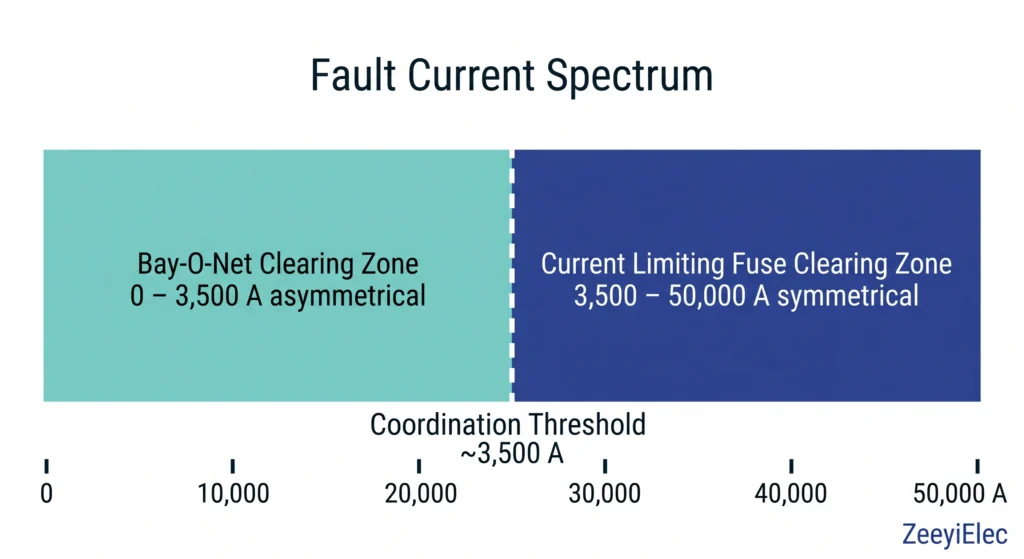
वितरण ट्रांसफॉर्मर सुरक्षा के लिए दोष धारा स्पेक्ट्रम, जिसमें Bay-O-Net निष्कासन फ्यूज क्लियरिंग ज़ोन दिखाया गया है (0–3,500 A असममित) और धारा-सीमित फ्यूज क्लियरिंग क्षेत्र (3,500–50,000 A सममित), समन्वय हैंडऑफ़ थ्रेशोल्ड लगभग 3,500 A पर चिह्नित है — वह महत्वपूर्ण सीमा जिसे किसी भी फ्यूज परिवार को RFQ में निर्दिष्ट करने से पहले सिस्टम फॉल्ट लेवल अध्ययन के आधार पर पुष्टि करनी चाहिए।.
[विशेषज्ञ की अंतर्दृष्टि]
ट्रांसफॉर्मर के kVA के आधार पर ही Bay-O-Net फ्यूज लिंक का आकार कभी न निर्धारित करें। पूर्ण-भार प्राथमिक धारा की गणना करनी चाहिए, फिर ऊर्जाकरण के दौरान अनावश्यक संचालन से बचने के लिए उसे 0.1 सेकंड के लिए FLA का 8–12 गुना इनरश मार्जिन से गुणा करें।
लेट-थ्रू I²t को ट्रांसफॉर्मर की शॉर्ट-सर्किट सहनशीलता रेटिंग के खिलाफ पुष्टि किया जाना चाहिए। फ्यूज चयन की खरीद टीम अक्सर इस क्षेत्र को छोड़ देती हैं, इसे आपूर्तिकर्ता की जिम्मेदारी मानकर, जबकि ऐसा नहीं है।
ऑफ-सर्किट टैप चेंजर आरएफक्यू फ़ील्ड्स और वोल्टेज समायोजन विनिर्देश लॉजिक
ऑफ़-सर्किट टैप चेंजर्स ट्रांसफॉर्मर के टर्न अनुपात को सामान्यतः पाँच अलग-अलग स्थितियों में समायोजित करते हैं, जो 2.5% के अंतराल पर होती हैं और नाममात्र वोल्टेज अनुपात के आसपास ±5% का समायोजन प्रदान करती हैं। किसी भी स्थिति परिवर्तन से पहले ट्रांसफॉर्मर को पूरी तरह से विद्युत्-विच्छेदित किया जाना चाहिए; यह शर्त इस अनुभाग के प्रत्येक पैरामीटर पर लागू होती है।.
विद्युत और यांत्रिक पैरामीटर क्षेत्र
क्षेत्र
दायरा / विकल्प
टिप्पणियाँ
वोल्टेज वर्ग
15 kV / 25 kV / 35 kV
एचवी वाइंडिंग से मेल करें
वर्तमान रेटिंग
63 A / 125 A
ट्रांसफॉर्मर HV FLA से चुनें
पदों की संख्या
5 (मानक)
नाममात्र के आसपास ±2 × 2.5%
टैप स्टेप वोल्टेज
वी में गणना करें
एचवी वाइंडिंग वोल्टेज × 2.5% प्रति चरण
घूर्णन प्रकार
रेखीय / घूर्णी
ट्रांसफॉर्मर OEM ड्राइंग से पुष्टि करें
मोटर ऑपरेटर
हाँ/नहीं
सशर्त — नीचे देखें
RFQ जमा करने से पहले टैप स्टेप वोल्टेज की गणना करनी चाहिए। 22 kV रेटेड HV वाइंडिंग वाले ट्रांसफॉर्मर में मानक 5-पोजीशन टैप व्यवस्था के लिए प्रत्येक 2.5% स्टेप 550 V के बराबर होता है। पूरी समायोजन सीमा -2 पोजीशन से +2 पोजीशन तक 20,900 V से 23,100 V तक फैली हुई है, जो कुल 2,200 V की विंडो है।एसी. केवल “22 kV, 5-स्थिति” निर्दिष्ट करने से स्टेप वोल्टेज के बिना वाइंडिंग अनुकूलता के बारे में कुछ भी पुष्टि नहीं होती।.
घूर्णन प्रकार चयन तर्क
घूर्णन प्रकार की पुष्टि के लिए ट्रांसफार्मर OEM ड्रॉइंग या निर्माता की प्रत्यक्ष पुष्टि आवश्यक है; इसे केवल kVA रेटिंग या वोल्टेज वर्ग से अनुमानित नहीं किया जा सकता। एक दस्तावेजित फील्ड मामले में, केवल विद्युत मापदंडों के आधार पर ऑर्डर किए गए प्रतिस्थापन टैप चेंजर को टैंक के आंतरिक भाग द्वारा अनुमत स्थान की तुलना में 40% अधिक रैखिक यात्रा दूरी की आवश्यकता थी; आंतरिक ट्रांसफार्मर संशोधन के बिना स्थापना संभव नहीं थी।.
सशर्त क्षेत्र: मोटर ऑपरेटर
क्षेत्र
यदि लागू हो तो निर्दिष्ट करें
मोटर ऑपरेटर वोल्टेज
24 वोल्ट डीसी / 110 वोल्ट एसी / 230 वोल्ट एसी
नियंत्रण संकेत का प्रकार
स्थानीय / दूरस्थ / SCADA इंटरफ़ेस
स्थिति प्रतिक्रिया
4–20 mA / डिजिटल पल्स / कोई नहीं
पर्यावरणीय आवरण
मोटर आवास के लिए आईपी रेटिंग
हर टैप चेंजर RFQ में आपूर्तिकर्ता द्वारा अनुशंसित इंटरलॉक लेबलिंग विनिर्देश का अनुरोध किया जाना चाहिए। लोड के तहत संचालित टैप चेंजर्स से संबंधित फील्ड घटनाएँ लगातार अपर्याप्त लॉकआउट/टैगआउट लेबलिंग या इस उपकरण और लोडब्रेक स्विच के बीच कर्मियों की भ्रम के कारण होती हैं।.
आपूर्तिकर्ता मूल्यांकन क्षेत्र और RFQ प्रस्तुति चेकलिस्ट
आपूर्तिकर्ता योग्यता मानदंड
क्षेत्र
आवश्यकता
गुणवत्ता प्रणाली
ISO 9001 वर्तमान प्रमाणपत्र का अनुरोध करें
उत्पाद प्रमाणीकरण
गंतव्य बाजार के अनुसार लागू CE / RoHS
कारखाना परीक्षण रिपोर्टें
नियमित रिपोर्टें आवश्यक हैं; अनुरोध पर प्रकार परीक्षण।
नमूने का लीड समय
मानक विन्यासों के लिए आमतौर पर 3–6 सप्ताह
ओईएम/ओडीएम क्षमता
कस्टम आयामों या निजी-लेबल मार्किंग के लिए पुष्टि करें।
दस्तावेज़ निर्यात करें
सीओओ, पैकिंग सूची, परीक्षण प्रमाणपत्र, पीओ से पहले एचएस कोड की पुष्टि करें
आरएफक्यू प्रस्तुति तत्परता गेट
सबमिट करने से पहले, पुष्टि करें कि सभी आठ बिंदु हल हो गए हैं:
ट्रांसफॉर्मर नेमप्लेट डेटा पूरा
सबसे ऊँचा सिस्टम वोल्टेज यूएम पुष्टि किया गया
बीआईएल ने kVp में कहा।
फ्यूज समन्वय सीमा दर्ज की गई।
प्रति सहायक उपकरण परिवार मात्रा, अतिरिक्त अनुपात के साथ बताई गई
वितरण की शर्तें और बंदरगाह की पुष्टि हो गई
निरीक्षण की आवश्यकता बताई गई
जहाँ लागू हो, आयामी आरेख या डेटाशीट संलग्न है।
एक ही वस्तु का गायब होना आपूर्तिकर्ता से स्पष्टीकरण अनुरोध करने और कोटेशन की समय-सीमा को दिनों या हफ्तों तक रीसेट करने के लिए पर्याप्त आधार है।.
ZeeyiElec इस टेम्पलेट में सभी सात ट्रांसफार्मर सहायक उपकरण परिवारों में तकनीकी RFQ प्रतिक्रियाओं का समर्थन करता है। परियोजना पैरामीटर और नेमप्लेट डेटा को के माध्यम से सबमिट करें। परियोजना पूछताछ प्रपत्र. IEC मानक संरेखण नोट्स के साथ एक समानांतर क्षेत्र-दर-क्षेत्र खरीद संदर्भ के लिए, ट्रांसफॉर्मर सहायक उपकरणों के लिए आरएफक्यू चेकलिस्ट इसी सहायक उपकरण परिवारों को कवर करता है। उसी परियोजना पर केबल सहायक उपकरण की खरीद के लिए, केबल एक्सेसरीज़ श्रृंखला एक समानांतर चयन और आरएफक्यू ढांचा प्रदान करता है।.
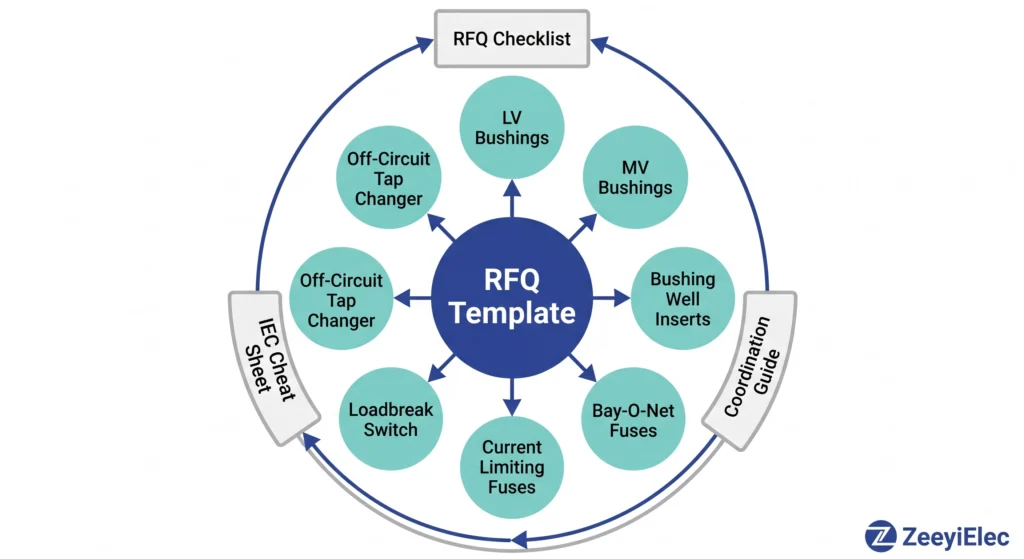
हब-एंड-स्पोक संसाधन मानचित्र जो ट्रांसफॉर्मर सहायक उपकरण RFQ टेम्पलेट (केंद्रीय नोड) को सात उत्पाद श्रृंखला पृष्ठों — एलवी बुशिंग्स, एमवी बुशिंग्स, बुशिंग वेल इन्सर्ट्स, बे-ओ-नेट फ्यूज़, करंट लिमिटिंग फ्यूज़, लोडब्रेक स्विच, और ऑफ-सर्किट टैप चेंजर — से जोड़ता है, साथ ही बाहरी रिंग में RFQ चेकलिस्ट, समन्वय गाइड, और IEC विनिर्देशन चीट शीट सहित खरीद सहायता संसाधन शामिल हैं।.
अक्सर पूछे जाने वाले प्रश्न
ट्रांसफॉर्मर एक्सेसरी के लिए RFQ शुरू करने के लिए न्यूनतम आवश्यक जानकारी क्या है?
न्यूनतम रूप से, आपको ट्रांसफॉर्मर नेमप्लेट डेटा (kVA, HV/LV वोल्टेज, वेक्टर समूह, कूलिंग प्रकार और लागू मानक), उच्चतम सिस्टम वोल्टेज Um, kVp में BIL, स्थापना की ऊँचाई और साइट प्रदूषण वर्ग की आवश्यकता है। इनके बिना, आपूर्तिकर्ता द्वारा रिक्त स्थान भरने की धारणा के बिना कोई भी एक्सेसरी परिवार सही ढंग से निर्दिष्ट नहीं किया जा सकता।.
मैं Bay-O-Net असेंबली के लिए सही फ्यूज लिंक करंट रेटिंग की गणना कैसे करूँ?
ट्रांसफॉर्मर की पूर्ण-भार प्राइमरी धारा की गणना kVA ÷ (√3 × HV kV) का उपयोग करके करें, फिर 0.1 सेकंड के लिए FLA का 8 से 12 गुना इनरश मार्जिन लागू करें, ताकि ऐसी फ्यूज लिंक रेटिंग की पहचान की जा सके जो लगभग 2,500–3,500 A की Bay-O-Net इंटरप्टिंग सीमा से नीचे ओवरलोड दोषों को क्लियर करते समय बिना संचालित हुए सामान्य भार वहन कर सके।.
ट्रांसफॉर्मर सहायक विनिर्देश में नाममात्र वोल्टेज और Um में क्या अंतर है?
नाममात्र वोल्टेज नेटवर्क का डिज़ाइन संदर्भ है; Um वह अधिकतम वोल्टेज है जिसे सिस्टम सामान्य परिचालन स्थितियों में सहन करता है, जो आमतौर पर नाममात्र वोल्टेज से 5–15% अधिक होता है, और बुशिंग क्रीपेज दूरी, BIL तथा फ्लैशओवर आवश्यकताएँ सभी Um द्वारा नियंत्रित होती हैं, न कि नाममात्र वोल्टेज द्वारा।.
ऑफ-सर्किट टैप चेंजर निर्दिष्ट करते समय रोटेशन प्रकार क्यों मायने रखता है?
रेखीय और रोटरी टैप चेन्जर तंत्रों की आंतरिक यात्रा ज्यामिति और टैंक क्लियरेंस आवश्यकताएँ भिन्न होती हैं, जिसका अर्थ है कि केवल विद्युत मापदंडों के आधार पर निर्दिष्ट एक इकाई को ट्रांसफार्मर द्वारा अनुमत आंतरिक क्लियरेंस से अधिक स्थान की आवश्यकता हो सकती है, जिससे ट्रांसफार्मर में संशोधन किए बिना इसकी स्थापना भौतिक रूप से असंभव हो जाती है।.
ऑफ-सर्किट टैप चेंजर के बजाय लोडब्रेक स्विच का निर्दिष्टीकरण कब किया जाना चाहिए?
जब अनुप्रयोग को ट्रांसफॉर्मर के ऊर्जा-युक्त रहते हुए लोड धारा को जोड़ने या तोड़ने की आवश्यकता हो, तो लोडब्रेक स्विच निर्दिष्ट करें; जब वोल्टेज अनुपात समायोजन केवल नियोजित विद्युत्-विच्छेदन के दौरान आवश्यक हो, तब ऑफ-सर्किट टैप चेन्जर निर्दिष्ट करें। बाहरी रूप में समान दिखने के बावजूद, ये उपकरण परिचालनात्मक रूप से परस्पर प्रतिस्थाप्य नहीं हैं।.
ट्रांसफॉर्मर एक्सेसरी RFQ में कौन सा स्पेयर अनुपात शामिल किया जाना चाहिए?
उपभोज्य सहायक उपकरण जैसे फ्यूज लिंक के लिए प्रति परियोजना 10–15% अतिरिक्त भंडार निर्धारित किया जाता है; गैर-उपभोज्य यांत्रिक घटक जैसे बुशिंग, टैप चेंजर और लोडब्रेक स्विच आमतौर पर 5% या प्रति परियोजना एक अतिरिक्त इकाई के रूप में रखे जाते हैं, और दूरस्थ स्थलों के लिए जहाँ प्रतिस्थापन का समय चार सप्ताह से अधिक होता है, उच्च अनुपात उचित ठहराया जाता है।.
क्या एक ही RFQ एक ही आपूर्तिकर्ता से कई ट्रांसफॉर्मर सहायक उपकरण परिवारों को कवर कर सकती है?
हाँ, और एक ही प्रस्तुति में समेकित करने से समन्वय प्रयास कम हो जाता है, लेकिन प्रत्येक सहायक उपकरण परिवार को अपने पैरामीटर फ़ील्ड्स के साथ एक अलग अनुभाग में रखना अनिवार्य है, क्योंकि बिना विभेदित विनिर्देशों को एक ही ब्लॉक में समूहित करना बहु-परिवार ट्रांसफॉर्मर सहायक उपकरण ऑर्डर पर गलत उद्धरण और गलत शिपमेंट का सबसे आम कारण है।.
योयो शी
योयो शी ZeeyiElec के लिए लिखती हैं, जहाँ उनका ध्यान मध्यम-वोल्टेज सहायक उपकरणों, ट्रांसफॉर्मर घटकों और केबल सहायक समाधानों पर केंद्रित है। उनके लेख उत्पाद अनुप्रयोगों, तकनीकी मूल बातों और वैश्विक विद्युत उद्योग के खरीदारों के लिए आपूर्ति संबंधी अंतर्दृष्टि को कवर करते हैं।.





 English
 한국어
한국어 العربية
 Español
 हिन्दी
 தமிழ்
தமிழ் Deutsch (Sie)
 Français
 Português do Brasil
 Русский