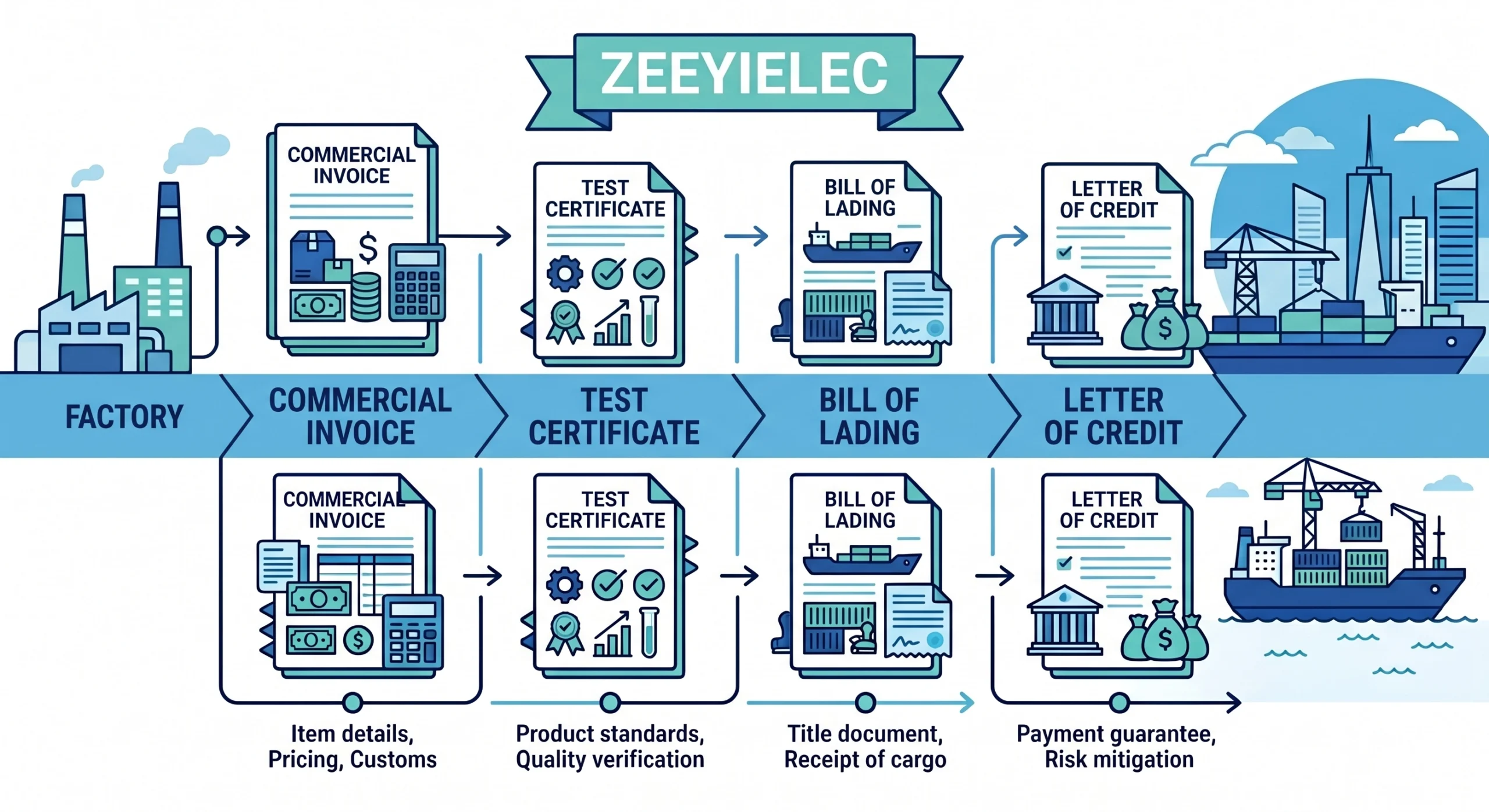
ट्रांसफॉर्मर एक्सेसरीज़ या केबल एक्सेसरीज़ की हर सीमा-पार खेप एक कागजी प्रक्रिया के साथ चलती है, जो माल ढुलाई से भी अधिक काम करती है। दस्तावेज़ीकरण पैकेज तीन परिणाम तय करता है: माल कस्टम से क्लियर होगा या नहीं, भुगतान साधन धनराशि जारी करेगा या नहीं, और खरीदार की कमीशनिंग अनुसूची लागू रहेगी या नहीं। एक ही प्रमाणपत्र की कमी बंदरगाह पर कंटेनर को 2–3 सप्ताह तक रोक सकती है, और भुगतान शर्तों के विपरीत एक चालान पाँच या छह अंकों वाले ऑर्डर को अनिश्चितकाल तक अटका सकता है।.
वितरण-श्रेणी के एक्सेसरीज़ के लिए, 1.2 kV निम्न-वोल्टेज बुशिंग्स से लेकर 38/40.5 kV लोडब्रेक स्विच तक के आइटम्स के लिए दस्तावेज़ सेट व्यापक रूप से सुसंगत है, लेकिन तकनीकी प्रमाणपत्र की परत वोल्टेज श्रेणी और गंतव्य जांच के अनुसार बढ़ती है। चार दस्तावेज़ परिवारों को पहले से ही सही ढंग से तैयार करने से वह हड़कंप टल जाती है जो तब होती है जब कोई फॉरवर्डर अचानक ऐसे कागजात मांगता है जिन्हें आपूर्तिकर्ता ने कभी तैयार नहीं किया था।.
एक विद्युत सहायक उपकरण निर्यात आदेश के साथ कौन से दस्तावेज़ यात्रा करते हैं?
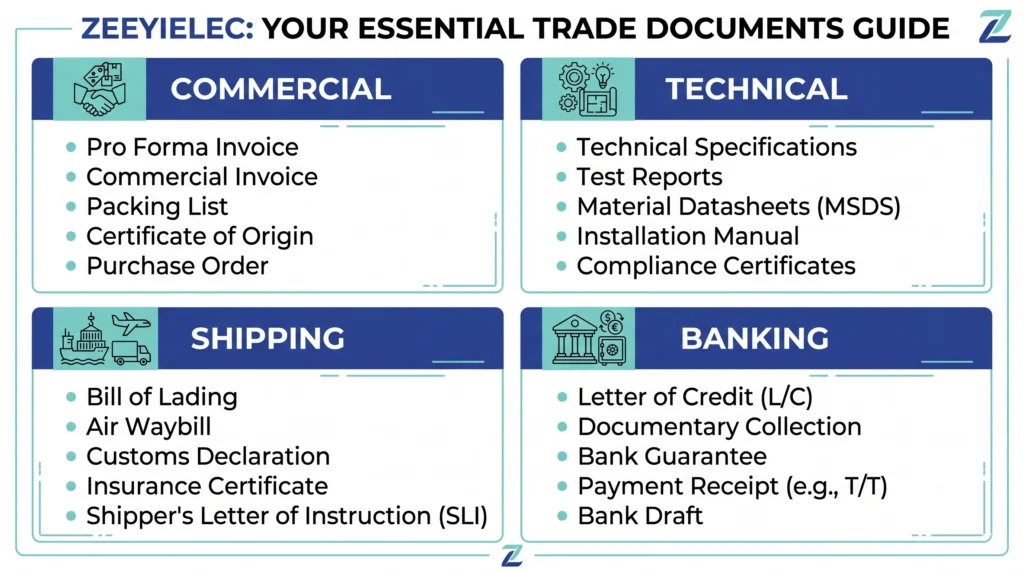
विद्युत सहायक उपकरणों के लिए निर्यात दस्तावेज़ीकरण चार कार्यात्मक समूहों में वर्गीकृत है, प्रत्येक समूह एक अलग हितधारक के प्रश्न का उत्तर देता है।.
चार दस्तावेज़ परिवार
वाणिज्यिक दस्तावेज़ — क्या बेचा गया, किस मूल्य पर, किन शर्तों पर (कस्टम मूल्यांकन और आयातक का लेखा-जोखा)।.
तकनीकी अनुपालन प्रमाणपत्र — यह प्रमाण कि उत्पाद सहमत विनिर्देशों को पूरा करता है (परियोजना अभियंता और निरीक्षण प्राधिकरण)।.
शिपिंग और लॉजिस्टिक्स दस्तावेज़ — माल कैसे परिवहन होता है और कहाँ से आता है (परिवहनकर्ता और सीमा शुल्क)।.
बैंकिंग और भुगतान दस्तावेज़ — बैंक को धन जारी करने के लिए क्या आवश्यक है (लेट्टर ऑफ़ क्रेडिट या संग्रह निपटान)।.
एक पूर्ण आदेश सभी चारों को छूता है; एक अपूर्ण आदेश आमतौर पर सबसे कमजोर पर असफल हो जाता है।.
दस्तावेज़-से-उद्देश्य मानचित्रण
नीचे दी गई तालिका में उन मुख्य दस्तावेज़ों का विवरण दिया गया है जिनकी अधिकांश सहायक निर्यात के लिए आवश्यकता होती है। शर्तिया आइटम, वरीयता प्रमाणपत्र, कीटनाशक छिड़काव घोषणाएँ केवल तभी प्रकट होती हैं जब गंतव्य नियम उन्हें सक्रिय करते हैं।.
दस्तावेज़
मुख्य उद्देश्य
आमतौर पर द्वारा जारी किया जाता है
वाणिज्यिक चालान
कस्टम मूल्यांकन, भुगतान आधार
आपूर्तिकर्ता
पैकिंग सूची
भौतिक मिलान, वजन/आयतन
आपूर्तिकर्ता
माल भाड़ा पर्ची / हवाई माल पर्ची
शीर्षक और परिवहन अनुबंध
परिवहनकर्ता / अग्रेषक
मूल प्रमाणपत्र
कर्तव्य उपचार, उत्पत्ति प्रमाण
वाणिज्य मंडल
प्रकार / नियमित परीक्षण रिपोर्ट
विनिर्देश अनुपालन
निर्माता परीक्षण प्रयोगशाला
सामग्री / RoHS घोषणा
पदार्थ अनुपालन
आपूर्तिकर्ता
चित्र 1. चार कार्यात्मक दस्तावेज़ समूह जिन्हें एक सहायक निर्यात आदेश को पूरा करना चाहिए, प्रत्येक कस्टम मूल्यांकन से लेकर बैंक भुगतान रिहाई तक एक विशिष्ट हितधारक प्रश्न का उत्तर देता है।.
दोनों उत्पाद लाइनों से सोर्सिंग करने वाले खरीदार श्रेणी-स्तर का तकनीकी दायरा समीक्षा कर सकते हैं। ट्रांसफॉर्मर सहायक उपकरण और केबल सहायक उपकरण सूची को अंतिम रूप देने से पहले अवलोकन पृष्ठ देखें, क्योंकि आवश्यक परीक्षण साक्ष्य सहायक उपकरण परिवार के अनुसार भिन्न होता है।.
व्यावसायिक दस्तावेज़ों की जाँच-सूची
व्यावसायिक दस्तावेज़ यह स्थापित करते हैं कि क्या बेचा गया, इसकी घोषित मूल्य, और लेनदेन को नियंत्रित करने वाली शर्तें क्या हैं। यहाँ बार-बार होने वाली विफलता का बिंदु कोई दस्तावेज़ का अभाव नहीं है, बल्कि दस्तावेज़ों के बीच असंगति है—जैसे चालान मूल्य पैकिंग सूची की मात्रा से मेल नहीं खाता, या उत्पाद विवरण के साथ HS कोड का टकराव।.
वाणिज्यिक चालान
वाणिज्यिक चालान सीमा शुल्क मूल्यांकन के लिए नियंत्रक दस्तावेज़ है। इसमें न्यूनतम रूप से शामिल होना चाहिए: एक सटीक उत्पाद विवरण (जैसे, “26/35 kV कोल्ड श्रिंक आउटडोर टर्मिनेशन, 70–240 मिमी² कंडक्टर रेंज”), एचएस कोड, इकाई और कुल मूल्य, मुद्रा, और सहमत Incoterms 2020 शर्त (FOB, CIF, DAP)। “इलेक्ट्रिकल पार्ट्स” जैसे अस्पष्ट विवरण पुनर्वर्गीकरण और शुल्क विवादों को आमंत्रित करते हैं। जहाँ एक ऑर्डर में वोल्टेज वर्ग मिश्रित हों, जैसे 15 kV बुशिंग वेल के साथ 38 kV स्विच, तो प्रत्येक लाइन आइटम को अपनी खुद की वर्गीकरण के साथ अलग से होना चाहिए, क्योंकि ड्यूटी दरें लाइन के अनुसार भिन्न हो सकती हैं।.
पैकिंग सूची
पैकिंग सूची भौतिक शिपमेंट का चालान से मिलान करती है, जिसमें सकल और शुद्ध वजन, कार्टन और पैलेट की संख्या, तथा बाहरी आयाम दर्ज होते हैं। सटीकता परिचालन में महत्वपूर्ण है: एक 200 A बुशिंग वेल इंसर्ट और उसके मेटिंग घटक बहुत अलग-अलग वजन पर भेजे जाते हैं, और कंडक्टर क्रॉस-सेक्शन और पैकेजिंग के आधार पर 20 फुट के केबल जॉइंट किट का सकल वजन 8,000–12,000 किलोग्राम हो सकता है। कस्टम और फारवर्डर इन आंकड़ों का क्रॉस-चेक करते हैं, इसलिए लगभग 5% से अधिक की नेट-बनाम-ग्रॉस विसंगतियाँ अक्सर एक पूछताछ को जन्म देती हैं जो रिहाई में देरी करती हैं।.
प्रोफॉर्मा चालान बनाम अंतिम चालान
एक प्रोफार्मा इनवॉइस ऑर्डर से पहले जारी की जाती है, यह खरीदार की खरीद स्वीकृति, आयात लाइसेंस, या लेटर ऑफ क्रेडिट खोलने में सहायक होती है, और आमतौर पर 15–30 दिनों के लिए वैध होती है। अंतिम वाणिज्यिक चालान शिपमेंट के समय जारी किया जाता है और इसे खरीदार के भुगतान साधन में उल्लिखित विवरण से मेल खाना चाहिए। जब प्रोफार्मा के विरुद्ध एल/सी खोला गया हो, तो अंतिम चालान का विवरण, मूल्य और शर्तें एल/सी की शब्दावली को पुन: प्रस्तुत करनी चाहिए, अन्यथा बैंक विसंगति चिह्नित कर देता है।.
इन क्षेत्रों को कुशलतापूर्वक संकलित करने वाले खरीदार एक संरचित ढांचे से काम कर सकते हैं। ट्रांसफॉर्मर सहायक उपकरणों के लिए आरएफक्यू चेकलिस्ट, जो उस विनिर्देश विवरण को कैद करता है जो बाद में चालान विवरण में भरा जाता है और उद्धरण तथा शिपमेंट के बीच विचलन को रोकता है।.
[विशेषज्ञ की अंतर्दृष्टि]
कोटेशन में HS कोड और उत्पाद विवरण निर्धारित करें, फिर प्रत्येक आगामी दस्तावेज़ में इन्हें शब्दशः दोहराएँ।.
प्रत्येक वोल्टेज वर्ग को अपनी बिल पंक्ति के रूप में संभालें; मिश्रित-वर्ग शिपमेंट्स को एक ही कोड के अंतर्गत वर्गीकृत करने पर पुनर्मूल्यांकन की आवश्यकता होती है।.
नेट और ग्रॉस वजन के अंतर को कम रखें; बड़े अंतर सीमा शुल्क पूछताछ का सामान्य कारण होते हैं।.
ट्रांसफॉर्मर एवं केबल एक्सेसरीज़ के लिए तकनीकी अनुपालन प्रमाणपत्र
तकनीकी प्रमाणपत्र वह बिंदु हैं जहाँ विद्युत सहायक उपकरणों का निर्यात साधारण वस्तुओं से अलग होता है। ये प्रमाणित करते हैं कि 25 kV का बुशिंग वेल या 35 kV का कोल्ड श्रिंक जॉइंट वास्तव में उस परियोजना द्वारा निर्दिष्ट डाइइलेक्ट्रिक और यांत्रिक प्रदर्शन को पूरा करता है। खरीदार, निरीक्षण निकाय और कुछ बाजारों में सीमा शुल्क स्वयं इन्हें स्वीकृति की शर्तें मानते हैं, वैकल्पिक संलग्नक नहीं।.
परीक्षण रिपोर्ट बनाम नियमित परीक्षण प्रमाणपत्र
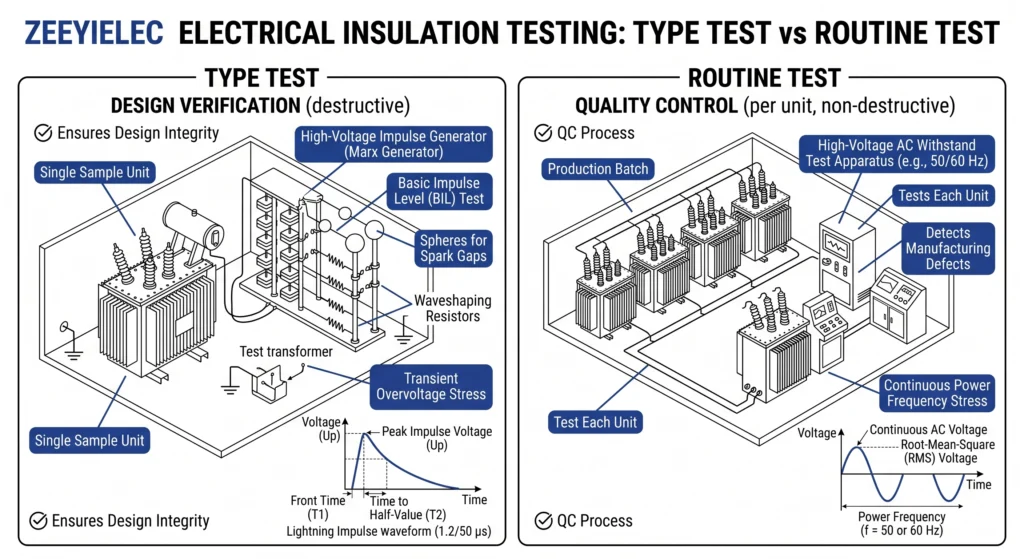
एक टाइप टेस्ट रिपोर्ट प्रतिनिधि नमूने पर एक-बार की योग्यता परीक्षण, आंशिक निर्वहन, आवेग प्रतिरोध (BIL), ताप-चक्र, और डाइइलेक्ट्रिक परीक्षणों का दस्तावेजीकरण करती है, जो यह दर्शाते हैं कि डिज़ाइन अपनी श्रेणी के मानकों को पूरा करता है। एक नियमित परीक्षण प्रमाणपत्र में शिप किए गए वास्तविक उत्पादन बैच पर किए गए पास/फेल जांचों को दर्ज किया जाता है, जो आमतौर पर पावर-फ्रीक्वेंसी सहनशीलता और आंशिक निर्वहन स्क्रीन होती हैं। एक खरीदार जो 25 kV का एक्सेसरी निर्दिष्ट करता है, आमतौर पर फाइल में 150 kV BIL टाइप टेस्ट रिपोर्ट और डिलीवर किए गए लॉट से संबंधित नियमित परीक्षण प्रमाणपत्रों की उम्मीद करता है।.
चित्र 2. प्रतिनिधि नमूने पर एक-बार की प्रकार योग्यता परीक्षण और भेजे गए बैच पर लॉट-विशिष्ट नियमित परीक्षण के बीच अंतर, सामान्य मध्यम-वोल्टेज स्वीकृति मापदंडों के साथ।.
मध्यम-वोल्टेज सहायक उपकरणों के लिए, नियमित आंशिक निर्वहन स्वीकृति सामान्यतः मापे गए स्तर ≤ 10 pC पर निर्धारित की जाती है, जो रेटेड फेज-टू-ग्राउंड मान से ऊपर के परीक्षण वोल्टेज पर होता है, जबकि नियमित एसी सहन क्षमता लगभग 1 मिनट तक लागू की जाती है। इन्सुलेशन प्रतिरोध जांचों में सामान्यतः 20 °C पर GΩ श्रेणी के मान अपेक्षित होते हैं, अन्य तापमानों पर सुधार लागू किया जाता है।.
सामग्री एवं पदार्थ घोषणाएँ
अधिकांश गंतव्य RoHS घोषणा की अपेक्षा करते हैं और, बढ़ती हुई प्रवृत्ति के साथ, सामग्री संरचना या REACH-शैली के पदार्थ विवरण की भी। केबल एक्सेसरीज़ के लिए इसमें सिलिकॉन या EPDM इलास्टोमर और तनाव-नियंत्रण यौगिक शामिल हैं; बुशिंग्स के लिए इसमें पोर्सिलेन, एपॉक्सी या HTN बॉडी और फिटिंग्स में किसी भी भारी धातु की मात्रा शामिल है। ये आपूर्तिकर्ता द्वारा जारी किए जाते हैं, लेकिन इनमें इनके पीछे के परीक्षण या आपूर्ति-श्रृंखला आधार का संदर्भ होना चाहिए।.
गंतव्य के अनुसार मानक-अनुपालन प्रमाण
अनुपालन अपेक्षाएँ गंतव्य द्वारा अपनाए गए मानक प्रणाली के अनुरूप होती हैं। बुशिंग्स को आमतौर पर IEC 60137 के अनुसार प्रमाणित किया जाता है, और केबल एक्सेसरीज़ को संबंधित केबल-एक्सेसरी परीक्षण श्रृंखला के तहत आंका जाता है, लेकिन किसी विशिष्ट खरीदार द्वारा उद्धृत सटीक टाइप-टेस्ट प्रावधान बाजार और परियोजना के अनुसार भिन्न होते हैं [मानक सत्यापित करें: वोल्टेज वर्ग के अनुसार लागू IEC केबल-एक्सेसरी टाइप-टेस्ट संदर्भ]। समानता मानने के बजाय शिपमेंट से पहले खरीदार द्वारा निर्दिष्ट मानक की पुष्टि करें।.
मानकों का खरीद भाषा से कैसे मेल होता है, इसका पैरामीटर-दर-पैरामीटर अवलोकन, आईईसी विनिर्देशन चीट शीट यह उन परीक्षण आवश्यकताओं को समेकित करता है जिन्हें इंजीनियर सबसे अधिक बार अनुरोध करते हैं। प्रामाणिक मानक का दायरा और संशोधन स्थिति सीधे जारी करने वाली संस्था से सत्यापित की जानी चाहिए — देखें ट्रांसफॉर्मर बुशिंग्स के लिए IEC 60137 मानक आईईसी वेबस्टोर पर.
शिपिंग और लॉजिस्टिक्स दस्तावेज़
शिपिंग दस्तावेज़ यह साबित करते हैं कि माल कैसे और कहाँ से आता है। बार-बार आने वाली अड़चन स्वयं वाहक के कागजात में नहीं बल्कि साथ में संलग्न मूल और पैकेजिंग दस्तावेज़ों में होती है, जैसे फ्यूमिगेशन मार्क का गायब होना या वह मूल प्रमाणपत्र जो उस व्यापार समझौते से मेल नहीं खाता जिसे खरीदार दावा करना चाहता था।.
माल-परिवहन पत्र / हवाई माल-परिवहन पत्र
बिल ऑफ़ लेडिंग (समुद्री) या एयर वे बिल (हवाई) परिवहन अनुबंध और मूल “टू ऑर्डर” बी/एल के लिए स्वामित्व दस्तावेज़ दोनों है। इसमें शिपर, कन्साइन, और सूचना प्राप्त करने वाली पार्टी का नाम बिल्कुल वैसे ही होना चाहिए जैसे खरीदार का बैंक और ब्रोकर अपेक्षा करते हैं, और शिपिंग की शर्तें चालान के Incoterms के अनुरूप होनी चाहिए। लेटर ऑफ क्रेडिट के विरुद्ध कन्साइन-फ़ील्ड का मेल न होना बैंक द्वारा अस्वीकृति के सबसे सामान्य कारणों में से एक है। एकीकृत शिपमेंट के लिए, पुष्टि करें कि हाउस बी/एल या मास्टर बी/एल में से कौन सा लागू होता है, क्योंकि ब्रोकर किसी विशिष्ट बी/एल के आधार पर ही क्लीयरेंस करता है।.
मूल प्रमाणपत्र (सीओ, फॉर्म ए/ई)
मूल प्रमाणपत्र निर्माण देश को दर्शाता है और वरीय शुल्क व्यवहार का लाभ दिला सकता है।.
गैर-पसंदीदा सीओ — सामान्य सीमा शुल्क उद्देश्यों के लिए उत्पत्ति स्थापित करता है; कोई शुल्क लाभ नहीं।.
प्राथमिकता प्राप्त CO (फॉर्म E, फॉर्म A, या समझौता-विशिष्ट फॉर्म) — व्यापार समझौते के तहत कम या शून्य शुल्क के दावे, केवल तब मान्य जब मूल-सामग्री नियम पूरे हों।.
संबंधित समझौते के तहत आसियान में चीन-मूल के सामानों के शिपमेंट के लिए, एक सही वरीयतात्मक प्रपत्र आयात शुल्क में महत्वपूर्ण कटौती कर सकता है, लेकिन HS कोड या मूल मानदंड में त्रुटि क्लीयरेंस पर लाभ को रद्द कर देती है।.
धूमिशोधन / आईएसपीएम 15 घोषणा
ठोस-लकड़ी की पैकेजिंग, जिसमें बुशिंग, स्विच और केबल जॉइंट्स की रीलें ले जाने वाले क्रेट और पैलेट शामिल हैं, को आमतौर पर हीट-ट्रीट या फ्यूमिगेट किया जाना चाहिए और उन पर ISPM 15 मार्क होना चाहिए। एक सामान्य विधि में, कोर तापमान को कम से कम 30 मिनट तक 56 °C पर बनाए रखते हुए हीट ट्रीटमेंट किया जाता है, और प्रत्येक लकड़ी के टुकड़े पर यह मुहर दिखाई देती है। प्लाइवुड और इंजीनियर्ड वुड आमतौर पर छूट प्राप्त होते हैं, लेकिन यदि किसी पैलेट पर मिश्रित पैकेजिंग में कोई बिना उपचारित ठोस लकड़ी मौजूद हो, तो होल्ड लग सकता है। बिना मार्क के कच्ची लकड़ी पर क्रेट में रखा एक भारी 38 kV स्विच गंतव्य बंदरगाह पर फिटोसेनिटरी अस्वीकृति का जोखिम पैदा करता है। पैकिंग विनिर्देश को खरीदार के प्राप्ति निरीक्षण के साथ संरेखित करें ताकि जो आता है वह उस से मेल खाता हो जिसे फील्ड क्रू जांचता है।.
बैंकिंग एवं भुगतान दस्तावेज़ (एल/सी अनुपालन की वास्तविकताएँ)
लेट्टर ऑफ़ क्रेडिट के तहत, बैंक माल का निरीक्षण नहीं करता, बल्कि दस्तावेज़ों का निरीक्षण करता है कि वे एल/सी की शर्तों के अनुरूप हैं या नहीं, और केवल पूर्ण मेल होने पर भुगतान करता है। व्यवहार में सहायक वस्तु स्वयं शायद ही कभी समस्या होती है; अस्वीकृति आमतौर पर विवरण, मूल्य या तारीख में कुछ अक्षरों के अंतर के कारण होती है, जो एल/सी में निर्दिष्ट मानदंडों से हट जाता है।.
एल/सी के विरुद्ध आवश्यक दस्तावेज़
एक सामान्य एल/सी में एक परिभाषित सेट की मांग होती है, प्रत्येक एक निर्दिष्ट संख्या में मूल और प्रतियों में: वाणिज्यिक चालान, पैकिंग सूची, मूल समुद्री बिल ऑफ़ लेडिंग का पूरा सेट, उत्पत्ति का प्रमाणपत्र, और खरीदार द्वारा नामित तकनीकी या निरीक्षण प्रमाणपत्र। क्रेडिट में सख्त समयसीमाएँ भी निर्धारित होती हैं, आमतौर पर बिल ऑफ़ लेडिंग की तारीख के बाद 21-दिन की प्रस्तुति अवधि और एक अंतिम शिपमेंट तिथि। 21-दिन की अवधि के 23वें दिन प्रस्तुति देना एक विसंगति है, भले ही हर आंकड़ा सही हो।.
बैंक अस्वीकृति को जन्म देने वाली सामान्य विसंगतियाँ
विवरण में असंगति — चालान में “35 kV टर्मिनेशन” लिखा है, लेकिन एल/सी में “26/35 kV कोल्ड श्रिंक आउटडोर टर्मिनेशन” लिखा है।”
चालान और पैकिंग सूची के बीच मूल्य या मात्रा में असंगति।.
अंतिम तिथि के बाद देर से प्रस्तुति या शिपमेंट।.
बी/एल, इनवॉइस और सीओ में पार्टी नामों में असंगतता।.
एक ही विसंगति जारीकर्ता बैंक को भुगतान से इनकार करने या खरीदार से छूट की मांग करने की अनुमति देती है, जिससे निपटारे तक एक सुरक्षित एल/सी प्रभावी रूप से खुले खाते के जोखिम में बदल जाता है।.
टी/टी और डी/पी विकल्प
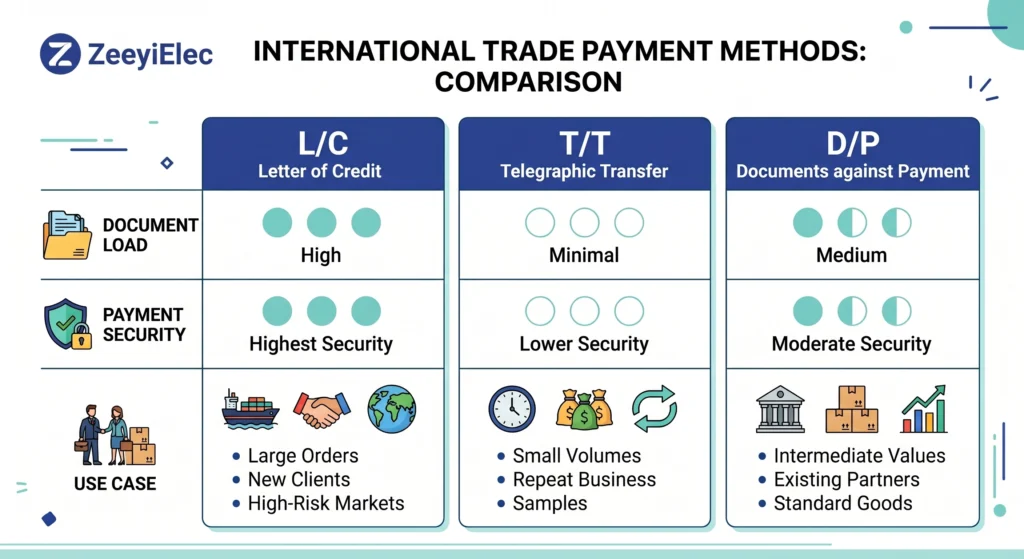
हर ऑर्डर के लिए L/C जरूरी नहीं होता। टेलीग्राफिक ट्रांसफर (T/T), जिसमें अक्सर 30% जमा और शिपिंग कॉपीज़ के खिलाफ 70% शेष राशि होती है, दस्तावेज़ी बोझ बहुत कम होता है और इसमें सख्त विसंगति व्यवस्था नहीं होती, जो स्थापित संबंधों के लिए उपयुक्त है। भुगतान के विरुद्ध दस्तावेज़ (D/P) दोनों के बीच आता है: खरीदार बैंक से दस्तावेज़ केवल भुगतान करने पर ही प्राप्त करता है। उपयुक्त साधन एक निश्चित नियम के बजाय ऑर्डर मूल्य, गंतव्य जोखिम और खरीदार-आपूर्तिकर्ता के इतिहास पर निर्भर करता है।.
चित्र 3. दस्तावेज़ लोड, भुगतान सुरक्षा और ट्रांसफॉर्मर एवं केबल सहायक उपकरण ऑर्डर के लिए सामान्य उपयोग के मामले के आधार पर L/C, T/T और D/P निपटान विधियों की तुलना।.
दस्तावेज़ तैयार होने से पहले ऑर्डर संरचित करने वाले खरीदारों के लिए, केबल एक्सेसरीज़ आरएफक्यू चेकलिस्ट उत्पाद विवरण को जल्दी लॉक करने में मदद करता है, ताकि एल/सी से इनवॉइस तक शब्दांकन समान रहे।.
[विशेषज्ञ की अंतर्दृष्टि]
चालान पर एल/सी उत्पाद विवरण को शब्दशः दोहराएँ; पुनर्व्याख्या करना एक विसंगति है।.
बी/एल तिथि से 21-दिन की प्रस्तुति विंडो को डायरी में दर्ज करें और समय से पहले प्रस्तुत करें।.
उच्च-मूल्य या उच्च-जोखिम वाले गंतव्यों के लिए आरक्षित एल/सी का उपयोग करें; जहाँ विश्वास स्थापित हो चुका हो, वहाँ टी/टी का उपयोग करें।.
गंतव्य-विशिष्ट आवश्यकताएँ और क्षेत्रीय कठिनाइयाँ
मूल दस्तावेज़ सेट को अधिकांशतः क्रम में लाया जाता है, लेकिन गंतव्य नियम और कुछ टाली जा सकने वाली गलतियाँ सबसे महंगी देरी का कारण बनती हैं, जिन्हें यहाँ बंदरगाह पर वास्तव में क्या गलत होता है, उसके आधार पर व्यवस्थित किया गया है।.
एचएस कोड की गलत वर्गीकरण और शुल्क जोखिम
HS कोड शुल्क दर और दस्तावेज़ी आवश्यकताओं दोनों को निर्धारित करता है जो सीमा शुल्क अधिकारी लागू करते हैं। ट्रांसफॉर्मर और केबल सहायक उपकरण निर्माण के आधार पर विभिन्न शीर्षकों के अंतर्गत आ सकते हैं, और गलत कोड से अधिक भुगतान किया गया शुल्क (जो खरीदार को वापस लेना पड़ता है) या कम भुगतान किया गया शुल्क (जो जुर्माने के रूप में सामने आता है) उत्पन्न होता है। केवल इनवॉइस पर कोड और विवरण में असंगति ही पूछताछ शुरू करने के लिए पर्याप्त है। कोटेशन में कोड तय करें, इसे खरीदार के ब्रोकर से पुष्टि करें, और हर जगह एक ही रूप में दोहराएँ।.
टेस्ट प्रमाणपत्र में कंटेनरों को धारण करने वाले अंतराल
प्री-शिपमेंट या अनुपालन प्रमाणन की आवश्यकता वाले बाजारों में, परीक्षण प्रमाणपत्र का गायब होना या मेल न खाना कंटेनर-होल्डिंग विफलता का क्लासिक उदाहरण है। एक खरीदार को 25 kV बुशिंग का एक लॉट प्राप्त होता है, जिसका रूटीन प्रमाणपत्र डिलीवर किए गए सीरियल रेंज से मेल नहीं खाता, निरीक्षण प्राधिकरण रिहाई से इनकार कर देता है, और कंटेनर 2–3 सप्ताह का डेमरेज जमा करता रहता है। प्रमाणपत्र मौजूद था, बस वह शिप किए गए लॉट से मेल खाने के लिए तैयार नहीं था। शिपमेंट से पहले जारी किए गए लॉट-ट्रेस करने योग्य प्रमाणपत्र इसे रोकते हैं।.
बाजार-विशिष्ट अनुपालन योजनाएँ
यूरोपीय संघ — सीई मार्किंग, सहायक अनुपालन घोषणा और परीक्षण फ़ाइल के साथ।.
यूनाइटेड किंगडम — यूकेसीए मार्किंग, जीबी बाज़ार के लिए सीई के साथ या इसके स्थान पर आवश्यक।.
अन्य क्षेत्र — राष्ट्रीय अनुपालन प्रमाणपत्र योजनाएँ (पूर्व-शिपमेंट निरीक्षण या पंजीकरण व्यवस्थाएँ) जो माल के मूल स्थान से प्रस्थान करने से पहले आयोजित की जाती हैं।.
प्रत्येक योजना की अपनी साक्ष्य फ़ाइल और अग्रिम समय होता है, और शिपमेंट के बाद इसकी व्यवस्था करना शायद ही कभी संभव होता है। कोटेशन चरण में अनुपालन फ़ाइल तैयार करना, प्रेषण के समय नहीं, इन आवश्यकताओं को महत्वपूर्ण मार्ग से बाहर रखता है।.
शिपमेंट-पूर्व सत्यापन कार्यप्रवाह और कोट अनुरोध
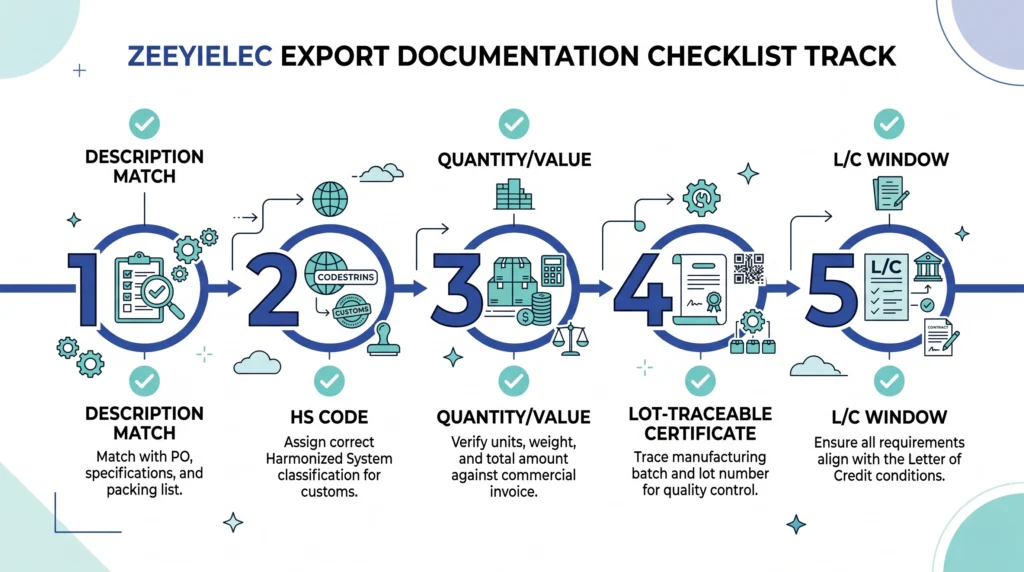
अंतिम सुरक्षा उपाय कंटेनर सील होने से पहले एक जानबूझकर किया जाने वाला क्रॉस-चेक है, एक पाँच मिनट का अनुक्रम जो विसंगतियों को तब पकड़ता है जब उन्हें ठीक करना अभी भी सस्ता होता है।.
अंतिम दस्तावेज़ क्रॉस-चेक अनुक्रम
सुनिश्चित करें कि उत्पाद का विवरण चालान, पैकिंग सूची, उत्पत्ति प्रमाणपत्र और किसी भी एल/सी में वर्णन के अनुसार चरित्र-समान हो।.
यह सत्यापित करें कि HS कोड विवरण से मेल खाता है और प्रत्येक दस्तावेज़ में अंकित है।.
इनवॉइस और पैकिंग लिस्ट के बीच मात्रा और मूल्य का मिलान करें, नेट-बनाम-ग्रॉस विचलन को कुछ प्रतिशत के भीतर रखें।.
चेक करें कि परीक्षण प्रमाणपत्र शिप किए गए सीरियल रेंज के लिए लॉट-ट्रेस करने योग्य हैं, और 25 kV सहायक उपकरण के लिए 150 kV BIL प्रकार की रिपोर्ट तथा बैच रूटीन प्रमाणपत्र दोनों फाइल में मौजूद हैं।.
पुष्टि करें कि प्रस्तुति एल/सी विंडो के भीतर होती है, जो सामान्यतः बी/एल की तारीख से 21 दिनों की होती है।.
एक निर्यात-तैयार आपूर्तिकर्ता आपके दस्तावेज़ीकरण जोखिम को कैसे कम करता है
अधिकांश विफलताएँ मूल पक्ष से जुड़ी होती हैं: एक ऐसा विवरण जो कोटेशन और इनवॉइस के बीच खो जाता है, या एक प्रमाणपत्र जो शिपमेंट के बाद तैयार किया जाता है बजाय इसके कि वह प्राप्त लॉट के आधार पर हो। एक आपूर्तिकर्ता जो RFQ पर विनिर्देश को लॉक करता है, लॉट-ट्रेस करने योग्य परीक्षण प्रमाणपत्र जारी करता है, और प्रेषण से पहले गंतव्य अनुरूपता फ़ाइल तैयार करता है, वह उन विफलता बिंदुओं को खरीदार के ब्रोकर या बैंक तक पहुँचने से पहले ही दूर कर देता है।.
ZeeyiElec ट्रांसफॉर्मर और केबल एक्सेसरी ऑर्डरों के लिए सहमति-प्राप्त विनिर्देशों के आधार पर तैयार निर्यात दस्तावेज़ीकरण, वाणिज्यिक कागजी कार्रवाई, लॉट-ट्रेस करने योग्य परीक्षण प्रमाणपत्र, और आपके गंतव्य बाजार के अनुरूप मूल दस्तावेज़ीकरण के साथ समर्थन प्रदान करता है। अपनी विशिष्टताएँ, गंतव्य और भुगतान शर्तें साझा करें, और हमारी टीम आपके ऑर्डर के लिए आवश्यक दस्तावेज़ सेट के साथ तकनीकी प्रतिक्रिया देगी। ट्रांसफॉर्मर और केबल एक्सेसरी दोनों लाइनों के लिए यह दस्तावेज़ीकरण समर्थन कोटेशन में ही शामिल है।.
चित्र 4. पाँच क्रमिक पूर्व-शिपमेंट सत्यापन द्वार—विवरण मिलान से लेकर लेटर ऑफ़ क्रेडिट प्रस्तुति विंडो तक—जो कंटेनर सील होने से पहले दस्तावेज़ीकरण में विसंगतियों को पकड़ते हैं।.
अक्सर पूछे जाने वाले प्रश्न
एक एक्सेसरी ऑर्डर के लिए निर्यात दस्तावेज़ तैयार करने में कितना समय लगता है?
अधिकांश मानक दस्तावेज़ सेट शिपमेंट के लिए तैयार होने के बाद 3–7 कार्यदिवसों में तैयार हो जाते हैं, हालांकि वरीय मूल प्रमाणपत्र और गंतव्य अनुपालन फाइलें 1–2 सप्ताह का अतिरिक्त समय ले सकती हैं; समय गंतव्य की प्रमाणन व्यवस्था और विनिर्देशन को कितनी जल्दी लॉक किया गया था, इस पर निर्भर करता है।.
क्या एक ही कंटेनर में ट्रांसफॉर्मर एक्सेसरीज़ और केबल एक्सेसरीज़ को एक ही दस्तावेज़ों पर मिलाया जा सकता है?
हाँ, एक ही शिपमेंट दोनों उत्पाद परिवारों को समेकित कर सकता है, लेकिन प्रत्येक वस्तु को आमतौर पर अपने स्वयं के HS कोड और चालान में लाइन-आइटम विवरण की आवश्यकता होती है; चाहे वे एक ही उत्पत्ति प्रमाणपत्र साझा करें या अलग-अलग तकनीकी प्रमाणपत्रों की आवश्यकता हो, यह गंतव्य के वर्गीकरण और निरीक्षण नियमों पर निर्भर करता है।.
यदि सहायक उपकरण की खेप पर HS कोड गलत हो जाए तो क्या होता है?
एक गलत कोड आमतौर पर या तो अधिक चुकाए गए शुल्क का कारण बनता है जिसे खरीदार को वापस लेना पड़ता है, या कम चुकाए गए शुल्क का, जिसे बाद में दंड के साथ आकलित किया जाता है, और अक्सर कई दिनों से लेकर कुछ हफ्तों तक कस्टम होल्ड भी होता है; इसकी गंभीरता गंतव्य के प्रवर्तन अभ्यास और शुल्क अंतर के आकार पर निर्भर करती है।.
क्या विद्युत सहायक उपकरणों के निर्यात के लिए हमेशा परीक्षण प्रमाणपत्र आवश्यक होते हैं?
टेस्ट प्रमाणपत्र उन सभी मामलों में आवश्यक होते हैं जहाँ खरीदार की परियोजना विनिर्देश या गंतव्य की अनुपालन योजना इन्हें मांगती है, जो अधिकांश मध्यम-वोल्टेज यूटिलिटी और ईपीसी परियोजनाओं को कवर करती है; निम्न-वोल्टेज या अनियंत्रित खरीदार हल्का सेट स्वीकार कर सकते हैं, इसलिए आवश्यकता को प्रत्येक ऑर्डर के अनुसार पुष्टि करनी चाहिए।.
अगर दस्तावेज़ों के कारण सीमा शुल्क में देरी होती है तो डेमरेज कौन चुकाता है?
उत्तरदायित्व आमतौर पर सहमत Incoterms और देरी के कारण के अनुसार निर्धारित होता है, जिसमें मूल-पक्ष दस्तावेज़ त्रुटियाँ आमतौर पर आपूर्तिकर्ता की जिम्मेदारी होती हैं और आयात-क्लियरेंस संबंधी समस्याएँ खरीदार की; सटीक आवंटन शिपमेंट से पहले अनुबंध में तय किया जाना चाहिए।.
क्या मुझे हर गंतव्य के लिए उत्पत्ति का प्रमाणपत्र चाहिए?
मूल प्रमाणपत्र की आवश्यकता तब होती है जब भी सीमा शुल्क को मूल प्रमाण की आवश्यकता हो या जब खरीदार किसी व्यापार समझौते के तहत वरीय शुल्क का दावा करता हो, जो अधिकांश बाजारों को कवर करता है; कुछ कम-मूल्य या अंतर-ब्लॉक शिपमेंट्स में इसे माफ किया जा सकता है, इसलिए खरीदार के ब्रोकर से पुष्टि करें।.
मैं लेटर ऑफ क्रेडिट भुगतान अस्वीकृतियों से कैसे बचूँ?
जब उत्पाद का विवरण, मूल्य और पक्षों के नाम एल/सी से बिल्कुल मेल खाते हैं और दस्तावेज़ निर्दिष्ट समय-सीमा (आमतौर पर 21 दिन) के भीतर प्रस्तुत किए जाते हैं, तो अस्वीकृति दरें तीव्रता से घट जाती हैं; मुख्य चर विवरण की सटीकता और प्रस्तुति का समय हैं, जिन्हें शिपमेंट से पहले नियंत्रित किया जा सकता है।.
योयो शी
योयो शी ZeeyiElec के लिए लिखती हैं, जहाँ उनका ध्यान मध्यम-वोल्टेज सहायक उपकरणों, ट्रांसफॉर्मर घटकों और केबल सहायक समाधानों पर केंद्रित है। उनके लेख उत्पाद अनुप्रयोगों, तकनीकी मूल बातों और वैश्विक विद्युत उद्योग के खरीदारों के लिए आपूर्ति संबंधी अंतर्दृष्टि को कवर करते हैं।.




 English
 한국어
한국어 العربية
 Español
 हिन्दी
 தமிழ்
தமிழ் Deutsch (Sie)
 Français
 Português do Brasil
 Русский