Before you replace current limiting fuse protection after a fault, identify the operated device, establish the equipment manufacturer’s service requirements, and investigate the event. Some internal backup fuses are not field replaceable. An approved replacement must restore the specified protection arrangement, while return to service requires separate evidence that the equipment is fit for energization.
A fuse operation can interrupt a fault without correcting the underlying defect. Restoring continuity is therefore a different task from restoring an acceptable transformer condition. This guide gives maintenance planners, engineers, and buyers a decision checklist for transformer backup fuses; it is not a switching instruction or a procedure for opening energized equipment.
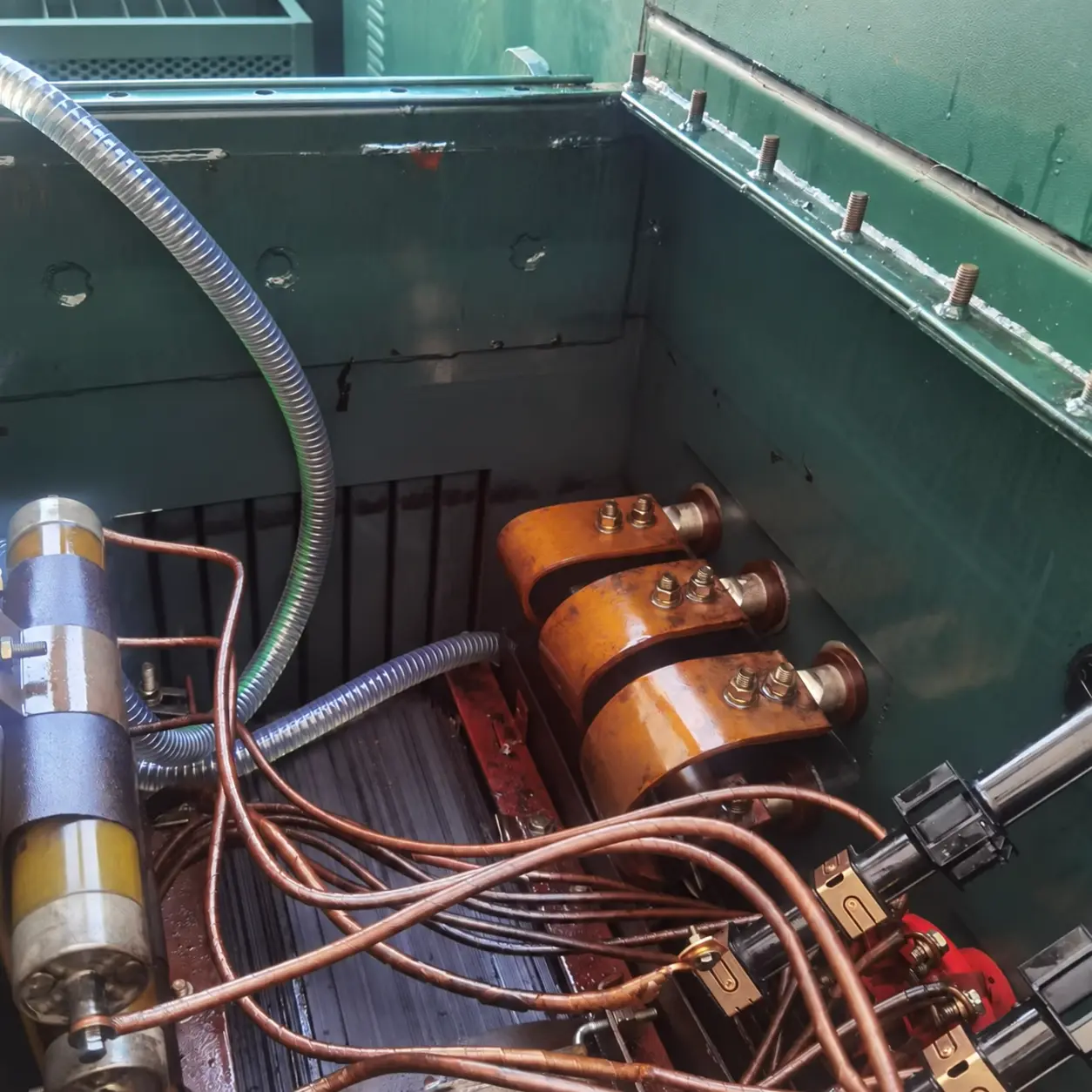
Retouched installation photograph showing the arrangement of current-limiting fuse components, supports, and insulated connections inside a transformer tank. Confirm individual ratings from the nameplate and approved documentation.
Identify the Device Before Planning Replacement
An instruction to replace current limiting fuse components should start with a verified catalog number and protection diagram. An outage, an open upstream device, or a reported blown fuse does not establish which component operated. Record observations separately from conclusions, particularly when several protective devices are connected in the same circuit.
Distinguish the two protection functions
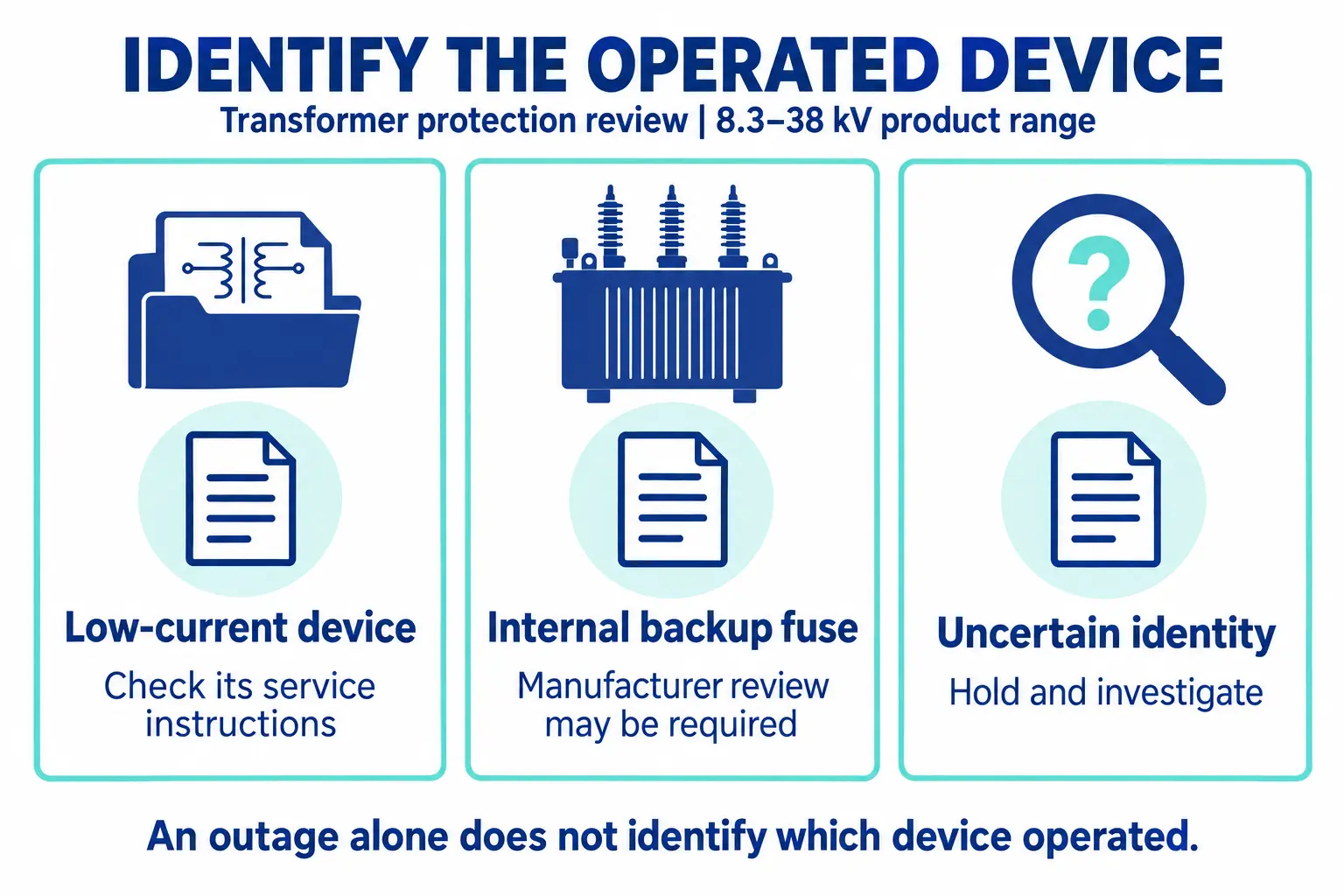
A backup current-limiting fuse interrupts sufficiently high fault currents and has a minimum interrupting current. A coordinated low-current device covers the lower part of the protection range. The assembly must work as an approved combination; a backup fuse’s current rating alone does not describe the behavior of the complete protection system.
An expulsion link and an internal backup fuse can consequently have different replacement rules. Consult the equipment drawing and exact product instructions before deciding whether an accessible component is the failed device. The Bay-O-Net and current-limiting fuse coordination guide provides background on their complementary functions.
Check the manufacturer’s service boundary
Eaton’s ELSP instructions, MN132001EN state that an ELSP fuse operated by high fault current is not field replaceable and requires return of the transformer/fuse to the transformer manufacturer. That restriction is specific to the cited product; it is neither permission to repair another design nor a universal rule for all current-limiting fuses.
For an unfamiliar assembly, obtain the applicable service instruction before ordering labor or promising restoration time. Where manufacturer disposition is required, a spare fuse in the warehouse does not turn the job into an authorized field repair.
This conceptual review distinguishes low-current protection, internal backup fuses, and unresolved device identity within the stated 8.3–38 kV product range, with service instructions controlling each decision.
Secure the Equipment and Preserve Fault Evidence
Before personnel replace current limiting fuse assemblies, the responsible operator must establish the approved electrical safety condition. Qualified personnel must follow the site’s isolation, lockout, absence-of-voltage verification, grounding, and stored-energy procedures as applicable. Consider every possible supply and backfeed path; this article cannot specify a switching sequence for an unknown installation.
Preserve observations before disturbing the assembly
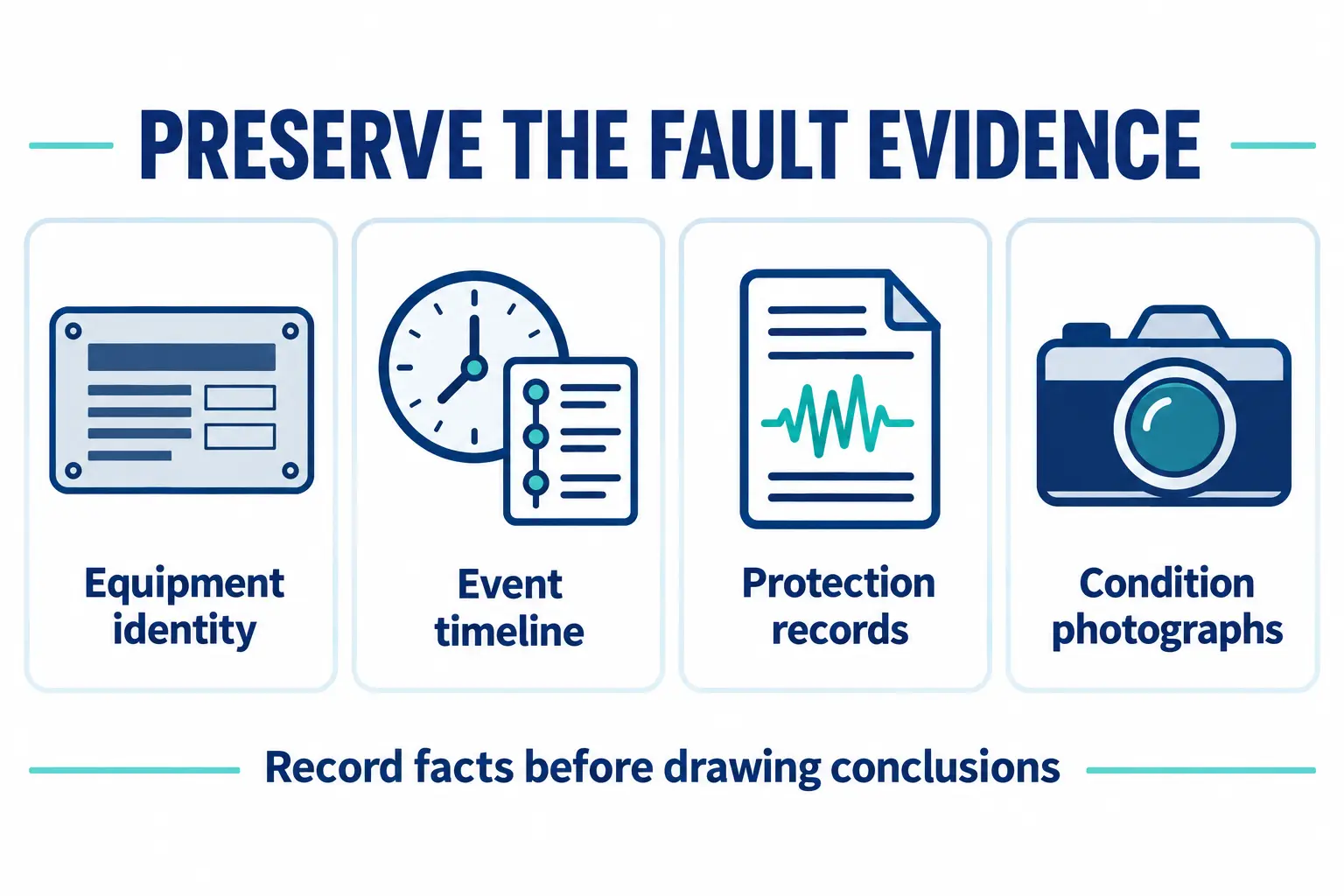
Document the event time, affected equipment, protection indications, alarms, and available fault records. Keep original relay or monitoring files alongside the written summary. Preserve photographs and component identification where they can be obtained under the authorized work procedure; evidence collection never justifies approaching unsafe equipment.
Record what was observed and who observed it. A report of a loud sound, leakage, or an upstream trip may help frame the investigation, but it does not by itself locate a fault. Likewise, absence of visible external damage does not establish the condition of internal insulation or connections.
Maintain an evidence trail
Keep removed components identified and segregated when their removal is authorized. Do not clean, dismantle, or dispose of a failed item before the investigation owner decides what evidence is needed. Packaging for return should protect both the component and its identification without making unsupported claims about the cause of failure.
[Expert Insight: An Incomplete Outage Report]
In a hypothetical outage, the operator reports only that the upstream protection opened.
The review remains unresolved until the operated devices and event records are reconciled.
This example illustrates evidence handling, not a claimed ZeeyiElec field incident.
Equipment identity, the event timeline, protection records, and condition photographs provide complementary evidence for an investigation without treating any single observation as a complete diagnosis.
Investigate the Fault Before Selecting a New Fuse
The decision to replace current limiting fuse protection must remain separate from the decision about the transformer itself. Establish whether available evidence points toward an internal equipment fault, an external circuit problem, a connection defect, or another condition. Where evidence is incomplete, retain an explicit unresolved status instead of closing the report with a convenient explanation.
Use findings to define the repair scope
Finding or uncertainty
Review action
Evidence needed before release
Internal backup fuse operation confirmed
Apply the equipment maker’s service route
Written repair or replacement disposition
External fault suspected
Investigate the affected circuit and protection response
Documented cause and corrective action
Heat or damage at a connection
Assess the connection and adjacent components
Approved repair scope and inspection results
Operated device not identified
Hold the equipment for further diagnosis
Reconciled device identity and event evidence
Previous repair or substitute fuse found
Compare against the approved design
Accepted configuration and coordination review
A continuity measurement can support a specific diagnostic question, but it cannot certify transformer insulation, establish interruption performance, or prove a fault has disappeared. Any electrical testing must follow the equipment manufacturer’s methods and acceptance criteria, performed by personnel qualified for that work.
Avoid using re-energization as a diagnostic shortcut
Do not bypass a fuse, increase its rating, or repeatedly energize questionable equipment to see whether another fuse operates. Such actions alter the protection conditions or expose equipment to another event without resolving the original uncertainty. The electrical accessory failure diagnosis workflow supports structured evidence collection and hypothesis review.
The investigation may lead to transformer replacement rather than fuse replacement. That outcome should be recorded as a technical disposition, with the supporting observations and manufacturer response retained for future maintenance planning.
Match the Complete Approved Protection Arrangement
When an authorized repair requires you to replace current limiting fuse components, use the exact approved part or a documented accepted equivalent. Similar body dimensions and the same ampere marking are insufficient evidence of interchangeability. Identify the assembly revision and any changes made since the original transformer was supplied.
Check electrical and mechanical compatibility together
Review item
Information to compare
Why it affects acceptance
தயாரிப்பு அடையாளம்
Manufacturer, catalog number, drawing revision
Defines the intended component
Application voltage
Equipment requirements and fuse rating
Supports correct application selection
தடைசெய்யும் திறன்
Available fault duty and product limits
Checks suitability for the fault environment
பாதுகாப்பு ஒருங்கிணைப்பு
Approved low-current device and fuse characteristics
Maintains the intended operating relationship
Physical interface
Body support, terminals, lead arrangement
Prevents an apparently similar but incompatible fit
Service environment
Approved insulating medium and thermal conditions
Preserves the documented application conditions
Replacement scope
Single item, associated components, or complete assembly
Follows the manufacturer’s event-specific disposition
Current-limiting behavior includes peak-current limitation and clearing energy, not just a time-current curve or rated current. A competent protection review considers the characteristics required by the equipment design. Do not infer acceptable let-through performance from an unverified cross-reference list.
Address associated fuses and components explicitly
For multiphase equipment, ask whether the other phases require replacement or further evaluation after the particular event. Do not invent a universal one-fuse or three-fuse rule. Apply the equipment and fuse manufacturers’ instructions, taking account of the configuration and known exposure.
[Expert Insight: A Similar-Looking Spare]
Consider a hypothetical spare with the same current marking but a different catalog suffix.
The suffix may affect an interface or characteristic that visual inspection cannot establish.
Verify the approved equivalence before issue; this is a planning scenario, not test data.
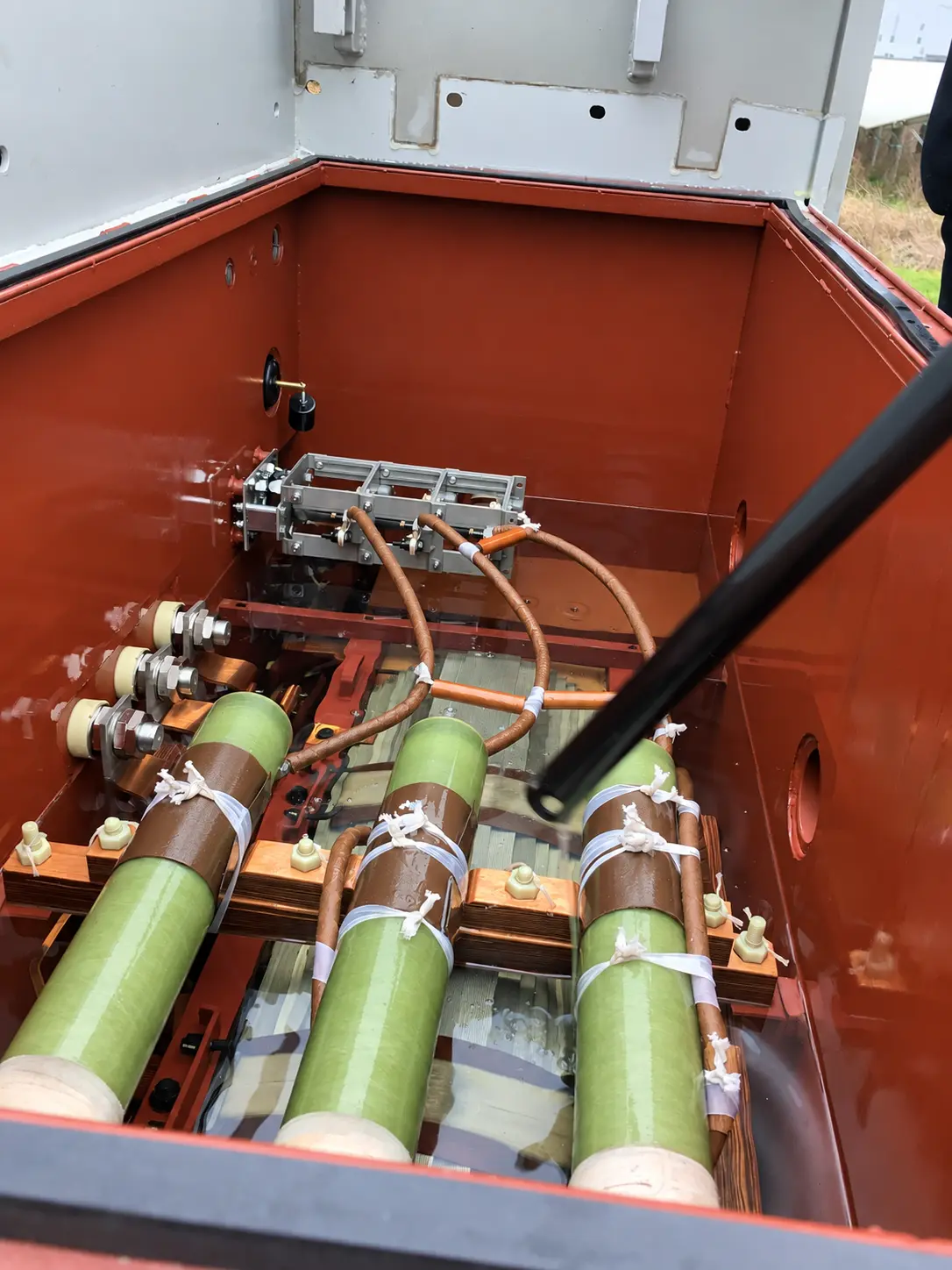
Retouched application photograph, with the visible hand removed, showing a current-limiting fuse assembly and copper connections inside a transformer enclosure. Component identity and service requirements require documentation.
Separate Installation Acceptance from Return to Service
An instruction to replace current limiting fuse protection is not a release certificate. Once the approved repair is complete, the responsible team must verify the repaired equipment against the applicable work package. Preserve the distinction between component installation records and the wider decision to energize the transformer.
Review the completed work package
Confirm the approved replacement identity, traceability, assembly condition, and required inspection results. Where the repair involved internal connections, insulating fluid, seals, or disturbed supports, the work package must address those interfaces under the equipment manufacturer’s instructions. This article deliberately supplies no generic torque, test-voltage, or insulation-resistance threshold.
Record the test method, instrument identification where required, relevant conditions, acceptance criterion, measured result, and reviewer. A result without its method and applicable limit cannot establish compliance. Equally, a checklist tick cannot substitute for an unresolved manufacturer recommendation or missing corrective action.
Keep unresolved items visible
The release decision should identify who accepted the fault disposition, who verified the repair, and who has operating authority. If any required evidence is absent, maintain the hold and state exactly what would close it. Restoration pressure does not make a missing approval equivalent to an accepted deviation.
After authorized return to service, apply the monitoring or follow-up specified in the approved plan. A normal initial observation is useful evidence, but it does not erase the event history or justify deleting the investigation record.
Prepare a Technical Replacement Request
To replace current limiting fuse stock for an approved repair, send a request that links the component to its equipment and event. Include transformer identification, the fuse label, approved drawing or parts list, associated low-current protection, known operating conditions, and the manufacturer’s repair disposition. Distinguish verified facts from information still being investigated.
Ask ZeeyiElec to confirm product identity, documentation availability, and the proposed supply scope against the approved requirements. Supply confirmation does not replace the transformer manufacturer’s service authorization or the operator’s release decision. Retain the final part reference, inspection documents, and accepted deviations with the maintenance record so a future team can understand exactly what changed.
அடிக்கடி கேட்கப்படும் கேள்விகள்
Can every current-limiting fuse be replaced in the field?
No; serviceability depends on the exact fuse and equipment design. The cited ELSP instructions require manufacturer return following high-fault operation, so access to a spare does not establish permission for field replacement.
Does an operated backup fuse prove the transformer is beyond repair?
Not by itself; the event requires equipment-specific investigation and manufacturer disposition. Repairability cannot be decided solely from an open fuse, an external photograph, or a continuity reading.
Can I replace current limiting fuse protection with a higher current rating?
Do not uprate a fuse as a response to unexplained operation. Any proposed change requires an approved protection and equipment review rather than a trial installation.
Must every phase fuse be replaced after one operates?
Apply the manufacturer’s instructions for the assembly and the event. A universal replacement count cannot account for different configurations, fuse types, or fault exposure.
Which test result permits transformer re-energization?
There is no single universal reading that provides release for every repaired transformer. The authorized decision must consider the specified tests, repair verification, resolved fault findings, and applicable operating procedure.
What records are needed to replace current limiting fuse assemblies?
Retain equipment identity, event evidence, approved replacement details, repair and test records, and the authorized release. The responsible manufacturer or operator may require additional information for the particular fault and design.
யோயோ ஷி
யோயோ ஷி, ZeeyiElec-க்காக எழுதுகிறார். இவர் நடுத்தர-வோல்டேஜ் துணைக்கருவிகள், டிரான்ஸ்ஃபார்மர் பாகங்கள் மற்றும் கேபிள் துணைக்கருவி தீர்வுகள் ஆகியவற்றில் கவனம் செலுத்துகிறார். அவரது கட்டுரைகள், உலகளாவிய மின்சாரத் தொழில் வாங்குபவர்களுக்கான தயாரிப்புப் பயன்பாடுகள், தொழில்நுட்ப அடிப்படைகள் மற்றும் கொள்முதல் குறித்த பார்வைகள் ஆகியவற்றை உள்ளடக்கியுள்ளார்.





 English
 한국어
한국어 العربية
 Español
 हिन्दी
 தமிழ்
தமிழ் Deutsch (Sie)
 Français
 Português do Brasil
 Русский