Select a low-voltage transformer bushing by checking load current, service temperatures, terminal connections, mounting dimensions and the selected model’s documented rating conditions. Calculated transformer current is the starting point; it does not by itself approve a bushing or its installation.
Calculate the transformer load current
For a balanced three-phase transformer, rated line current is I = S / (√3 × V), where S is total three-phase apparent power in VA and V is line-to-line voltage in volts. For a single-phase transformer, use I = S / V. Identify the winding and connection under review before applying either expression.
Illustrative example: a balanced 1,250 kVA, 400 V three-phase secondary has a rated line current of approximately 1,804 A. This calculation does not automatically select a 2,000 A or 3,150 A bushing. The final choice requires the specified operating duty and the manufacturer’s applicable thermal and connection conditions.
Confirm the conditions behind the current rating
| Input | Provide with the enquiry | Confirm for the proposed model |
|---|
| Electrical duty | Voltage, frequency, rated current and required overload profile | Applicable voltage, continuous current and overload limitations |
| Thermal environment | Ambient and liquid temperatures, enclosure, ventilation and solar exposure | Rating conditions and any documented adjustment |
| Load characteristics | Relevant harmonic, unbalance and neutral-current requirements | Thermal suitability for the specified duty |
| Connections | Conductor material, cable/lug or busbar details, parallel paths and support | Terminal geometry, contact arrangement and permissible mechanical loading |
| Mounting and sealing | Tank opening, mounting drawing, liquid specification and gasket requirements | Dimensions, materials and installation instructions |
| Evidence | Project standards, acceptance criteria and requested test records | Document applicability to the exact model and revision |
Use documented thermal limits
Specify the required continuous and overload duty rather than adding an assumed universal percentage to full-load current. Where temperatures, enclosure conditions or the load waveform differ from the rating conditions, request a documented assessment. Do not substitute a fixed percentage-per-temperature rule or an automatic jump to the next current tier.
Check terminal and mounting compatibility
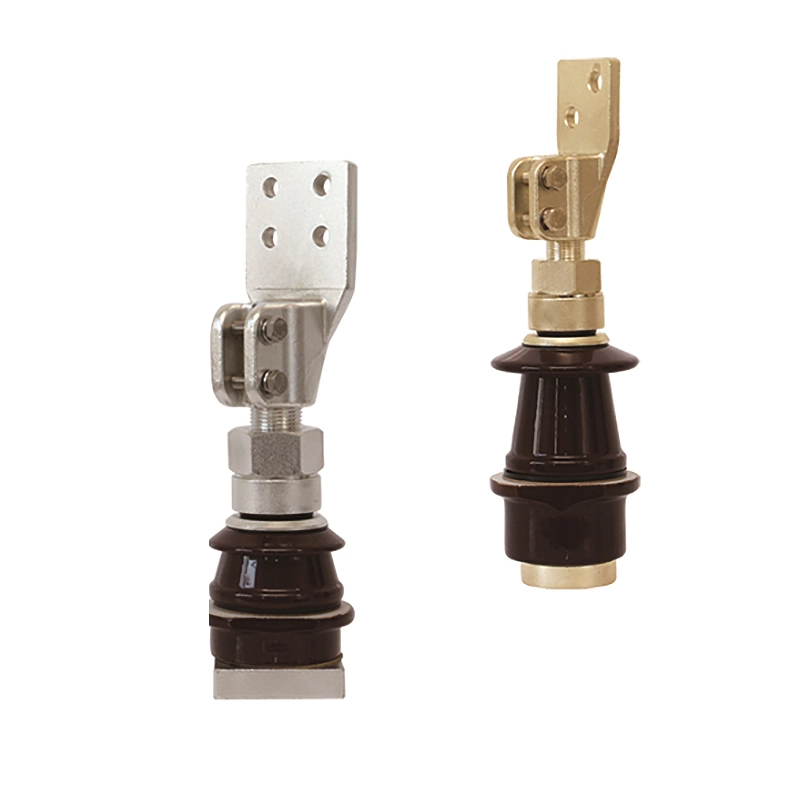
A threaded stud or multi-hole terminal must match the proposed connection drawing. Current rating alone does not determine thread size, pad hole pattern, cable count or tank opening. For replacements, compare the full dimensional drawing and sealing arrangement before approval.
Obtain tightening instructions for the exact terminal, fasteners and assembly. Do not apply a general torque range based only on whether the insulation is porcelain, epoxy or another material. Confirm cable or busbar support so the bushing is not subjected to unspecified loads.
Prepare the RFQ
Include the transformer rating and secondary voltage, calculated current, operating duty, site temperatures, connection drawing, insulating liquid, quantity and required documentation. Ask the supplier to identify the proposed model, approved drawing revision, exceptions, accessory scope and delivery terms.
When comparing potential suppliers, consult our guide to transformer bushing manufacturers for published product scope and procurement checks. Confirm that each shortlisted supplier offers the required LV configuration and supporting documents.
Explore our low-voltage transformer bushings and submit the above information with your enquiry. For the primary side, see the medium-voltage bushing selection guide.
Calculation reference: Schneider Electric: transformer current formula. This reference supports the current calculation; model suitability must be confirmed separately.
Frequently asked questions
Must every bushing include a fixed current margin?
Do not apply that range as a universal rule. Specify the actual duty and project requirements, then confirm the selected model under its documented service conditions.
Does a higher current rating prove replacement compatibility?
No. Confirm voltage and insulation requirements, terminal and mounting dimensions, sealing, service medium and mechanical conditions as well as current capacity.
How should high ambient temperatures or harmonics be handled?
Provide the relevant conditions and load information to the manufacturer. Request confirmation or a documented adjustment for the proposed model rather than assuming one standard derating factor.
Can terminal torque be chosen from the current rating?
No. Use the instructions for the specific terminal, fasteners and assembly, including the stated preparation and tightening conditions.
Does the calculated line current determine the neutral bushing rating?
No. Identify the winding connection and the expected neutral current, including unbalance and relevant harmonics. Have the neutral connection assessed for that duty.
What documents are needed before ordering a replacement?
Provide the existing assembly drawing, electrical duty, terminal details, mounting and sealing dimensions, and service conditions. Obtain the proposed model drawing and installation instructions before approving a replacement.





 English
 한국어
 العربية
 Español
 हिन्दी
 தமிழ்
 Deutsch (Sie)
 Français
 Português do Brasil
 Русский