A metal seated vs soft seal butterfly valve comparison should start with the same transformer oil-system duty, leakage acceptance and service conditions. Seat labels describe part of the sealing design; they do not prove liquid compatibility, vacuum suitability or complete-assembly performance. Select the offered configuration using controlled drawings, material identification and applicable test evidence.
A butterfly valve rotates a disc within the passage to control the connection. The seat forms the closure interface between the disc and valve body or associated sealing arrangement. For transformer service, closure tightness and the seals preventing escape to the surroundings both matter, but they are different performance boundaries.
This guide explains how to compare seat options without inventing a universal winner. Use the transformer accessories selection guide for the wider assembly context. The responsible designer still determines the required isolation arrangement, operating conditions and acceptance basis for the specific transformer.
Define What the Seat Description Actually Means
Identify the supplied sealing system
In a metal seated vs soft seal butterfly valve enquiry, ask what makes contact at closure. A metal seat may use a metallic sealing element or surface, while a soft-seal design uses a compliant nonmetallic sealing element. Commercial descriptions can cover different constructions, including composite arrangements; request the actual material and sectional drawing.
Do not assume that a metal body means a metal seat, or that every soft seal is the same rubber compound. Ask for the material identity and relevant specifications of the seat, stem seals and gaskets. A generic term such as oil-resistant is not enough to evaluate the specified insulating liquid and temperature exposure.
Keep the mechanism and performance separate
Disc offset, seat geometry, contact loading and the complete operating mechanism influence how the assembly closes. Seat material alone cannot establish operating torque, pressure direction capability or maintenance requirements. Request model-specific declarations instead of transferring the performance of a familiar valve to a visually similar product.
The transformer valve product family helps identify available configurations. It does not replace the offered assembly drawing or establish that every construction is available for every connection size and transformer duty.
Original ZeeyiElec product photograph supports visible interface identification. Seat composition, internal construction and performance must be confirmed from controlled product documents.
Separate Closure Tightness from External Sealing
Define the boundary being tested
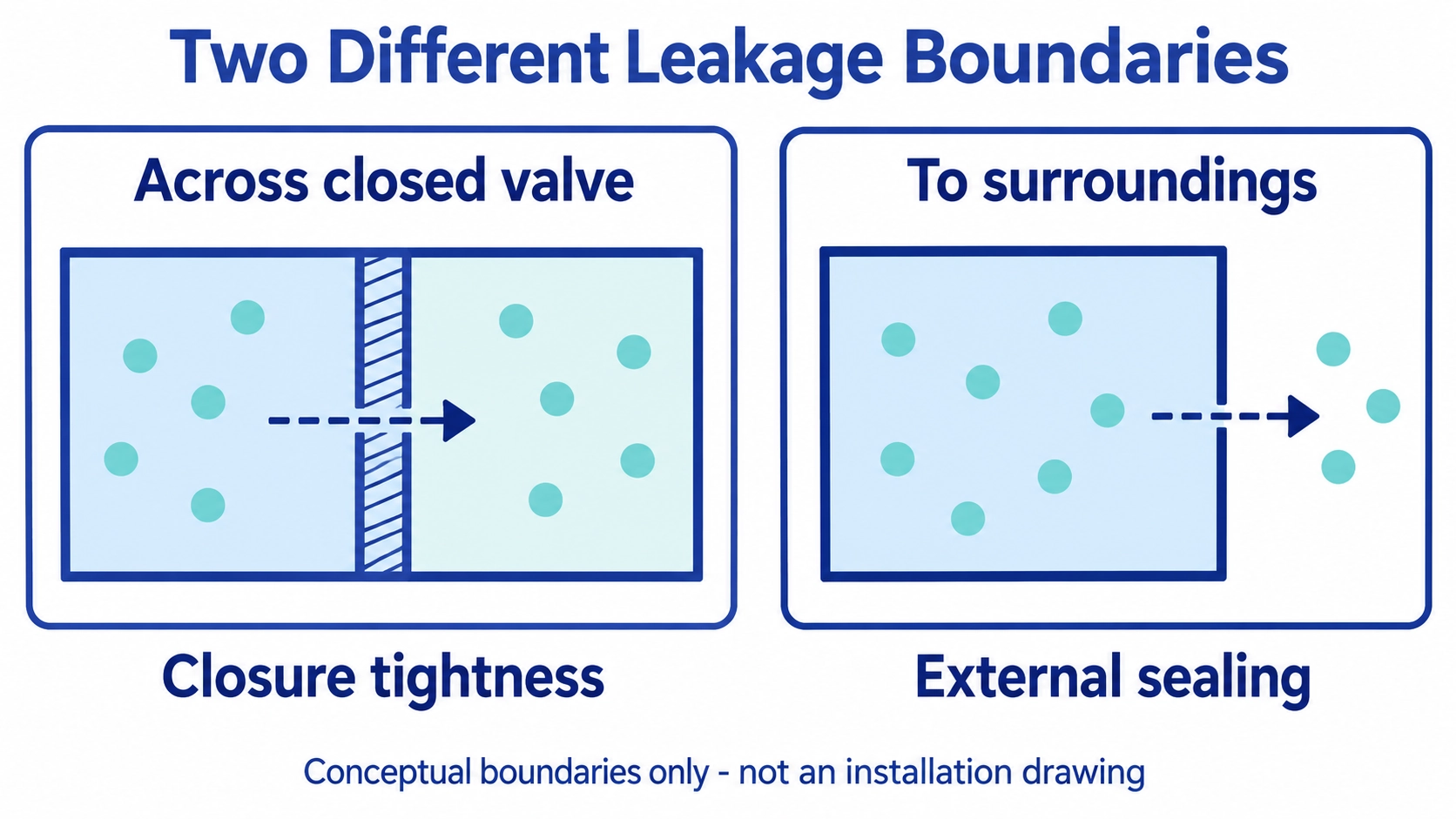
Closure leakage passes across the closed valve between connected spaces. External leakage escapes through the body boundary, stem sealing or mating interfaces. A successful closure test does not automatically demonstrate that every external joint is suitable for the transformer application, and a dry exterior does not establish the required internal isolation.
The metal seated vs soft seal butterfly valve comparison therefore needs two separate acceptance questions. How much leakage across the closed valve is permitted under the specified test conditions? What external sealing evidence is required for the supplied valve, stem arrangement and installed mating interfaces? Record both answers before requesting an equivalent alternative.
Translate leakage language into an acceptance record
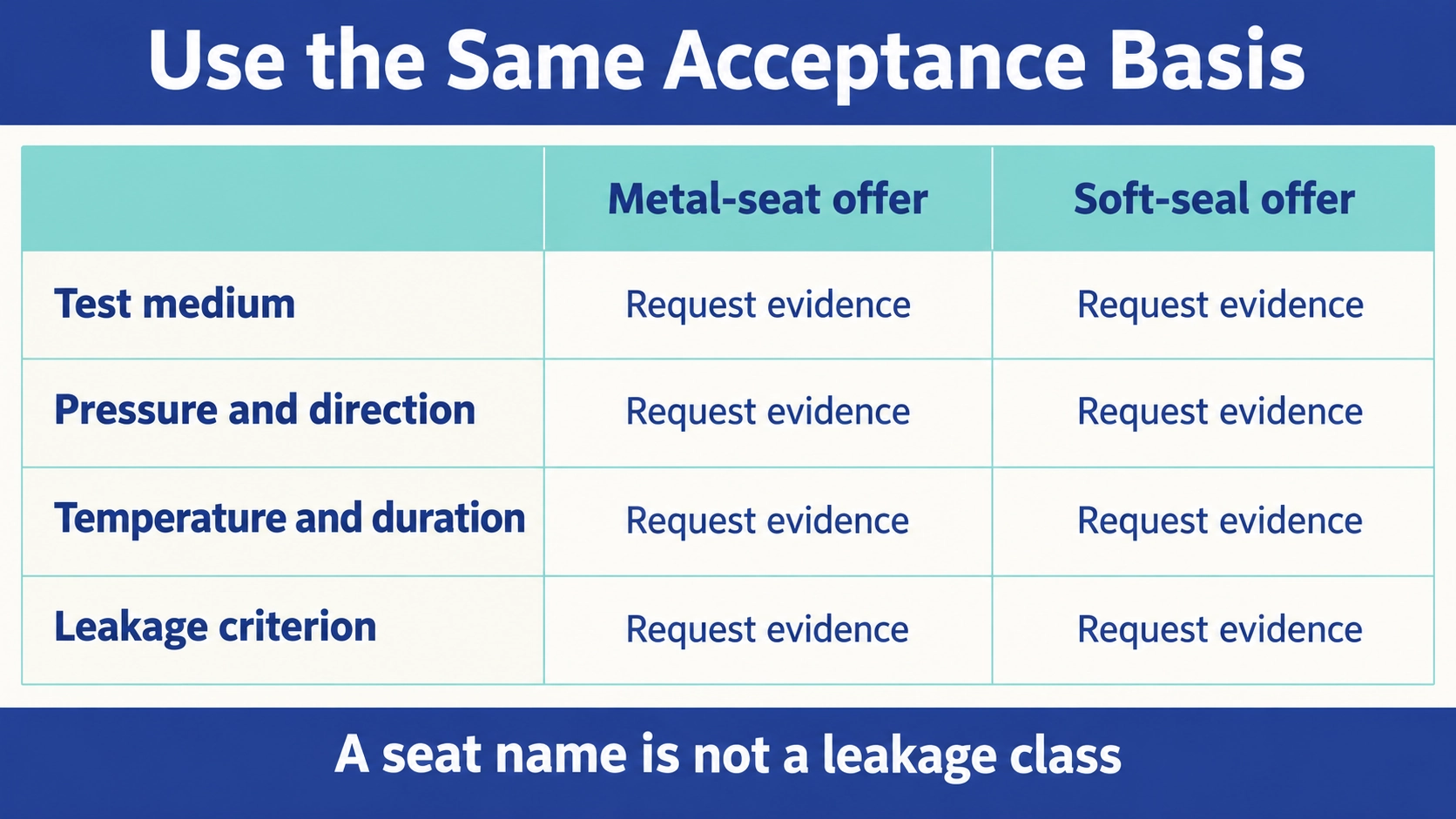
Words such as tight, zero leakage and bubble-tight need an identified test method and acceptance criterion. Specify the test medium, pressure, direction, temperature and duration, together with the measurement or observation basis. Different test conditions cannot be treated as interchangeable merely because the resulting catalogue statements sound similar.
The public scope of ISO 5208:2015 covers pressure-boundary integrity and closure-tightness verification for metallic industrial valves, applied with relevant product requirements. Metallic in that title does not mean every covered valve has a metal seat. Establish applicability and the agreed acceptance requirements; a standard reference alone is not proof that the offered assembly passed.
Conceptual boundaries distinguish closure tightness from external sealing. The diagram assigns no leakage class, test result or installation arrangement.
Match Materials to the Complete Service Envelope
Check the actual liquid and temperature exposure
A metal seated vs soft seal butterfly valve review should identify the insulating liquid, relevant additives and any cleaning or processing exposure. Ask the supplier to confirm compatibility of every relevant wetted component. Compatibility cannot be inferred from colour, hardness, a generic polymer family or the external appearance of a seat.
Compliant seals can provide effective closure when properly selected, but their service limits depend on the actual compound, design and exposure. Metal sealing elements may support duties beyond the capability of some soft materials, but the complete valve can still be limited by nonmetallic stem seals, gaskets or other parts. Avoid assigning a universal temperature advantage to an unspecified assembly.
Treat pressure, vacuum and cycling as separate requirements
State operating and differential-pressure conditions, including relevant direction changes. If vacuum exposure is required during transformer processing, specify that requirement separately and request confirmation for the actual configuration. A positive-pressure declaration does not by itself establish resistance to inward leakage or acceptable behaviour under the required vacuum conditions.
Describe expected operating frequency and relevant thermal or pressure cycles without inventing a fixed service life. Ask how declared performance relates to the specified duty. A cycle-test result under one laboratory condition should not be presented as a maintenance interval or a guaranteed life in a different insulating-liquid system.
Compare Both Offers on the Same Evidence Basis
Use a requirement-led comparison table
The metal seated vs soft seal butterfly valve decision becomes clearer when both suppliers answer the same questions. Keep confirmed requirements separate from assumptions, and identify which document supports each offered limit. Do not turn an unanswered matrix cell into an automatic pass for a preferred material.
Review item
Metal-seated candidate
Soft-seal candidate
Closure acceptance
Request method, conditions and result
Request the same acceptance basis
Liquid compatibility
Identify all wetted materials
Identify the exact sealing compound and other wetted materials
Temperature envelope
Confirm complete-assembly limits
Confirm complete-assembly limits
Pressure and vacuum
Confirm each specified condition separately
Confirm each specified condition separately
Operation and service
Request torque, access and service instructions
Request torque, access and service instructions
A metal-seated model is not automatically leaky, and a soft-seal model is not automatically suitable for every transformer oil connection. The acceptance question is whether the exact model satisfies the project conditions with adequate evidence. Where an alternative requires changed criteria, the responsible engineer must approve the change explicitly.
Conceptual comparison requests the same acceptance basis from both candidates. A seat description is not a leakage class or evidence that a test has passed.
Compare the complete purchasing scope
Review the transformer accessories package to identify supplied seals, operating parts and interfaces. Document whether replacement seats or complete valves are available and what controlled instructions govern service. Do not assume an apparently removable seat can be replaced in the field without an approved method.
Keep separate cable accessories requirements identifiable when both systems appear in one procurement package. Shared purchasing documents should not transfer valve leakage criteria or material assumptions to unrelated accessory types.
Check Mechanical Fit and Maintenance Access
Reconcile the valve with both mating interfaces
Seat selection does not eliminate the need to verify nominal size, connection standard, flange geometry, sealing faces and installed envelope. Confirm disc movement clearance against the actual adjoining parts. A matching bolt pattern cannot establish that the disc will move freely or that the full assembly preserves the required electrical and mechanical spaces.
For a metal seated vs soft seal butterfly valve replacement, compare the current assembly drawing with the proposed one. Identify any changes to face-to-face dimensions, operating shaft, gasket requirements or permitted flow direction. Record an unresolved interface as an open technical point rather than relying on nominal interchangeability.
Evaluate serviceability without assuming a fixed interval
Ask for the operating mechanism limits, position indication and access needed for the approved maintenance procedure. Incorrect adjustment, contamination or damaged sealing surfaces can undermine either construction. These are reasons to request instructions and inspection criteria, not permission to prescribe a generic adjustment or cleaning operation.
Consider a hypothetical replacement offered with a higher temperature claim but no confirmation of the stem-seal material. The claimed seat capability leaves a complete-assembly question unresolved. In a second hypothetical enquiry, a soft-seal offer meets the stated closure criterion but has no evidence for the required vacuum exposure. Both enquiries need further evidence; neither can be decided from the seat label alone.
Document the Selection and Release Decision
Close deviations before approving an alternative
Complete the metal seated vs soft seal butterfly valve record with the duty specification, exact model, controlled drawing revision, material identification and applicable test documents. Include all proposed deviations and identify the responsible reviewer. An accepted commercial price does not close an unresolved engineering exception.
Use the transformer accessories RFQ checklist to structure the enquiry. Ask ZeeyiElec to review the actual liquid, service envelope, closure requirement and interface drawing. State unknown information openly so the response addresses the real application rather than an assumed standard duty.
Keep the approved configuration traceable
Link the final decision to the documents that establish the supplied assembly. If a material, seat arrangement or operating mechanism changes later, assess the affected requirements again. The release decision should explain why the configuration is acceptable, which limitations apply and which inspection records are required with delivery.
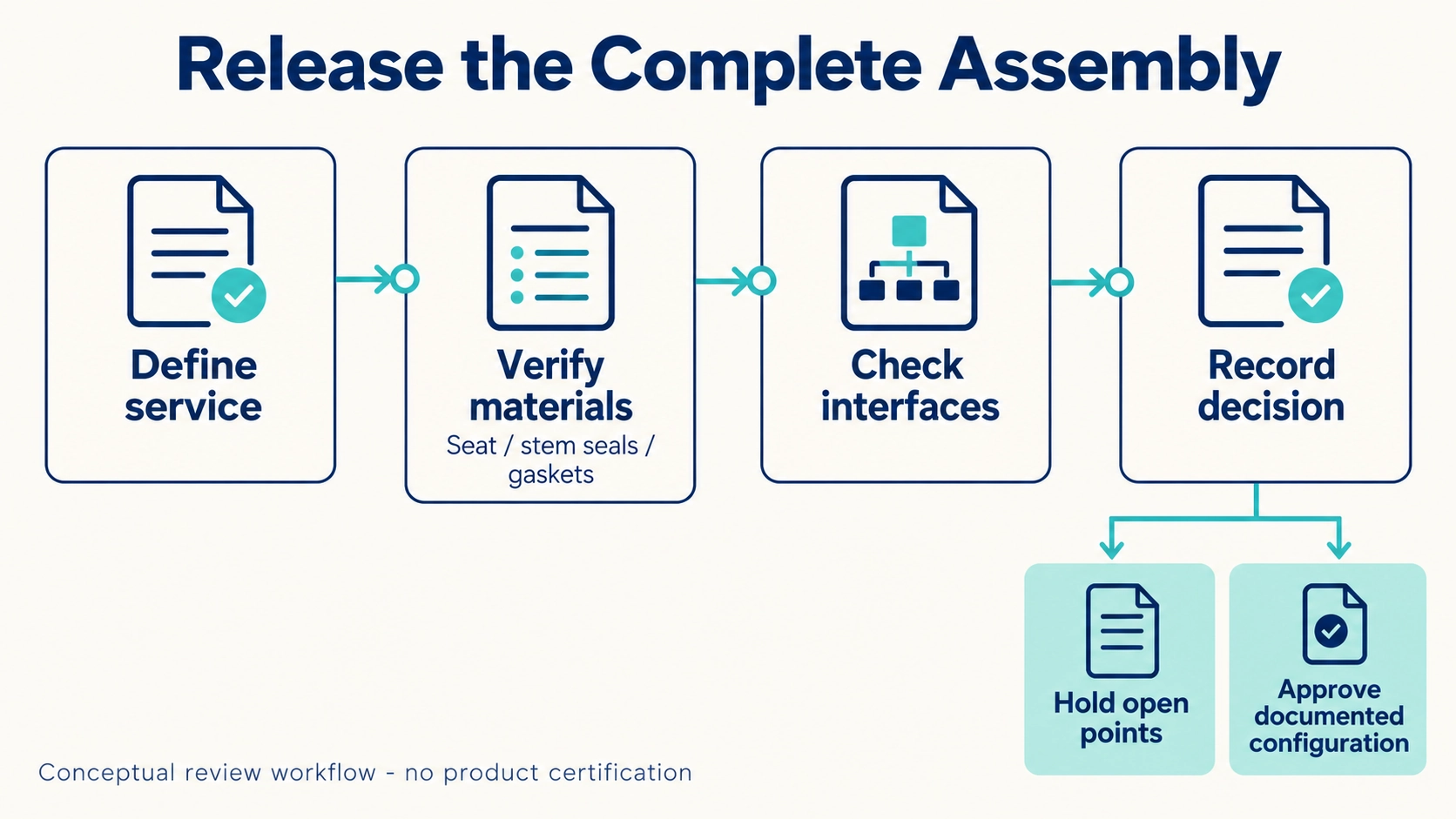
Conceptual review links service requirements, all relevant materials, mechanical interfaces and the release decision. Open technical points remain on hold until the responsible review is complete.
Frequently Asked Questions
Is a metal-seated butterfly valve always better for transformer service?
No. Compare the actual liquid, service conditions, closure acceptance, external sealing and mechanical interfaces. A metal seat does not establish the suitability of the complete assembly for every transformer connection.
Does a soft seal always mean zero leakage?
No. Request the stated acceptance criterion, test method and conditions for the exact supplied model. A soft-seal description alone does not establish a leakage class or test result.
Does a metal valve body prove that the valve is metal-seated?
No. Body material and closure-seal construction are different attributes. Confirm the seat material and sealing arrangement using the controlled sectional drawing and material documentation.
Can pressure-test evidence confirm vacuum suitability?
Not by itself. State the required vacuum exposure, temperature, duration and assembly configuration separately, then request applicable confirmation. Positive-pressure performance does not automatically establish the required vacuum behaviour.
Can seat material alone establish the valve temperature limit?
No. The complete valve may also be limited by stem seals, gaskets, other wetted components or its mechanical design. Request the declared service envelope for the supplied assembly.
What should a metal seated vs soft seal butterfly valve enquiry contain?
Provide the insulating liquid, service conditions, closure and external-leakage requirements, mating drawings, operating access and expected duty. Request exact materials, configuration, applicable evidence and a documented response to deviations.
yoyo shi
Yoyo Shi writes for ZeeyiElec, focusing on medium-voltage accessories, transformer components, and cable accessory solutions. Her articles cover product applications, technical basics, and sourcing insights for global electrical industry buyers.






 English
 한국어
 العربية
 Español
 हिन्दी
 தமிழ்
 Deutsch (Sie)
 Français
 Português do Brasil
 Русский