Cold shrink moisture ingress means moisture has crossed a defined boundary into an area intended to remain protected. Water on an exposed surface is a different observation. Assess the location, relevant sealing arrangement and available evidence before attributing a suspected problem to the termination body, cable interface or another route.
This article helps engineering and inspection teams structure an evidence review. It does not provide an energized inspection procedure, an installation sequence or a repair decision. Any physical examination or testing must follow the authorized equipment and site process. The examples are hypothetical, with no claim of field experience or measured performance.
Define the Boundary Before Calling It Ingress
Name the protected area and the observed location
A statement such as “the termination is wet” leaves several questions unanswered. Water may have been seen on an exposed shed, around the cable entry to an enclosure, or near a connection inside the equipment. Record the actual location using a drawing reference or an annotated observation rather than treating every wet surface as evidence of the same condition.
For cold shrink moisture ingress, the boundary under review must also be named. It might concern a particular sealing interface, the cable construction or an enclosure boundary. These are related parts of an installation, but they have different owners and evidence requirements. Do not replace an unknown boundary with an assumed one simply because a photograph shows a nearby termination.
The cable accessories selection guide provides the broader equipment context. This review has a narrower purpose: distinguish the observation from a proposed moisture route, then identify what information is needed to assess that route.
Keep the observation and the interpretation separate
Use separate fields for what was observed and what someone believes caused it. “Droplets visible on the enclosure floor” is an observation. “Water entered through the termination” is a proposed explanation requiring additional support. Retaining the distinction allows the responsible team to compare explanations without turning an early assumption into a recorded fact.
Conceptual evidence worksheet. The questions do not represent an inspection result or establish a moisture route.
Separate Surface Wetting From Evidence Beyond a Seal
An external surface does not reveal every internal interface
Rain, condensation or another source can leave water on accessible surfaces. The appearance of those surfaces does not, by itself, reveal the condition behind a sealing interface. Likewise, a dry exterior at one observation time cannot prove that all protected areas remained dry throughout an earlier event. Describe the time and limits of the observation.
An enquiry about cold shrink moisture ingress should identify which surfaces were accessible and which were not examined. If the observation was made through a window, from a remote image or after an enclosure was opened under an authorized process, preserve that context. Differences in access can explain why two records contain different information without either record being false.
Distinguish environmental exposure from a confirmed entry route
A high-humidity or outdoor location describes exposure. It does not independently identify where moisture entered or prove that the accessory failed. An enclosure may also have a protective function that needs separate assessment. Keep the environmental description, accessory requirements and observed condition as linked but distinct records.
The cold shrink reliability article provides environmental context. A general discussion is not evidence that a particular supplied assembly, cable and interface combination satisfies every exposure condition. Obtain the configuration-specific information relevant to the boundary being assessed.
Conceptual distinction between observations and conclusions. No actual failure, hidden interface or diagnostic finding is shown.
Review More Than the Visible Termination Body
Map the relevant interfaces without inventing a path
Ask which controlled assembly information describes the accessory-to-cable and connection-side interfaces. Record the supplied component identity and the applicable instructions. Do not create a generic sealing arrangement from memory or apply details from another kit simply because the exterior shape appears similar.
For cold shrink moisture ingress, the visible body is only one possible part of the review boundary. The investigation may also need information about the cable, the connection arrangement and nearby equipment interfaces. Listing those dependencies does not establish that each one leaked; it prevents an assessment from overlooking a relevant boundary before evidence is collected.
Keep cable-side and equipment-side questions open
Moisture observed near a termination is not proof that it originated at that location. Ask whether the available cable and equipment records address other possible sources or routes. If the information does not establish the origin, record it as unresolved rather than selecting the most visible component as the cause.
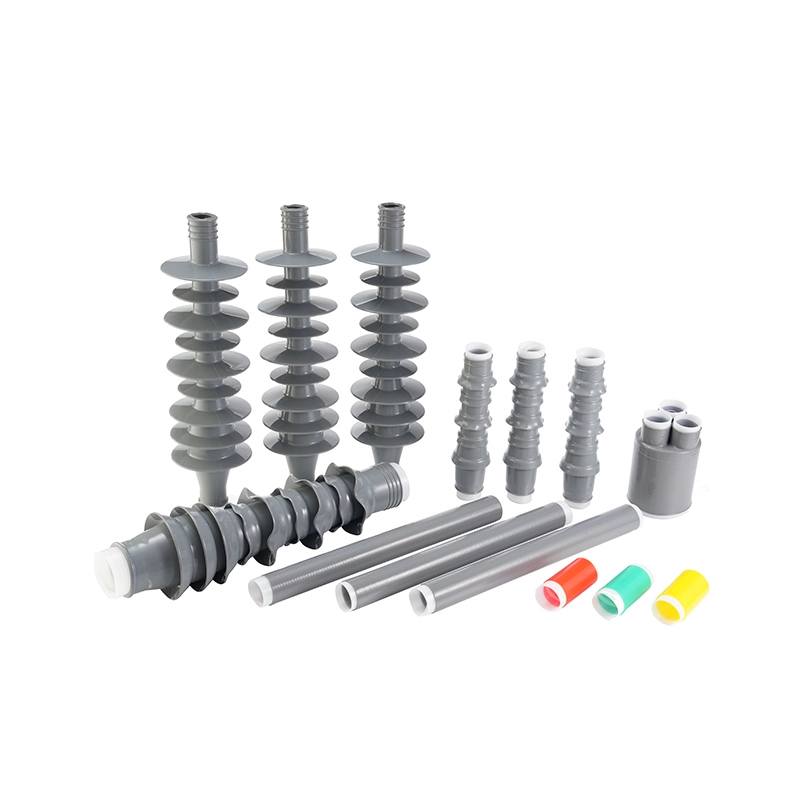
The cold shrink product family can help identify the offered accessory type. Confirm the actual supplied configuration separately. Similar-looking bodies, sleeves and breakout components do not establish identical sealing functions or interchangeable instructions.
Original photograph from the ZeeyiElec product library. Separate visible components illustrate why the supplied assembly must be identified; the photograph does not show an installed seal or prove a water-protection rating.
Build a Record That Can Test the Proposed Explanation
Preserve time, condition and observation limits
Record when the condition was observed, what circumstances were known and which facts came from a witness rather than a direct examination. Relevant context may include a reported wet-weather event, storage history or enclosure condition. Distinguish a documented event from a possible explanation. Do not reconstruct a precise sequence when the evidence supports only a broad time window.
Photographs can support cold shrink moisture ingress reviews when they retain component identity and location context. An isolated close-up may show a mark clearly while concealing where it belongs. Keep an overall reference with any detailed image, and preserve the original files. Do not alter a photograph to make a suspected route appear more definite.
Use a comparison table instead of a premature diagnosis
The following table organizes evidence requests. It is not a field test checklist or a list of criteria for returning equipment to service. The responsible team must define any required physical examination and testing for the actual equipment.
Recorded observation
What it establishes
What remains unresolved
Water visible on an external surface
That surface was wet at the recorded time
Whether moisture crossed a particular seal
Water reported inside an enclosure
A reported condition within that enclosure
Origin, route and affected accessory interfaces
A supplied part differs from the recorded kit
An identification discrepancy requiring review
Whether the difference contributed to the moisture condition
A test report covers an accessory design
Evidence within the report's stated scope
Condition of the particular installed assembly
Keep conclusions proportional to the record. Missing information can justify holding a decision without establishing a failure mechanism. Where several explanations remain possible, identify the evidence that would distinguish them rather than treating the number of photographs or documents as proof of one explanation.
Use Test Evidence Within Its Actual Scope
Type testing and installation condition answer different questions
The public description of IEC 60502-4:2023 identifies type-test requirements for accessories within its stated cable-voltage scope. That is a different question from the condition of an individual installation. A reference to a standard does not independently establish that the supplied configuration was covered or that a particular interface remained protected during service.
When reviewing cold shrink moisture ingress, identify what the cited report actually covers: accessory identity, relevant cable configuration and the stated test scope. Do not infer a water-exposure qualification from an unrelated electrical test result. The applicable acceptance requirements and complete supporting documentation need review by the responsible technical team.
Avoid turning a label into a universal water claim
A broad product description, an indoor or outdoor label, or a visible shed profile does not answer every moisture question. Ask what environmental conditions and interface arrangements the supporting information addresses. If the application includes a condition outside that evidence, record the gap rather than assuming that the nearest familiar label covers it.
The cold shrink and heat shrink comparison addresses technology selection. Changing technology is not, by itself, a diagnosis of an observed moisture condition. Resolve the evidence gap before describing a different accessory type as a demonstrated remedy.
Close the Review With a Bounded Disposition
A hypothetical enclosure-water report
Consider a hypothetical report of droplets inside a cable compartment after wet weather. One photograph shows an accessory body; another shows water below it. Those observations justify review, but their proximity does not establish that water passed through the body or its sealing interface. Record the locations and the unresolved relationship between them.
The cold shrink moisture ingress review should identify who owns the accessory evidence, enclosure information and cable-side questions. Retain the boundary reference and the next required decision for each item. Do not quietly convert a missing record into an accepted condition, or treat an accessory photograph as a complete installation assessment.
Conceptual evidence-record structure. A completed record is not permission to energize, disturb a seal or undertake repair work.
Preserve uncertainty when the evidence is incomplete
A useful disposition states what has been established, what remains uncertain and who must resolve it. If the conclusion concerns only an external wetting observation, say so. If a route is supported by the authorized investigation, identify the evidence and its limits. Keep any required operational or repair decision within its own responsible process.
Coordinate the review with the relevant cable accessories interfaces. Reopen affected conclusions when component identity, cable information or boundary evidence changes. Cold shrink moisture ingress becomes a manageable review question when the record distinguishes observation, route hypothesis and authorized disposition throughout the assessment.
Frequently Asked Questions
Do water droplets on the outer surface prove moisture entered the termination?
No. They establish wetting at the observed surface and time. Evidence about the defined sealing boundary is needed before concluding that moisture entered an area intended to remain protected.
Does a dry exterior rule out an earlier moisture event?
No. A dry surface describes the condition at the time it was observed. It does not establish the earlier condition of every interface or protected area.
Can water inside an enclosure be attributed to the nearest accessory?
Not from proximity alone. Record the location and review the relevant enclosure, cable and accessory boundaries before identifying a supported origin or route.
Does an electrical type-test report prove an installed seal stayed dry?
No. Review the report's actual scope and configuration. Evidence for a tested design does not independently establish the condition of a particular installed sealing interface.
Should a missing sealing record be treated as proof of ingress?
No. A missing record is an evidence gap. It may prevent a decision from being released, but it does not establish a moisture route or failure mechanism by itself.
What should a moisture review state if the origin remains uncertain?
State the verified observations, assessed boundaries and unresolved explanations. Identify the required evidence and responsible reviewer without presenting a route hypothesis as a confirmed result.
yoyo shi
Yoyo Shi writes for ZeeyiElec, focusing on medium-voltage accessories, transformer components, and cable accessory solutions. Her articles cover product applications, technical basics, and sourcing insights for global electrical industry buyers.







 English
 한국어
 العربية
 Español
 हिन्दी
 தமிழ்
 Deutsch (Sie)
 Français
 Português do Brasil
 Русский