يؤدي التسرب الكهربائي إلى إنهاء العمر التشغيلي للعديد من الآبار والبطانات التي تكون سليمة بخلاف ذلك، ومع ذلك فهو أحد أكثر أنماط الأعطال التي يمكن الوقاية منها في محولات التوزيع. فهو يتطور ببطء عند السطح الفاصل العازل، ويظهر علامات تحذيرية قبل حدوث العطل، ويتأثر بعدد قليل من المتغيرات التي يمكن التحكم فيها: النظافة، والرطوبة، ومستوى التثبيت، ودرجة جودة المواد.
ما المقصود بالتسرب الكهربائي عند واجهة البطانة والآبار؟
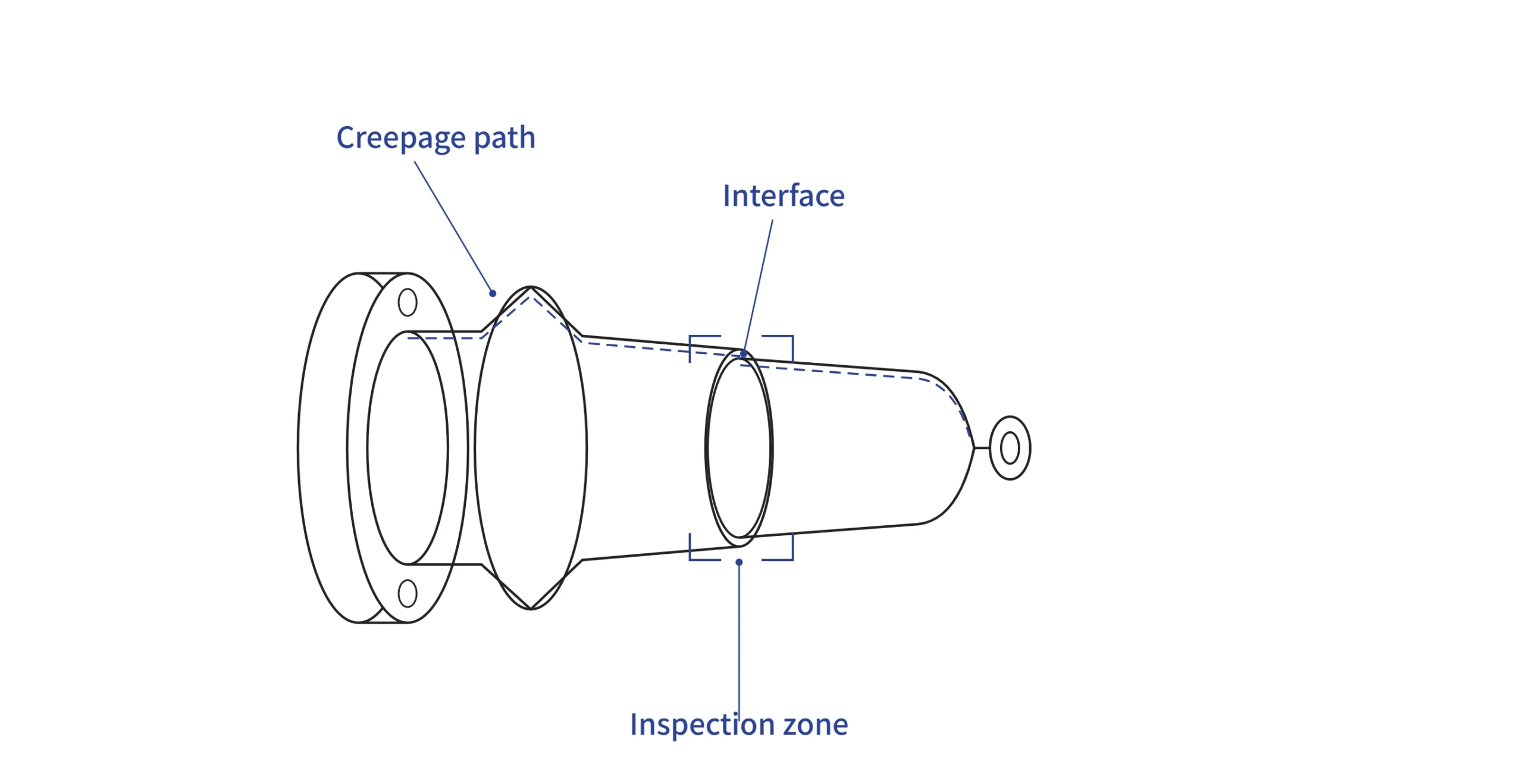
التتبع الكهربائي هو التكوّن التدريجي لمسار موصل دائم ومتفحّم عبر سطح عازل، مدفوعًا بتيار التسرب السطحي الذي يؤثر على التلوث والرطوبة. وعند واجهة البطانة والآبار، يتشكل هذا المسار على طول الحدود العازلة حيث يتم تثبيت ملحق قابل للفصل أو موصل كوعي في جسم البئر.
إن بئر البطانة ومجموعة الإدخال وهو نظام عازل متوافق مصمم عادةً لتحمل تيار مستمر يبلغ 200 أمبير عبر فئات الجهد 15/25 كيلوفولت و15/25/35 كيلوفولت. ولا تعتمد موثوقية هذا النظام على العزل الرئيسي بقدر ما تعتمد على الواجهة الرقيقة بين الأسطح المتلامسة، حيث يبدأ حدوث التسرب الكهربائي.
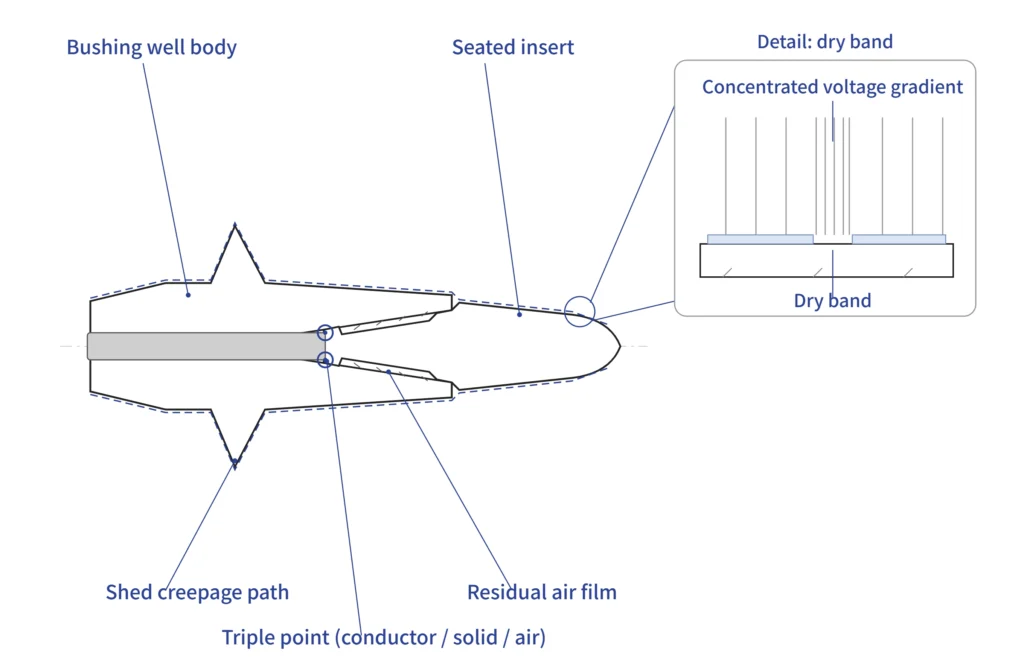
هناك ثلاث خصائص تجعل هذا الحد حاسماً: فالأسطح لا تكون أبداً متطابقة تماماً، مما يترك فراغات دقيقة وطبقة هواء متبقية؛ وتشكل الهندسة نقطة ثلاثية يلتقي فيها الموصل والعازل الصلب والهواء تحت ضغط مكثف؛ كما أن السطح الخارجي للقطعة المُدرجة يحدد مسار الزحف، الذي يتراوح عادةً بين 16 و25 ملم/كيلوفولت حسب مستوى التلوث.
في ظل ظروف نظيفة وجافة، يظل التسرب السطحي أقل بكثير من 1 μA، وتعمل الواجهة بالشكل المقصود. ومع تكوّن طبقة تلوث موصلة، يرتفع التسرب إلى عشرات الميكروأمبير، ويؤدي التسخين المقاومي الموضعي إلى تجفيف أشرطة ضيقة عبر السطح. داخل هذه الأشرطة الجافة، يتركز جهد الواجهة بالكامل عبر فجوة لا يتجاوز عرضها بضعة ملليمترات، ويمكن أن تتجاوز درجات الحرارة السطحية العابرة 300 درجة مئوية — وهي درجة حرارة كافية لبدء التحلل الحراري لسطح البوليمر.
الانحلال الحراري عملية لا رجعة فيها — فالكربون موصّل للكهرباء، لذا فإن كل تفريغ كهربائي يطيل مسار التسرب تدريجيًّا بدلًا من أن يتوقف فجأة. إن التعامل مع التسرب الكهربائي باعتباره ظاهرة تحدث على سطح الحدود، وليس عيبًا في الكتلة، هو ما يجعل الوقاية منه أمرًا عمليًّا.
الشكل 1. مقطع عرضي لبئر عازل تيار 200 أمبير وملحق مثبت فيه، يبرز الواجهة العازلة، والنقطة الثلاثية، ومسار الزحف حيث يبدأ التسرب السطحي.
لماذا يتطور التتبع: آلية الفشل
يُعد التتبع دورة ذاتية التعزيز: فبمجرد تشكل طبقة موصلة، تسهل كل مرحلة المرحلة التي تليها، لذا قد تبدو الواجهة سليمة لسنوات ثم تتدهور بسرعة.
التسرب السطحي والتفريغ في النطاق الجاف
يُظهر سطح البوليمر النظيف مقاومة في نطاق الجيجاأوم؛ أما الطبقة المستمرة من التلوث والرطوبة فتخفض هذه المقاومة إلى نطاق الميجاأوم، مما يسمح بتدفق تيار التسرب على طول مسار الزحف. يعمل التسخين الأومي على تجفيف الشرائط الضيقة، ونظرًا لأن الشريط الجاف يقطع الطبقة، فإن جهد السطح البيني يكاد يُوزَّع بالكامل عبره — عدة كيلو فولت/مليمتر على شريط بعرض 1–3 مليمتر — مما يؤدي إلى تأين الهواء المجاور وتحويله إلى تفريغات متلألئة.
يمكن قياس عملية الانتقال من خلال السلوك الحالي: حيث يرتفع التيار التسرب من أقل من 1 ميكروأمبير على سطح نظيف إلى نطاق الميليأمبير أثناء التلألؤ النشط، في حين يمكن أن تتأرجح المقاومة السطحية المحلية بين ≥1 جيجاأوم (جاف) وبضعة ميغاأوم (مبلل وملوث). تعتبر اختبارات التتبع المعيارية أن تيار التسرب المستمر الذي يتجاوز حوالي 60 mA معيارًا للفشل، مما يعطي فكرة مفيدة عن الحجم المعني.
التفحيم والمسار الموصّل الدائم
يؤدي كل تفريغ كهربائي إلى التحلل الحراري للبوليمر، ويكون الكربون المتبقي موصلاً للكهرباء، لذا يمتد المسار مع كل دورة حتى يقوم جسر كربوني بتقصير مسافة الزحف بما يكفي لإحداث قفزة كهربائية. ويتم تقييم مقاومة هذه الآلية من خلال اختبار المستوى المائل في ظل IEC 60587 — مقاومة التتبع والتآكل.
أين تكمن أكبر نقاط الضعف في الواجهة
تتركز المخاطر عند نقطة الثلاثية وجذور الحافة، حيث يبلغ الإجهاد المماسي ذروته ويتراكم التلوث. كما تحتفظ المنطقة السفلية من المقعد في الملحق المثبت جزئيًا بالرطوبة، مما يجعلها موقعًا شائعًا لبدء التآكل.
الظروف الميدانية التي تسرع عملية التتبع
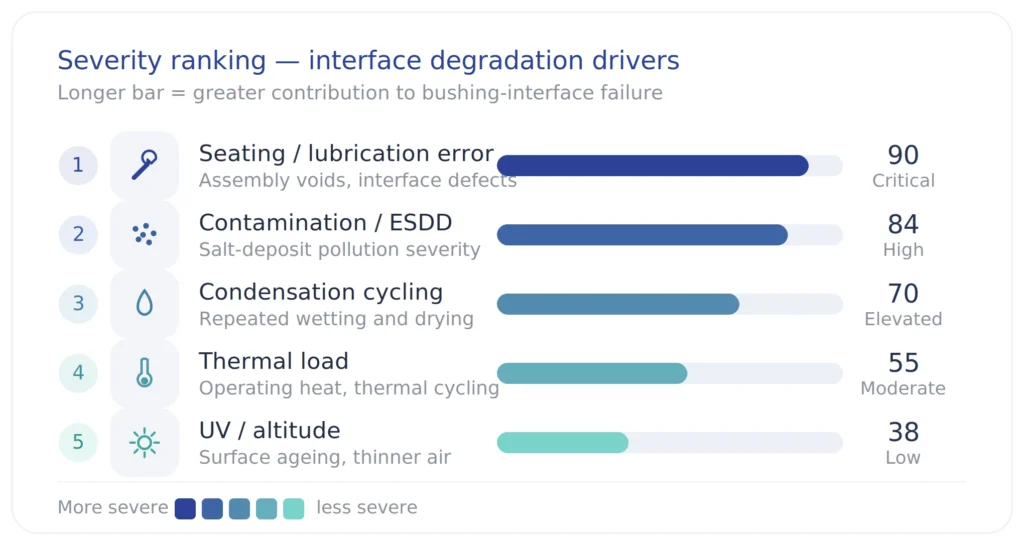
أثناء الاستخدام، نادرًا ما يُعد التآكل عيبًا جوهريًّا — فالسبب الحقيقي هو تأثير البيئة على الواجهة بمرور الوقت، ولهذا السبب تُعد معايير التسارع هذه أكثر أهمية من التصنيف المختبري وحده. لمعرفة كيفية انسجام مكونات الواجهة مع النظام الأوسع نطاقًا، انظر مجموعة ملحقات المحولات.
الشكل 2. العوامل الميدانية التي تؤثر على أداء البطانات في الآبار، مرتبة حسب درجة خطورتها — التلوث، ودورات الرطوبة، وأخطاء التركيب، والإجهاد الحراري، والتعرض للعوامل الخارجية.
طبقات التلوث والتلوث البيئي
يشكل الملح وغبار الأسمنت والجسيمات الصناعية الطبقة الموصلة التي تتطلب إجراء اختبارات التتبع. وغالبًا ما تُعبَّر عن شدة هذه الظاهرة بمؤشر كثافة ترسب الملح المكافئة (ESDD): حيث تتراوح القيم في المواقع الخفيفة بين 0.01 و0.06 ملغ/سم²، بينما تتجاوز 0.4 ملغ/سم² في المواقع الساحلية أو الصناعية الشديدة. وتؤدي القيم العالية لمؤشر ESDD إلى تقصير مسافة الزحف الفعالة وزيادة التسرب.
تسرب الرطوبة ودورات التكثف
تعمل الرطوبة على تنشيط الدورة، وأكثر الأنماط إضرارًا هو دورة التكثف — حيث تنخفض درجة حرارة السطح إلى ما دون نقطة الندى، ثم يتشكل طبقة رقيقة من الرطوبة، ثم يجف. وتعد الرطوبة النسبية التي تتجاوز 85–90% في حاوية مثبتة على قاعدة غير مهواة مثالية لهذا الغرض، خاصةً مع تقلبات درجات الحرارة بين النهار والليل التي تتجاوز 10–15 درجة مئوية.
أخطاء التثبيت التي مهدت الطريق
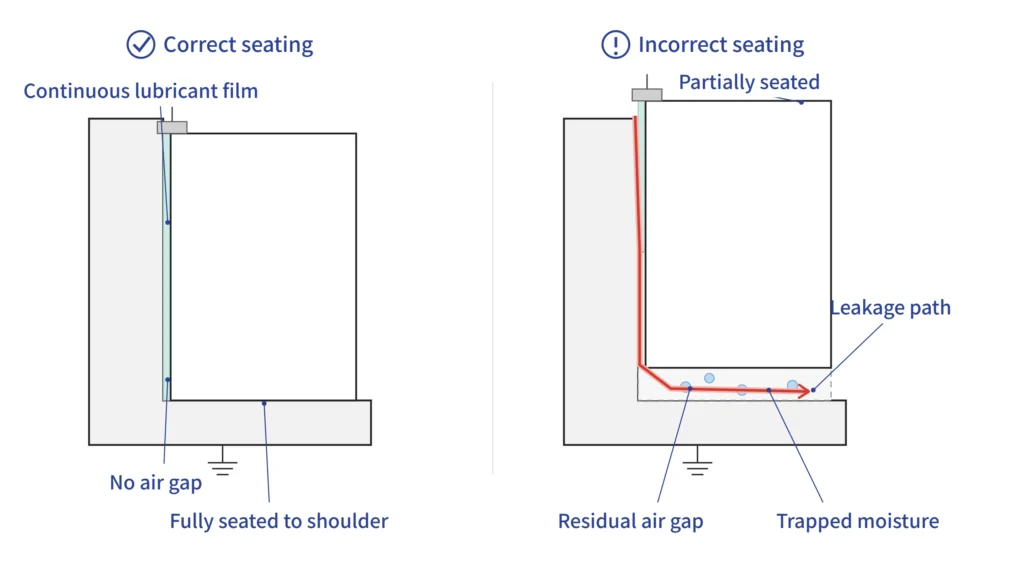
إن ترك الملحق غير مثبت بشكل كامل يؤدي إلى وجود فجوة هوائية ومصيدة للرطوبة؛ كما أن إهمال استخدام مادة التشحيم المحددة يترك فراغات دقيقة تتأين تحت الضغط. في إحدى حالات التشغيل التجريبي في منطقة ساحلية، أظهرت المكونات الداخلية ذات الجهد 25 كيلو فولت وميضًا مبكرًا عند انقطاع التيار التالي — ولم يُعزى ذلك إلى المكونات نفسها، بل إلى تخطي خطوة التشحيم أثناء عملية التشغيل المتسرعة، مع عدم استبدال مادة التجفيف.
العوامل المسببة للإجهاد البيئي
فوق ارتفاع يبلغ حوالي 1,000 متر، تؤدي كثافة الهواء المنخفضة إلى تقليل هامش حدوث الاندلاع الكهربائي، وبالتالي تصل السطح البيني الملوث إلى مرحلة بدء التفريغ عند جهد كهربائي أقل مقارنةً بمستوى سطح البحر. ويؤدي الحمل الحراري والأشعة فوق البنفسجية إلى زيادة الضغط، لكنهما نادرًا ما يتسببان في حدوث التتبع بمفردهما.
[رؤية الخبراء] التقييم السريع لمخاطر التتبع في موقع ما
المواقع الساحلية أو الصناعية التي يُرجح أن يكون فيها مؤشر ESDD أكبر من 0.4 ملغ/سم² → يجب تحديد استخدام سيليكون ذي مؤشر CTI عالٍ ومسافة زحف أوسع.
حاوية غير مهواة مع تباين في درجة الحرارة بين النهار والليل يزيد عن 15 درجة مئوية → يجب إعطاء الأولوية لسلامة المادة المجففة وفتحة التهوية.
الارتفاع >1,000 م → يجب تطبيق معامل تخفيض القدرة المحدد من قبل الشركة المصنعة في حالة حدوث «الانفجار الكهربائي» قبل الاعتماد على الهوامش المذكورة في اللوحة التعريفية.
كيفية منع التتبع: خطوة بخطوة
يمكن التحكم في كل مسرع من المسرعات المذكورة أعلاه أثناء التركيب والصيانة: حافظ على نظافة الواجهة وجفافها وتوصيلها بشكل كامل وحمايتها من التآكل. ويتوافق التسلسل التالي مع ذلك قائمة مراجعة ضمان الجودة لتركيب ملحقات السفن; ؛ تعامل مع كل خطوة على أنها حكم يجب تطبيقه، وليس ضمانًا.
قبل التركيب: النظافة والتحقق
افحص كلا السطحين بحثًا عن بقايا صب، أو خدوش، أو جسيمات رملية؛ فقد يؤدي خدش بعمق جزء من المليمتر إلى حدوث مسار.
قم بالتنظيف باستخدام المذيب المحدد (عادةً ما يكون كحول الأيزوبروبيل)، في اتجاه واحد، بقطعة قماش خالية من النسالة — ولا تستخدم أبدًا مواد كاشطة.
تأكد من أن فئة الملحق وتصنيفه يتوافقان مع التطبيق (على سبيل المثال، 200 أمبير بشكل مستمر عند 15/25 كيلوفولت أو 15/25/35 كيلوفولت).
أثناء التركيب: التشحيم، التثبيت، إزالة الهواء
قم بوضع طبقة رقيقة ومتساوية من مادة التشحيم السيليكونية المحددة لإزالة الهواء وتسهيل عملية التركيب — فالكمية الزائدة لا تضيف أي فائدة.
يجب تثبيت المسمار بالكامل حتى الكتف الميكانيكي بحيث لا يتبقى أي فراغ هوائي؛ حيث يُعد التثبيت الجزئي أحد الأسباب الرئيسية في هذا المجال لحدوث التفريغ المبكر.
في حالة تحديد قيمة عزم الدوران، يجب الالتزام بها؛ حيث يؤدي كل من التثبيت الناقص والتثبيت الزائد إلى تشويه الشكل الهندسي للواجهة.
ما بعد التركيب: التحكم في البيئة والخط الأساسي
استبدل المادة الماصة للرطوبة، وتأكد من سلامة الأختام وفتحات التهوية، وحافظ على رطوبة العلبة أقل من 60% تقريبًا للحد من تكرار ظاهرة التكثف.
تسجيل خط الأساس عند بدء التشغيل حتى يمكن اكتشاف أي انحراف لاحقًا.
يتمثل الإجراء الأساسي العملي في إجراء فحص بصري/حراري مقترنًا بقراءة لمقاومة العزل؛ وعادةً ما تسجل واجهات الجهد المتوسط (MV) النظيفة قراءات في نطاق ≥1 GΩ عند درجة حرارة 20 °C. ويُعد انخفاض القيمة نحو نطاق MΩ خلال عمليات الفحص المتتالية بمثابة إنذار مبكر، وليس حكمًا نهائيًّا بالنجاح أو الفشل في حد ذاته.
في الممارسة العملية، فإن الخطوتين اللتين يتم تخطيهما غالبًا تحت ضغط الجدول الزمني — التزييت والتثبيت الكامل — هما اللتان تمنعان معظم حالات انزلاق الواجهة التي يمكن تجنبها.
الشكل 3. المقارنة بين التركيب الصحيح والخاطئ؛ حيث يؤدي التركيب الكامل مع وجود مادة تشحيم مستمرة إلى القضاء على الفجوة الهوائية ومصائد الرطوبة التي تتسبب في حدوث التتبع بين الأسطح المتلامسة.
خيارات المواد والمواصفات التي تمنع ظهور آثار الأقدام
تمنع الانضباطية الميدانية معظم حالات التلوث، لكن المواد المستخدمة تحدد الحد الأقصى للتلوث المسموح به — وهو خيار في عملية الشراء يؤتي ثماره على مدار العمر التشغيلي. وينطبق نفس المنطق على خيارات العزل في جميع أنحاء مجموعات العوازل ذات الجهد المتوسط, ، تم اختيارها بناءً على مقاومة التلوث وليس على الجهد الكهربائي وحده.
مقارنة بين السيليكون وEPDM والإيبوكسي
يتميز السيليكون (LSR/HTV) بمقاومة قوية للتسرب الكهربائي بالإضافة إلى القدرة على استعادة خصائصه المقاومة للماء — حيث يعيد سطحه تكوين قطرات الماء بعد التلوث، غالبًا في غضون ساعات إلى يوم واحد، مما يقلل من الحاجة إلى معالجة التسرب الكهربائي المستمر. أما مادة EPDM المعالجة بالبيروكسيد، الشائعة الاستخدام في الحشوات، فهي تتمتع بمقاومة عالية للتسرب الكهربائي ولكنها أقل قدرة على الاستعادة الذاتية. يُظهر الإيبوكسي الحلقي الأليفاتي أداءً جيدًا في الأماكن الخارجية، ولكنه، باعتباره مادة صلبة حرارية، يتآكل بدلاً من أن يستعيد خصائصه بمجرد تلفه.
مقارنة بين التتبع والمقاومة
نظام المواد
النطاق النموذجي لتقنية CTI
الكارهة للماء
شرط الواجهة الأمثل
السيليكون (LSR/HTV)
مرتفع (وغالبًا من الدرجة الأولى)
تستعيد شكلها بعد التبلل
تلوث شديد، رطوبة عالية، ساحلية
EPDM (معالج بالبيروكسيد)
مرتفع
انتعاش محدود
تلوث معتدل، مركبة مغلقة
الإيبوكسي السيكلوأليفاتيكي
متوسط – مرتفع
لا شيء (وضع التآكل)
في الهواء الطلق، مستوى تلوث أقل
مؤشر التتبع المقارن (CTI) كمعلمة من معلمات المواصفات
يُعد مؤشر CTI الرقم الأكثر فائدة لمقارنة مقاومة التتبع السطحي، ويتم تحديده وفقًا للمعيار IEC 60112، الذي ينظم مؤشرات مقاومة التتبع ومؤشرات التتبع المقارنة للمواد العازلة الصلبة.
تتراوح قيم CTI عادةً بين 175 و600 فولت تقريبًا، اعتمادًا على التركيبة ونظام الحشو، حيث تمثل القيم التي تبلغ 600 فولت أو أكثر مجموعة المقاومة العالية المفضلة للاستخدام في البيئات الملوثة. يجب ربط القيمة المستهدفة لمؤشر CTI بمواصفات مسافة الزحف المناسبة — في حدود 20–25 مم/كيلو فولت للمواقع شديدة التلوث — نظرًا لأن درجة جودة المادة وشكلها الهندسي يعملان معًا، وليس بشكل مستقل.
يُقاس مؤشر CTI على عينات مسطحة في ظل ظروف تلوث موحدة، لذا فهو يُصنف المواد بشكل موثوق، لكنه يُعد مؤشراً مقارناً وليس مؤشراً مباشراً للتنبؤ بعمر الخدمة الميداني.
[رؤية الخبراء] اختصارات المواصفات التي تثبت فعاليتها في الميدان
التلوث الشديد: يجب استهداف قيمة CTI ≥600 فولت ومسافة الزحف 20–25 مم/كيلوفولت معًا — فلا يعوض أحدهما الآخر.
اختر السيليكون في الحالات التي تسود فيها دورات التبليل؛ حيث يُعد استعادة خاصية مقاومة الماء هي العامل الفارق العملي.
قم بتدوين الدرجة الدقيقة لزيت التشحيم في ورقة المواصفات؛ فاستبدال الزيت يشكل خطرًا خفيًّا على عملية التتبع.
فترات الفحص والاختبار والصيانة
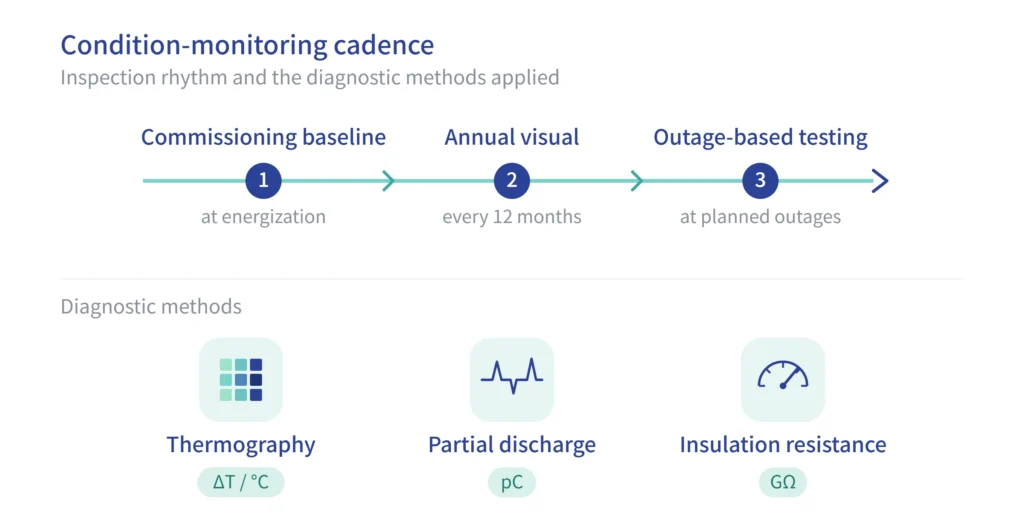
ينبه نظام التتبع قبل حدوث أي عطل — فمع ارتفاع معدل التسرب وظهور النقاط الساخنة وزيادة معدل التفريغ. ويحول البرنامج الذي يراقب هذه الإشارات أي انقطاع في الخدمة إلى عملية استبدال مخطط لها، حيث يتتبع كل أعراض المشكلة حتى الوصول إلى السبب قبل استبدال الأجزاء.
الشكل 4. وتيرة الصيانة وطرق الكشف من أجل التتبع المبكر، والجمع بين الفحص البصري والحراري مع تتبع اتجاهات التفريغ الجزئي ومقاومة العزل.
الفحص البصري والحراري
ابحث عن تبييض السطح، والخطوط الكربونية الدقيقة عند جذور الأغصان المتساقطة، وترسبات الملح، وتجمع الرطوبة. وتوفر التصوير الحراري مؤشراً لا يعتمد على التلامس: فوجود نقطة ساخنة متكررة ترتفع درجة حرارتها بمقدار 3–5 درجة مئوية عن السطح المحيط بها يستدعي إجراء فحص دقيق، ولا ينبغي تجاهله.
طرق اختبار التفريغ الجزئي والعزل
يكتشف قياس التفريغ الجزئي (PD) القوس الكهربائي الدقيق الذي يسبق عملية الكربنة؛ حيث يُعد ارتفاع النشاط إلى نطاق العشرات من pC، مع اتجاه تصاعدي بين الفترات الزمنية، إشارة أكثر دلالة من أي قراءة منفردة. اقرن ذلك بمقاومة العزل: عادةً ما تسجل الواجهة النظيفة قيمة ≥1 GΩ عند 20 درجة مئوية، ويشير الانخفاض المطرد نحو نطاق MΩ خلال عمليات الفحص إلى تطور مسار سطحي. تعامل مع اتجاهات التغير (Δ) وليس العتبات المطلقة كعامل محدد للقرار.
متى يجب إعادة تشحيم الملحق ومتى يجب استبداله
غالبًا ما يمكن تنظيف التلوث الذي لا يحتوي على كربون مرئي وإعادة تشحيمه باستخدام المركب المحدد؛ أما بمجرد ظهور علامات الكربون، فإن التلف يصبح دائمًا ويُعد الاستبدال هو الخيار الأكثر أمانًا. في إحدى الحالات، أظهرت وحدة إدخال بجهد 15 كيلو فولت، تم رصدها بسبب شذوذ حراري يبلغ حوالي 4 درجات مئوية، ارتفاعًا في التفريغ الجزئي (PD) بين فترات الانقطاع، كما أكدت خطوط الكربون الخافتة عند جذر الحجرة وجود تآكل مبكر — وقد تم اكتشاف ذلك في وقت مبكر بما يكفي، مما سمح بتجنب حدوث قفزة كهربائية أثناء التشغيل بفضل الاستبدال المجدول. يجب أن تتناسب وتيرة الفحوصات مع البيئة المحيطة: قد تكفي الفحوصات كل 3–5 سنوات للمفاتيح الكهربائية الداخلية النظيفة، بينما يجب إجراؤها سنويًّا في المواقع الملوثة أو الساحلية.
حدد واجهات آبار البطانات المقاومة للتتبع مع ZeeyiElec
يُعد منع التسرب عبر الواجهة مسألة تتطلب الالتزام بالمواصفات والتطبيق الصحيح: اختيار درجة المادة المناسبة، وتوفير مسافة الزحف الكافية، والتركيب الصحيح، بالإضافة إلى خطة صيانة تراعي الاتجاهات. توفر شركة ZeeyiElec آبار البطانات والملحقات المصنفة لتحمل تيار مستمر يبلغ 200 أمبير عبر فئات الجهد 15/25 كيلوفولت و15/25/35 كيلوفولت، وهي مصممة لتتناسب مع بيئة التلوث بدلاً من الجهد الكهربائي وحده.
نظرًا لأن واجهة البئر والموصل هي النقطة التي يلتقي فيها جانب المحول بالموصل القابل للفصل من جانب الكابل، فإن سلامة النظام تمتد لتشمل كلا نصفيه — ولهذا السبب فإن منتجاتنا مجموعة ملحقات الكابلات القابلة للانكماش البارد والانكماش الحراري تتبع نفس منطق الواجهة. بالنسبة للخدمات في المناطق الملوثة أو الساحلية، نساعد في مطابقة المواد ذات مؤشر CTI العالي (المجموعة التي تبلغ قيمتها 600 فولت أو أكثر) ومسافة الزحف التي تتراوح بين 20 و25 ملم/كيلوفولت مع ظروف الموقع.
يشمل الدعم مطابقة النماذج، وتقديم الملاحظات الفنية بشأن الاختيار، ووثائق التصدير المتوافقة مع معايير ISO 9001 وCE وRoHS. يرجى إطلاعنا على فئة الجهد الكهربائي، والقيمة الاسمية للتيار، وبيئة التلوث للحصول على ملاحظات فنية وعرض أسعار — ويرجى اعتبار هذه الأرقام نقاط انطلاق للمراجعة الخاصة بالمشروع، وليست ضمانات ثابتة.
الأسئلة المتداولة
ما هي أول علامة مرئية تدل على حدوث انزلاق في حشية بئر الحفر؟
عادةً ما تظهر آثار التلوث المبكرة على شكل خطوط بيضاء أو رمادية باهتة بالقرب من الجذور المتساقطة، وإن كان توقيت ظهورها يعتمد على مستوى التلوث والرطوبة — وغالبًا ما تظهر بقعة ساخنة على الصورة الحرارية لا تتجاوز بضع درجات قبل أن تصبح أي علامة مرئية.
كم من الوقت يستغرق تطور عملية الانتشار حتى الوصول إلى مرحلة «الاندلاع»؟
بمجرد بدء ظهور مسار متفحم، يمكن أن يستمر تطوره على مدى أسابيع أو أشهر حسب الحمل والتلوث ودورة الرطوبة؛ لكن في كثير من الأحيان، يمكن إيقاف التتبع السطحي المبكر الذي يتم اكتشافه قبل أن يربط المسار مسافة الزحف، بدلاً من أن يكون الأمر نهائياً.
هل تؤدي مسافة الزحف الأكبر دائمًا إلى منع حدوث التتبع؟
إن زيادة مسافة الزحف (التي تتراوح غالبًا بين 20 و25 ملم/كيلو فولت في حالات التلوث الشديد) تزيد من الهامش، لكنها لا تمنع حدوث التتبع بحد ذاتها؛ حيث لا تزال درجة جودة المادة ونظافتها وجودة تركيبها هي العوامل التي تحدد ما إذا كان سيتشكل غشاء موصل أم لا.
هل يمكنني استخدام شحم عادي بدلاً من مادة التشحيم المخصصة للواجهة؟
لا — فمركب السيليكون المحدد يعمل على إزالة الهواء دون الإضرار بالخصائص العازلة، في حين أن الشحوم ذات الاستخدامات العامة قد تتسبب في تآكل البوليمر أو احتجاز الشوائب، حيث يعتمد الخطر الفعلي على التركيب الكيميائي والكمية.
هل اختبار التفريغ الجزئي ضروري لكل بئر مزود بجلبة عازلة؟
لا ينطبق ذلك على جميع الوحدات؛ حيث يُعد قياس PD أكثر فائدة في الواجهات ذات الجهد العالي أو الحرجة، وفي الحالات التي تتطلب الحصول على بيانات الاتجاهات، في حين أن العديد من المنشآت الداخلية النظيفة تُدار بشكل ملائم من خلال الفحص البصري والحراري.
ما هي المادة الأكثر مقاومة لآثار الأقدام في البيئات الساحلية؟
يُفضل استخدام السيليكون (LSR/HTV) عمومًا في المواقع الساحلية والمناطق شديدة التلوث نظرًا لاستعادته لخاصية مقاومة الماء، على الرغم من أن الأداء لا يزال يعتمد على وجود مسافة زحف كافية والتركيب الصحيح، وليس على المادة وحدها.
يويو شي
تكتب يويو شي في ZeeyiElec، مع التركيز على ملحقات الجهد المتوسط ومكونات المحولات وحلول ملحقات الكابلات. تغطي مقالاتها تطبيقات المنتجات، والأساسيات التقنية، ورؤى المصادر للمشترين العالميين في مجال الصناعات الكهربائية.





 English
 한국어
한국어 العربية
 Español
 हिन्दी
 தமிழ்
தமிழ் Deutsch (Sie)
 Français
 Português do Brasil
 Русский