Transformer Accessories Series

Off-Circuit Tap Changers for Distribution Transformers

ZeeyiElec off-circuit (off-load) tap changers are designed for de-energized voltage adjustment, with stable contact performance and configurable structures including linear and rotary types.

OEM/ODM Support Fast Technical Response Export Documentation
Voltage Class 15 / 25 / 35 kV
Current Rating 63A / 125A
Operation Type De-Energized (Off-Load)
Product Definition

What Is an Off-Circuit Tap Changer?

An off-circuit tap changer (also called a de-energized tap changer or off-load tap changer) is a mechanical switching device used to adjust transformer turns ratio only when the transformer is disconnected from power. It helps maintain target output voltage by selecting predefined tap positions in a safe, controlled, and cost-effective way.

  • 1
    De-Energized Operation — tap position changes are performed only when the transformer is fully off-line.
  • 2
    Voltage Ratio Adjustment — compensates grid fluctuation through fixed tap steps (typical ±2×2.5% or similar schemes).
  • 3
    Simple & Reliable Structure — compared with OLTC systems, off-circuit tap changers offer lower complexity, lower maintenance demand, and practical lifecycle value.
ZeeyiElec provides linear and rotary off-circuit tap changer solutions for distribution transformer platforms, with support for 15/25/35kV classes and project-based configuration matching.

System Condition Transformer De-Energized
Input Action Rotate / Shift Selector Handle
This Product Off-Circuit Tap Changer
Output Result Adjusted Transformer Voltage Ratio
Series Configurations

Choose the Right Off-Circuit Tap Changer Configuration

ZeeyiElec provides two mainstream off-circuit tap changer structures for distribution transformers: linear type and rotary type. Select by installation space, operating habit, tap-position layout, and project standards.

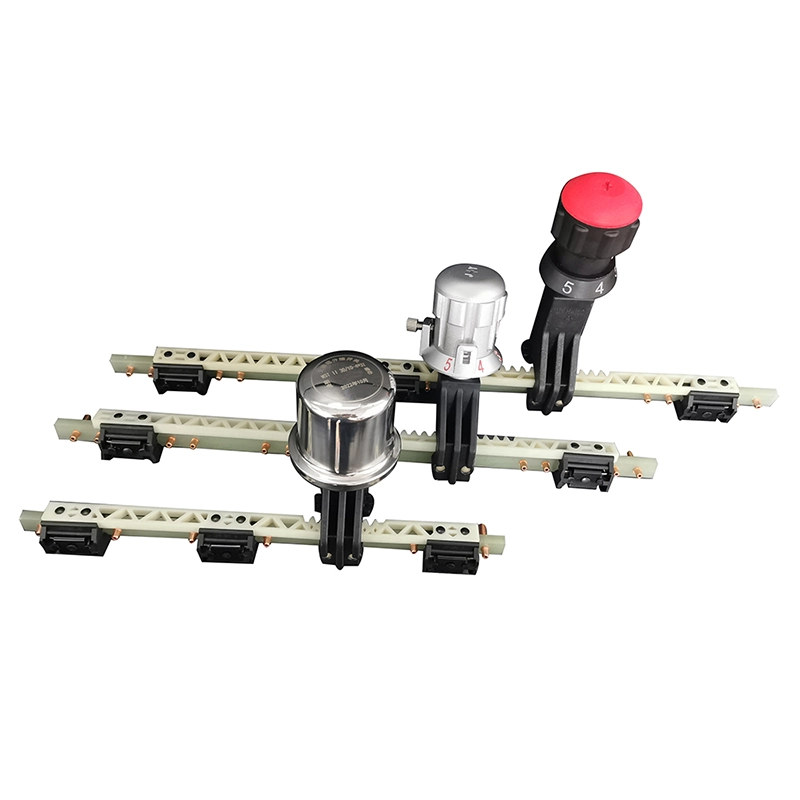
ZeeyiElec off-load tap changer linear type for distribution transformer de-energized voltage adjustment

Off-Load Tap Changer (Linear Type) De-Energized Switching Structure

  • Structure Linear Combined Type
  • Rated Voltage Class Up to 20/30kV (series-dependent)
  • Rated Current Range 10A / 30A / 63A
  • Tap Scheme 4×3 / 6×5 / 8×7
Typical Ordering Ref WSTII 10/20-6×5, WSTII 30/20-6×5, WSTII 63/30-6×5
Request Quote
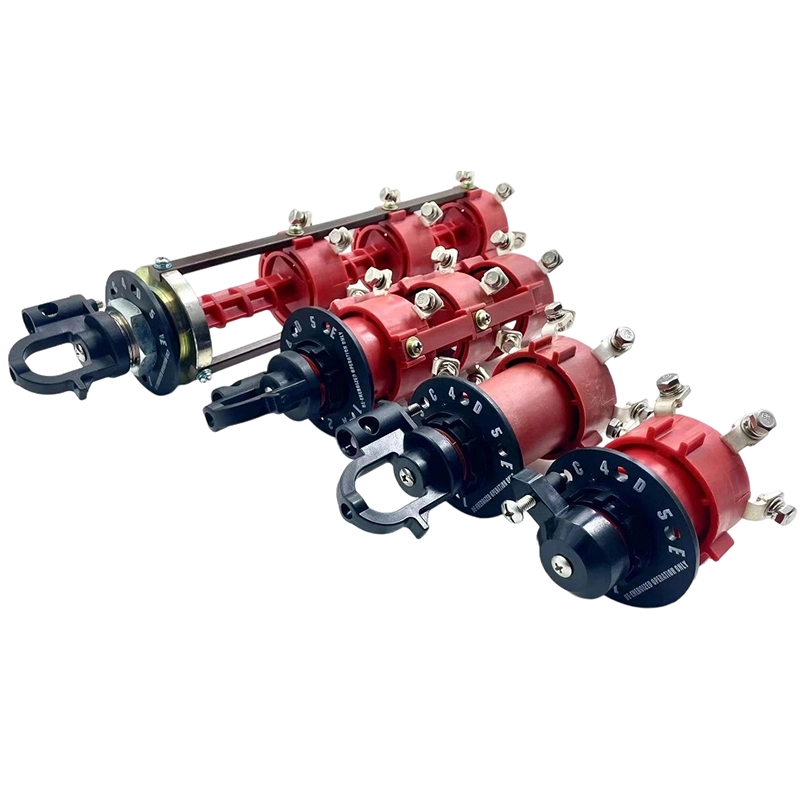
ZeeyiElec off-load tap changer rotary type for transformer tap position adjustment

Off-Load Tap Changer (Rotary Type) Single-Phase / Three-Phase Options

  • Structure Rotary Selector Type
  • Rated Voltage Class 15 / 25 / 35 kV
  • Rated Current Range 63A / 125A
  • Tap Scheme 6×5 (series-dependent)
Typical Ordering Ref WDP-63/15-6X5, WDP-125/35-6X5, WSP II 63/25-6X5
Request Quote

Technical Snapshot (Linear vs Rotary)

ItemLinear TypeRotary Type
Operation MethodDe-energized, linear shiftDe-energized, rotary selector
Typical Voltage Class20kV / 30kV series15 / 25 / 35kV series
Typical Current Range10A / 30A / 63A63A / 125A
Tap Position Scheme4×3 / 6×5 / 8×76×5
Phase ConfigurationProject-dependentSingle-phase / Three-phase
Installation PriorityLengthwise space & linkage layoutPanel operation convenience
Custom OptionsHandle, shaft, mounting adaptationThread, handle, interface adaptation
Typical ApplicationDistribution transformer projectsDistribution transformer projects
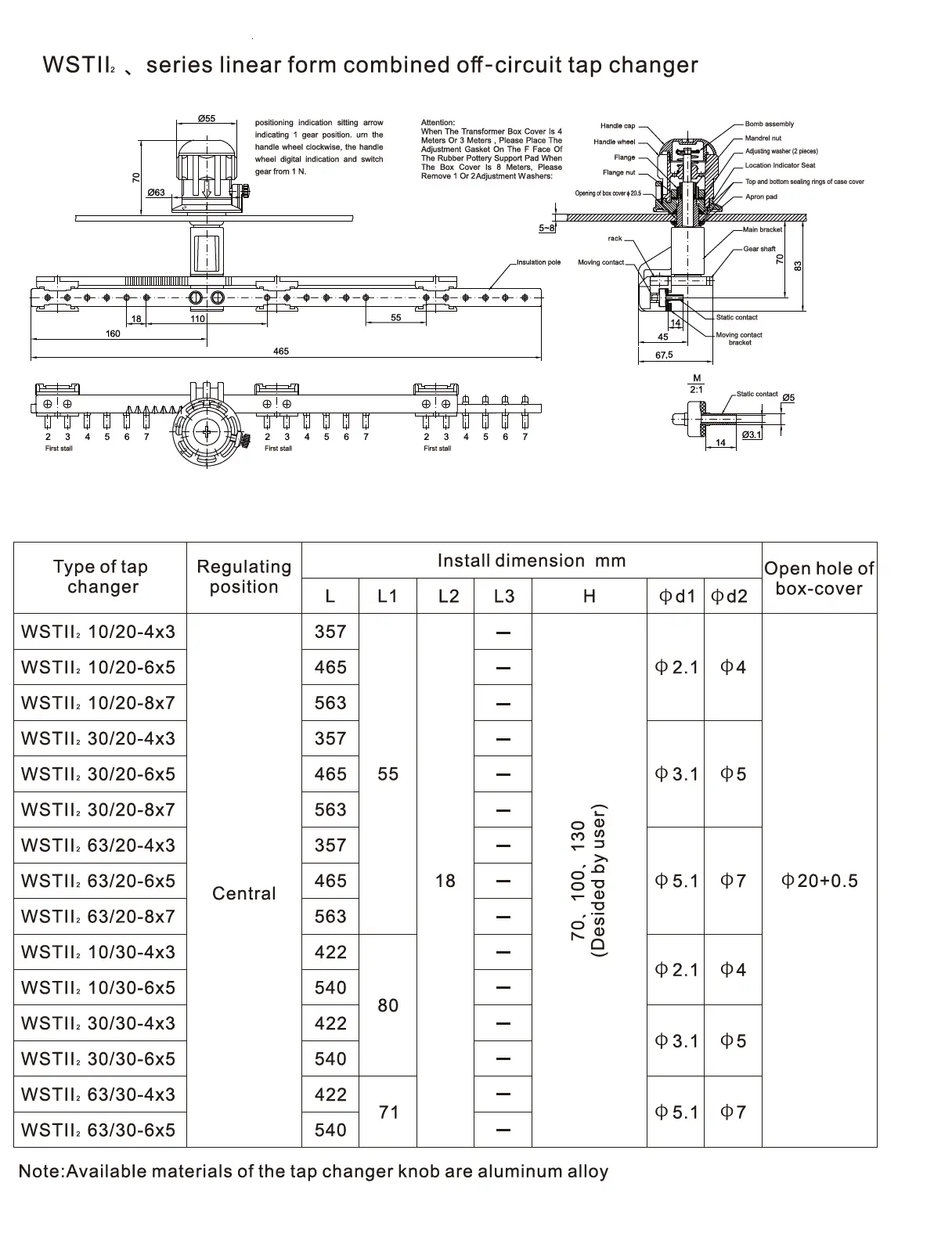
Dimension drawing of ZeeyiElec off-load tap changer linear type
Linear Type Dimension Drawing: Confirm mounting interface, operation travel, and panel opening based on final approved project drawing before production release.
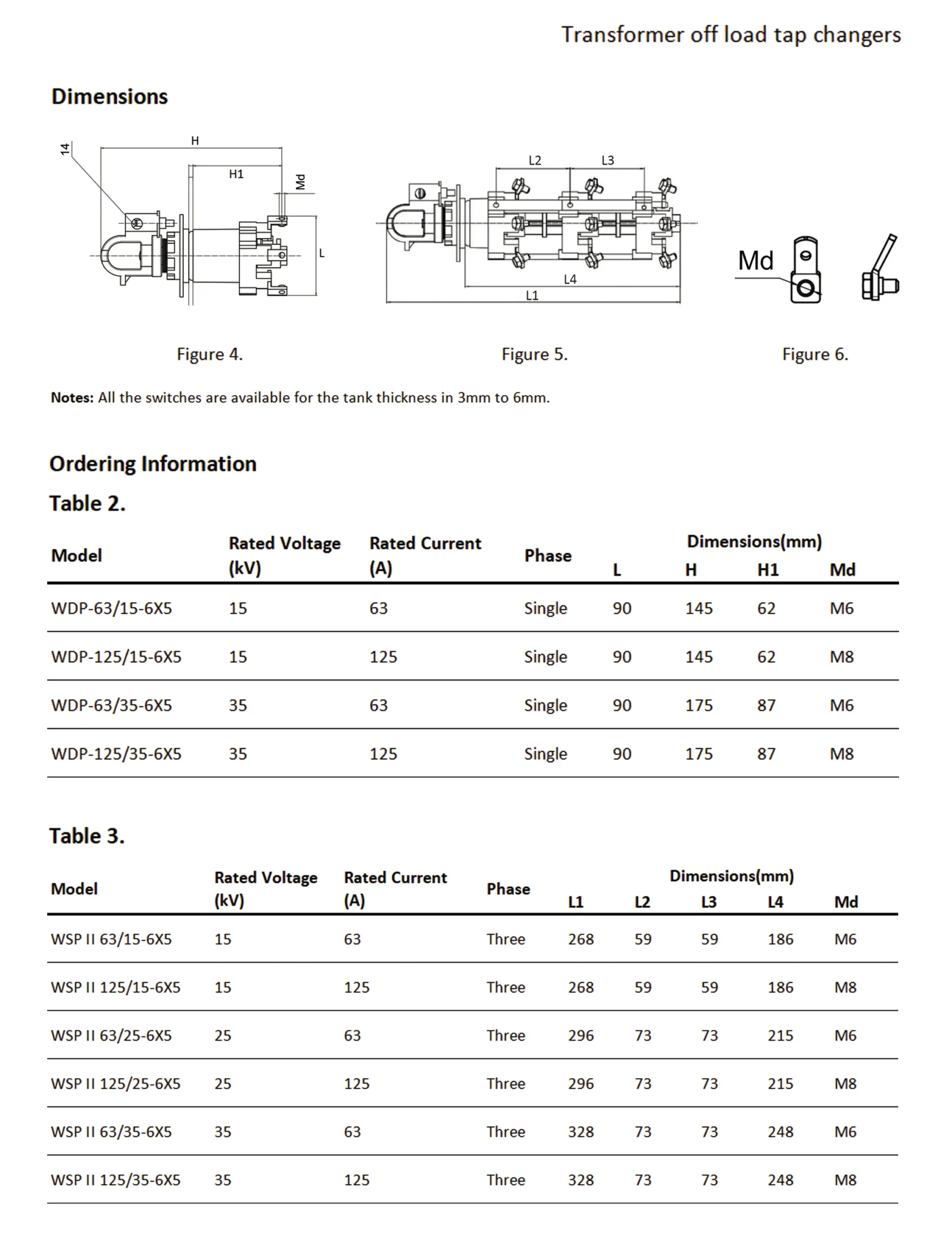
Dimension drawing of ZeeyiElec off-load tap changer rotary type
Rotary Type Dimension Drawing: Select by voltage class, current rating, phase configuration, and required tap-position scheme to ensure mechanical and electrical compatibility.
Technical Data

Engineering Specifications for Off-Circuit Tap Changers

Comparative electrical, insulation, mechanical, and ordering data for ZeeyiElec off-load tap changer linear type and rotary type configurations.

A. Electrical Ratings

ParameterLinear TypeRotary Type
Rated Voltage ClassUp to 20/30kV (series-dependent)15 / 25 / 35kV (series-dependent)
Rated Current10A / 30A / 63A63A / 125A
Tap Operation TypeOff-circuit (de-energized)Off-circuit (de-energized)
Tap Position Scheme4×3 / 6×5 / 8×76×5 (series-dependent)

B. Insulation & System Fit

ParameterLinear TypeRotary Type
Application SystemDistribution transformerDistribution transformer
Phase OptionProject-dependentSingle-phase / Three-phase
Typical Mounting ZoneTank sidewall / cover (project-dependent)Tank sidewall / cover (project-dependent)
Dielectric CoordinationPer project standardPer project standard

C. Mechanical & Interface

ParameterLinear TypeRotary Type
Selector StructureLinear sliding/contact transferRotary indexing/contact transfer
Actuation InterfaceShaft/handle linkageRotary handle/shaft linkage
Mechanical AdaptationCustomizableCustomizable
Panel Operation WindowRequiredRequired
Service ConditionOperate only when transformer is de-energizedOperate only when transformer is de-energized

D. Ordering Information

ConfigurationTypical Model / Ordering Ref
Linear Type 10A ClassWSTII 10/20-6×5
Linear Type 30A ClassWSTII 30/20-6×5
Linear Type 63A ClassWSTII 63/30-6×5
Rotary Type 63A ClassWDP-63/15-6X5 / WSP II 63/25-6X5
Rotary Type 125A ClassWDP-125/35-6X5

Dimensions & Selection Notes

  • Final model selection should be based on transformer voltage class, rated current, and tap-position scheme.
  • Confirm panel opening, shaft length, and interface direction with the approved dimension drawing before release.
  • Linear and rotary structures differ in operation feel and installation footprint; choose by cabinet layout and service preference.
  • Off-circuit tap changer operation must be performed only after transformer de-energization and grounding.
Why ZeeyiElec

Why Buyers Choose ZeeyiElec for Off Circuit Tap Changer Projects

For every Off Circuit Tap Changer program, execution quality depends on consistent manufacturing, clear technical alignment, and fast response during model selection. ZeeyiElec supports OEM and replacement business with engineering-first communication.

Stable Process for Off Circuit Tap Changer Production

Controlled production workflow helps maintain repeatable electrical contact quality and mechanical stability across batches.

Specification Driven Communication

Key data such as voltage class, rated current, and tap position scheme are aligned before quotation to reduce mismatch risk.

Linear and Rotary Type Matching Support

Selection guidance for Off Circuit Tap Changer linear type and rotary type based on cabinet layout and operation preference.

Routine Verification Before Shipment

Critical checks are completed before release to improve delivery confidence for replacement and new transformer projects.

Export Ready Documentation Support

Commercial and technical documents are coordinated for international purchasing, customs, and project handover workflows.

Responsive Follow Up During Project Changes

Fast technical follow-up on compatibility updates, drawing confirmation, and model adjustments during execution.

Engineering Selection

How to Select the Right Off Circuit Tap Changer for Distribution Transformers

Use this engineering selection guide to match Off Circuit Tap Changer type, voltage class, current path, installation interface, and operating method before RFQ. This helps reduce model mismatch and speeds up technical confirmation.

01

Confirm Transformer Duty

Define transformer rating, voltage range, and required tap steps for the target application before selecting Off Circuit Tap Changer.

02

Choose Type

Select Linear Type or Rotary Type according to cabinet layout, shaft direction, and operator preference.

03

Check Electrical Interface

Verify rated current path, contact arrangement, terminal interface, and insulation boundary against your transformer design drawing.

04

Validate Mechanical Fit

Confirm mounting hole pattern, shaft length, panel cutout, and operating clearance to avoid retrofit interference.

05

Finalize RFQ Data

Lock tap positions, quantity, destination market, and required docs so quotation and production can move without revision loops.

Common Mistakes

  • Choosing Off Circuit Tap Changer by appearance only, without checking electrical rating and tap scheme compatibility.
  • Ignoring panel space, shaft alignment, or handle clearance, which causes installation conflict at site.
  • Submitting RFQ without type confirmation (linear type vs rotary type), resulting in repeated technical revision.

📝 Information to Prepare Before RFQ

  • Off Circuit Tap Changer type: linear type or rotary type
  • Transformer rating and required tap positions / regulation range
  • Current path and terminal/interface requirement
  • Mounting boundary data: panel thickness, shaft length, hole pattern
  • Project quantity, target lead time, destination country, and document requirements
Execution Assurance

Quality Control & Documentation Support for Off Circuit Tap Changer Projects

ZeeyiElec supports Off Circuit Tap Changer supply with standardized verification workflow and complete shipment documents, helping OEM and replacement projects move from technical confirmation to delivery with fewer revisions.

Standardized Quality Protocol

  • Requirement Alignment Confirm Off Circuit Tap Changer type, tap positions, and interface details before production release.
  • Dimensional Verification Check shaft length, mounting points, and panel compatibility against approved drawings for linear type and rotary type units.
  • Contacting & Insulation Checks Routine inspection of switching position consistency, contact path integrity, and insulation boundary condition.
  • Pre-Shipment Audit Final verification for model consistency, quantity, marking, and package integrity before dispatch.

Handover Documentation & Support

Standard Export Docs

  • Commercial Invoice & Packing List
  • Off Circuit Tap Changer model confirmation sheet
  • Bill of Lading / Airway Bill
  • Product Specification Sheet

Technical Support

  • Off Circuit Tap Changer interface checklist
  • Installation dimension drawing (linear type / rotary type)
  • Batch traceability reference
  • Post-delivery technical Q&A support
FAQ & Resources

Off Circuit Tap Changer FAQ & Technical References

Practical answers for Off Circuit Tap Changer selection, OLTC vs OCTC boundaries, retrofit considerations, and common operation risks.

Related Resources

An Off Circuit Tap Changer is a transformer tap selector that changes winding tap position only when the transformer is de-energized. It is used to set voltage ratio during commissioning or periodic adjustment, not during live-load operation.
The two mainstream types are On Load Tap Changer (OLTC) and Off Circuit Tap Changer (also called Off Load Tap Changer or OCTC/DETC in many projects). OLTC operates under load; Off Circuit Tap Changer requires outage.
After isolating and de-energizing the transformer, operators move the selector to a new tap position through linear or rotary mechanism. The change modifies effective turns ratio and shifts secondary voltage by defined step values.
OLTC supports voltage regulation without interrupting service, using diverter switch architecture and higher control complexity. Off Circuit Tap Changer is simpler and lower-cost but requires shutdown before any tap position change.
OLTC stands for On Load Tap Changer. It enables tap switching while the transformer remains energized and supplying load, typically for automatic or frequent voltage control in dynamic network conditions.
Typical issues include contact wear, arcing byproducts in insulating medium, diverter mechanism stress, control circuit failures, and delayed switching response. Maintenance quality and operating frequency strongly affect lifecycle.
Main drawbacks are added component complexity, maintenance requirements, potential contact degradation, and coordination risks if tap logic is misapplied. For Off Circuit Tap Changer specifically, outage dependency is the key operational limitation.
Yes, many retrofit projects are feasible, but success depends on transformer design boundary, shaft/interface compatibility, tap range requirements, dielectric clearances, and mechanical mounting space. Pre-check with drawings is essential.
Off Circuit Tap Changer solutions are often preferred for stable-load systems because of simple mechanism, lower capex, straightforward maintenance, and robust long-term service when tap changes are infrequent.
Failure can cause voltage mismatch, incorrect tap position lock, overheating risk, or unavailable regulation function. In critical cases, the transformer may need isolation for inspection, correction, and recommissioning tests.