Transformer Accessories Series

Current Limiting Fuses for Distribution Transformer Protection

Medium-voltage current limiting fuse solutions engineered for rapid fault-current cutoff, high interrupting capability, and reliable coordination in distribution transformer protection schemes.

Backup Protection Integration Fast Technical Response Export Documentation
Product Type Current Limiting Fuse
Protection Function High Fault Interruption
Application Oil-Filled Distribution Transformers
Protection Fundamentals

What Is a Current Limiting Fuse and How It Protects Transformers?

A current limiting fuse is designed to interrupt high fault currents before they reach destructive peak levels. In transformer protection systems, it helps reduce thermal and mechanical stress while supporting selective coordination with other protective devices.

Energy Limitation — rapidly clears high prospective short-circuit currents in the initial stages, significantly reducing let-through energy.
Arc-Quenching Design — forces the internal arc to be partitioned and cooled by filler media, typically suppressing faults within the first half-cycle.
Backup Protection — operates effectively alongside primary devices (such as Bay-O-Nets) to handle high-fault ranges and improve system selectivity.
The next section presents specific current limiting fuse models, dimensional variants, and key parameter considerations for engineering selection.

Fault Event
High Prospective
Short-Circuit Current
Limiting Action
Element Melts Rapidly &
Arc is Quenched in Filler
System Protection
Peak Current Suppressed &
Thermal Stress Reduced
Product Variants

ELSP Current Limiting Backup Fuse Variants

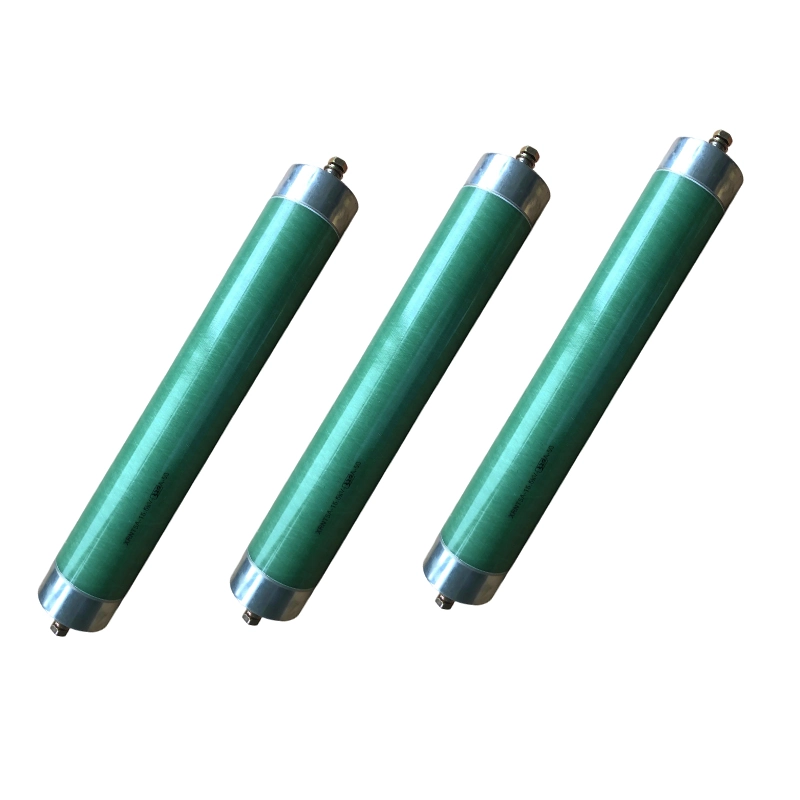
The ELSP series current limiting backup fuse is engineered for highly reliable transformer protection. Designed to operate in selective coordination with low-current protection devices (such as a Bay-O-Net assembly), this current limiting fuse provides a critical second layer of defense, instantly interrupting high fault currents to minimize equipment stress.

ZeeyiElec ELSP current limiting backup fuse for transformer protection

Key Application Attributes

  • Transformer backup protection
  • Coordination with low-current protection devices (e.g., Bay-O-Net)
  • Cylindrical cartridge format
  • Export project documentation support

(8.3)15.5 kV Class

  • Current Range 20 – 315 A
  • Breaking Current 50 kA
  • Tube Dimension (C) 2.1 in (53 mm) /
    3.0 in (76 mm)
  • Terminal (MA) M6 / M10
  • Typical Model Prefix XRNTS-(8.3)15.5-XX
View full specs

25 kV Class

  • Current Range 20 – 200 A
  • Breaking Current 50 kA
  • Tube Dimension (C) 3.0 in (76 mm)
  • Terminal (MA) M10
  • Typical Model Prefix XRNTS-25-XX
View full specs

(38)40.5 kV Class

  • Current Range 10 – 165 A
  • Breaking Current 31.5 kA
  • Tube Dimension (C) 3.0 in (76 mm)
  • Terminal (MA) M10
  • Typical Model Prefix XRNTS-(38)40.5-XX
View full specs

Technical Snapshot

Voltage Class (kV)Model SeriesCurrent Range (A)Breaking Current (kA)Tube CTerminal MA
(8.3)15.5 kVXRNTS-(8.3)15.520 – 315502.1″ / 3.0″M6 / M10
25 kVXRNTS-2520 – 200503.0″ (76 mm)M10
(38)40.5 kVXRNTS-(38)40.510 – 16531.53.0″ (76 mm)M10
Engineering Data

Engineering Specifications for ELSP Current Limiting Backup Fuses

This section provides dimensional and electrical data for the ELSP series current limiting fuse. These specifications assist in preliminary selection and coordination for transformer protection. Final configurations must be confirmed based on specific project conditions.

Product Type Current Limiting Backup Fuse
Voltage Classes (8.3)15.5kV / 25kV / (38)40.5kV
Rated Current Range 10 – 315 A
Breaking Current Up to 50 kA (Class dependent)
Mounting Form Cylindrical Cartridge
Typical Use Transformer Backup Protection
Comprehensive overview of ELSP current limiting fuse parameters by voltage class
Voltage Class (kV)Series / Model RuleRated Current Range (A)Breaking Current (kA)Tube Diameter CTerminal Thread (MA)
(8.3)15.5 kVXRNT5-(8.3)15.520 – 315 A50 kA2.1″ (53 mm) / 3.0″ (76 mm)M6 / M10
25 kVXRNT5-2520 – 200 A50 kA3.0″ (76 mm)M10
(38)40.5 kVXRNT5-(38)40.510 – 165 A31.5 kA3.0″ (76 mm)M10

Detailed Class Ratings

Table A: (8.3)15.5kV Class Detailed Ratings
15.5kV Class detailed specification breakdown
Catalog / ModelRated Current (A)Dimension CTerminal MARemarks
XRNT5-(8.3)15.5-20…17520, 25, 31.5… 175 A2.1 in (53 mm)M6Coordination range confirmed via curve
XRNT5-(8.3)15.5-200…315200, 250, 315 A3.0 in (76 mm)M10For higher fault current backup
Table B: 25kV Class Detailed Ratings
25kV Class detailed specification breakdown
Catalog / ModelRated Current (A)Dimension CTerminal MARemarks
XRNT5-25-20…20020, 25, 31.5… 200 A3.0 in (76 mm)M10Universal dimension for 25kV class
Table C: (38)40.5kV Class Detailed Ratings
40.5kV Class detailed specification breakdown
Catalog / ModelRated Current (A)Dimension CTerminal MARemarks
XRNT5-(38)40.5-10…16510, 20, 31.5… 165 A3.0 in (76 mm)M10Designed for extended voltage systems

Engineering & Application Notes

  • Coordination Note: This current limiting fuse must be evaluated and coordinated with Bay-O-Net or other upstream/downstream devices for proper selective coordination.
  • Application Note: Designed specifically as a backup fuse for transformer protection; it does not replace full-range protection devices.
  • Project Confirmation: Final selection requires validation of specific project short-circuit levels, system voltage, and local environmental conditions.
  • Commercial Note: Final supply specifications, dimensions, and ratings are subject to approved manufacturing drawings and official quotations.
Engineering Delivery Capability

Reliable Engineering Support for Current-Limiting Fuse Projects

We support current-limiting fuse projects with structured technical review, coordination-oriented recommendations, and export-ready documentation. Our process is designed to ensure your transformer backup protection schemes are executed reliably, reducing uncertainty from initial RFQ to final shipment.

Request Technical & Commercial Proposal

Coordination-Oriented Technical Support

Assist with protection coordination context and curve analysis for complex transformer backup schemes.

Project Documentation Readiness

Datasheet mapping, exact model confirmation, and comprehensive commercial/packing document alignment.

Export Workflow Efficiency

Fast response loops for technical clarifications and seamless order execution handoff for global delivery.

Application Scenarios

Where Current-Limiting Backup Fuses Are Commonly Applied

These profiles represent typical installation environments for the backup fuse. In all scenarios, final selection must be confirmed based on specific system voltage, short-circuit levels, and required coordination relationships.

Oil-Filled Distribution Transformer Protection

Acting as a critical secondary defense, the current-limiting fuse handles the high fault current spectrum, working collaboratively with low-current protection devices (such as a Bay-O-Net assembly) to form a complete protection scheme.

  • Forms a clear, two-part coordinated defense division
  • Limits destructive energy during major internal faults
Key check: Fault level and protection coordination window

Compact Substation / RMU Schemes

Space-constrained environments like ring main units (RMU) or compact pad-mounted substations require protective devices that offer stable physical structures and well-defined responses to mitigate medium-voltage side short-circuit risks.

  • Cylindrical cartridge design fits within tight enclosures
  • Rapidly clears faults to prevent catastrophic casing damage
Key check: Installation constraints and insulation clearance

Retrofit Projects with Elevated Fault Levels

As grid capacities increase, legacy protection strategies may become insufficient. Integrating a current-limiting backup fuse offers a viable, non-disruptive upgrade path to handle newly increased fault duties.

  • Upgrades system interruption capability cost-effectively
  • Complements existing primary protection devices
Key check: Updated short-circuit study and legacy compatibility

Industrial / Utility Feeder Backup

Positioned within multi-stage industrial or utility protection networks, these fuses fulfill a backup current-limiting role, significantly reducing the risk of catastrophic fault energy reaching the transformer core.

  • Suppresses massive let-through thermal energy
  • Enhances overall distribution network selectivity
Key check: Upstream/downstream selectivity validation

Application Boundary Reminder

  • A current-limiting backup fuse is not a full-range protection device; it must be paired with an appropriate low-current clearing device.
  • Proper application requires rigorous engineering validation against expected short-circuit currents and time-current coordination curves.
  • Final equipment configurations are always subject to project-specific technical specifications and approved manufacturing documentation.
Selection Method

How to Select the Right Current-Limiting Fuse for Transformer Protection

This guide provides a structured methodology for preliminary fuse selection. Final engineering configurations must be rigorously verified against specific system short-circuit studies and coordination criteria.

01

Confirm System Voltage Class

Why it matters

Identifying the nominal and maximum system voltage locks in the correct insulation and dielectric clearance class. Typically, options fall into the (8.3)15.5kV, 25kV, or (38)40.5kV categories. Otherwise, subsequent parameters will be misaligned.

What to collect
  • System nominal voltage and maximum continuous operating voltage
  • Insulation level / project voltage constraints
  • Applicable network segment requirements
Output: Preliminary voltage class shortlist (See Specs)
02

Define Required Rated Current Range

Why it matters

The rated current envelope determines the specific model variant. Undersizing leads to nuisance tripping under normal overload conditions, while oversizing compromises the backup protection sensitivity.

What to collect
  • Transformer kVA rating and full-load current
  • Expected maximum operating current envelope (including inrush)
  • Utility or local loading profile / margin policy
Output: Candidate rated current band
03

Verify Fault Level & Breaking Capacity

Why it matters

The breaking capacity of the fuse must safely exceed the maximum prospective short-circuit current of the project site to prevent catastrophic equipment failure during major fault events.

What to collect
  • Prospective three-phase short-circuit current at the installation node
  • Network update status (retrofit vs. new build considerations)
  • Class-dependent breaking requirement (e.g., up to 50kA)
Output: Breaking-capacity compliance check (Pass/Fail)
04

Check Protection Coordination

Why it matters

A current-limiting backup fuse rarely operates alone. It is usually paired with low-current clearing devices like a Bay-O-Net assembly. Ensuring their time-current curves don’t cross improperly guarantees correct protective selectivity.

What to collect
  • Upstream and downstream protective device information
  • Required coordination curve (TCC) crossover boundaries
  • Overall operational philosophy (backup vs. selective clearing)
Output: Coordination feasibility note
05

Validate Mechanical & Installation Constraints

Why it matters

Selecting the correct electrical parameters is useless if the fuse cannot physically fit. Physical dimensions, terminal thread sizes (e.g., M10 vs. M6), and operating ambient environments are the final gatekeepers.

What to collect
  • Available mounting space / tube diameter restrictions (C dimension)
  • Mechanical interface / terminal thread (MA) requirements
  • Ambient and environmental exposure constraints
Output: Final RFQ-ready configuration set

RFQ Readiness Checklist

  • Voltage class confirmed
  • Rated current range selected
  • Breaking capacity checked
  • Coordination path reviewed
  • Mechanical interface verified
  • Installation constraints reviewed
  • Application scenario matched
  • Approval basis documented

Common Mistakes to Avoid

  • Selecting by current only without fault-level validation
  • Ignoring coordination with companion protection devices
  • Assuming one class value applies to all voltage classes
  • Missing mechanical tube dimensions / thread compatibility checks

* Engineering Validation Reminder: Preliminary selection from this guide should be validated by project-specific short-circuit and coordination analysis before final release.

Delivery Assurance

Quality Control and Documentation Support for Current-Limiting Fuse Projects

For current-limiting backup fuse projects, ZeeyiElec provides structured quality control and comprehensive documentation support. We assist engineering and procurement teams in streamlining technical confirmation, order execution, and customs clearance preparation for your transformer protection project.

Structured Quality Flow

01

Incoming & Material Verification

Critical raw materials and fuse components are verified against engineering specifications to ensure structural and material consistency.

Output: Baseline Internal Verification Records
02

In-Process Control

Assembly parameters, filler compaction, and dimensional consistencies are rigorously monitored throughout key manufacturing stages.

Output: Process Conformity Confirmation
03

Final Inspection Before Shipment

Physical dimensions, product markings, and secure packaging are thoroughly reviewed against final order requirements prior to dispatch.

Output: Pre-Shipment Readiness Status

Project Documentation Support

Technical Datasheet

Baseline parameters, TCC curves, and dimensional references for preliminary engineering selection.

Model & Configuration Confirmation

Alignment of specific fuse naming rules, ratings, and physical dimensions before manufacturing release.

Packing List & Commercial Invoice

Structured commercial documents provided to support international shipping and customs clearance.

Product Marking / Label Information

Verification of physical labels, ratings, and batch traceability markings applied to the fuse body.

Order Review Summary (If Requested)

Compiled technical and commercial summaries provided to support your internal procurement approval workflows.

Export Communication Workflow

Closed-loop communication records tracking resolved technical clarifications and logistics queries.

Documentation Scope Reminder

The depth and availability of the document package depend on the confirmed project scope, commercial terms, and specific destination requirements. Certain documentation may be available upon request.

FAQ & Resources

Frequently Asked Questions on Current Limiting Transformer Fuses

Review these common engineering queries regarding the purpose, coordination, and application boundaries of current-limiting backup fuses to assist with your project evaluation.

What is a current limiting fuse used for in transformer protection systems?

It is primarily used to rapidly interrupt high-magnitude fault currents and provide essential backup protection. By limiting the peak fault current and significantly reducing the let-through energy (I²t), it minimizes thermal and electrodynamic stress on transformer components during severe short-circuit events.

What is the difference between a current limiting fuse and a regular expulsion fuse?

While a regular expulsion fuse interrupts the circuit after a natural current zero-crossing, a current-limiting fuse forces the arc to extinguish within the first half-cycle. This aggressive arc-quenching limits the peak current to a value significantly lower than the prospective fault current.

Do current limiting fuses reduce fault current?

Yes, they actively restrict the peak fault current and drastically reduce the total let-through energy during high-current short-circuit events. However, the exact reduction capability depends on the specific fuse class, current rating, and the system’s prospective fault current level.

How does a current limiting backup fuse work?

During a severe fault, the internal fuse element melts almost instantly, creating an electrical arc. The surrounding filler medium (such as high-purity silica sand) rapidly cools and partitions this arc. This generates a high internal resistance that suppresses the fault current before it can reach its peak.

Can a current limiting fuse replace all other protective devices?

No. A current-limiting backup fuse is not designed for full-range protection. It must be coordinated with a low-current protective device, such as a Bay-O-Net assembly. The low-current device handles standard overloads, while the current-limiting fuse strictly clears high-magnitude short circuits.

How do I select the right voltage class and current rating?

Selection begins by matching the system’s nominal voltage to the appropriate fuse voltage class (e.g., 15.5kV, 25kV). Next, determine the rated current based on the transformer’s full-load current and expected inrush envelope. Finally, verify the breaking capacity against site fault levels.

What is the role of coordination in backup fuse applications?

Coordination ensures that protective devices operate in the correct, selective sequence. Proper time-current curve (TCC) coordination guarantees that low-level faults are cleared by the primary expulsion device, reserving the current-limiting backup fuse strictly for catastrophic short circuits.

Are current limiting fuses resettable after operation?

No, current limiting fuses are non-resettable, one-time operation devices. Once the internal element melts and clears a fault, the entire fuse cartridge must be safely removed and replaced with a new unit of the exact same specification to safely restore system protection.

What project data should be prepared before requesting an RFQ?

To ensure accurate engineering selection, please prepare the system operating voltage, prospective short-circuit fault level, required current rating range, dimensional interface constraints (such as tube diameter and terminal thread size), and any specific protection coordination guidelines.

Can these fuses be used for household electronics or car-audio circuits?

No. The current limiting backup fuses detailed here are engineered exclusively for medium-voltage utility and industrial transformer protection (e.g., 15kV to 40kV). They are fundamentally incompatible with consumer electronics, 13A household plugs, residential breakers, or 12V automotive retrofits.